


















Scientific findings regarding Earth environmental history reveal that a fresh ice age was beginning to take shape before human activities and fossil fuel consumption completely disrupted this natural planetary cycle. The Barnes Ice Cap, spanning a significant area of Canada Baffin Island, was expanding thousands of years ago. However, as carbon pollution escalated rapidly starting in the 1960s, this massive sheet of ice began retreating at a fast pace.
Natural Shifts and the Milankovitch Cycles
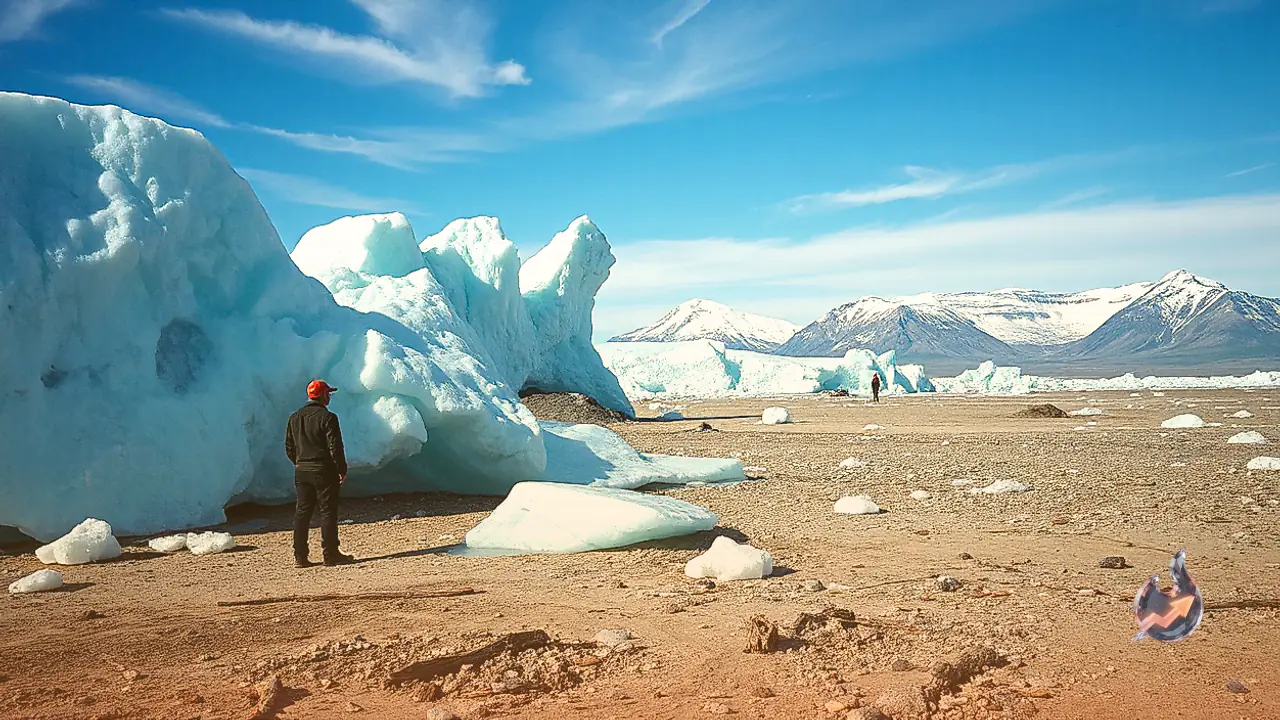
Earth regularly experiences phases where ice extends downward from high latitudes, commonly referred to as ice ages, driven by natural shifts in planetary rotation and orbit known as Milankovitch Cycles. These phases are followed by interglacial periods when ice retreats toward the poles. The previous ice age concluded 12,000 years ago, during which the Laurentide Ice Sheet covered all of Canada and stretched as far south as New York and the Midwest before retreating to form the Barnes Ice Cap, which currently covers an area on Baffin Island comparable to the size of Delaware.
Unlocking Secrets Preserved Beneath the Ice
Unlike standard glaciers that remain in motion, the Barnes Ice Cap is frozen directly to the bedrock, preserving the vegetal record growing underneath it. This unique characteristic allowed scientists to determine how much the ice cap expanded and shrank over time. To ascertain when it first reached its modern size, researchers utilized an exposure dating technique to calculate the duration rocks near the glacier edge remained exposed to the sky. By measuring Beryllium-10, an element forming on exposed rock surfaces, the team calculated that the ice sheet first attained its current dimensions approximately 3,600 years ago.
Tundra Moss and Lichen Provide Timeline Clues
The researchers then investigated how much the ice cap had regrown following that milestone by examining tundra mosses and lichens situated in front of the glacier. Nicolás Young explains that after the ice cap retreated, mosses colonized the newly exposed land until the ice re-expanded and killed the moss. These dead plant traces remained preserved within the newly re-exposed land, enabling the research team to reconstruct the movement of ice across the landscape. Based on these records, Young and his coauthors estimate that the glacier resumed growth roughly 2,000 years ago, potentially signaling the onset of another glaciation period.
The 1960s Reversal and Rapid Retreat
Beginning in the 1960s, the ice cap shifted behavior away from typical ice age trajectories by starting to shrink again. The team examined historical aerial photographs showing that the ice reversed course and retreated significantly from its margins. The edges of the Barnes Ice Cap have retreated by an average of 4 meters annually since the 1980s, coinciding with an era of rapidly rising carbon emissions that caused worldwide ice loss. Nicolás Young notes that this modern retreat has reversed two millennia of net expansion.
Broader Scientific Insights and Historical Context
Meredith Kelly, a professor of earth sciences at Dartmouth, describes the gathered data as remarkable and indicative of a clear pattern in ice cap behavior, though she suggests comparing data with other global sites to fully understand pre-human glaciation mechanisms. Furthermore, Young notes that the evidence validates a decades-old hypothesis that climate deniers frequently cited to claim climate change is a hoax. In the early 1970s, scientists gathered at Brown University to discuss impending glaciation timelines and issued a warning letter to President Richard Nixon. Young believes this study demonstrates that those scientists were correct regarding pending glaciation.