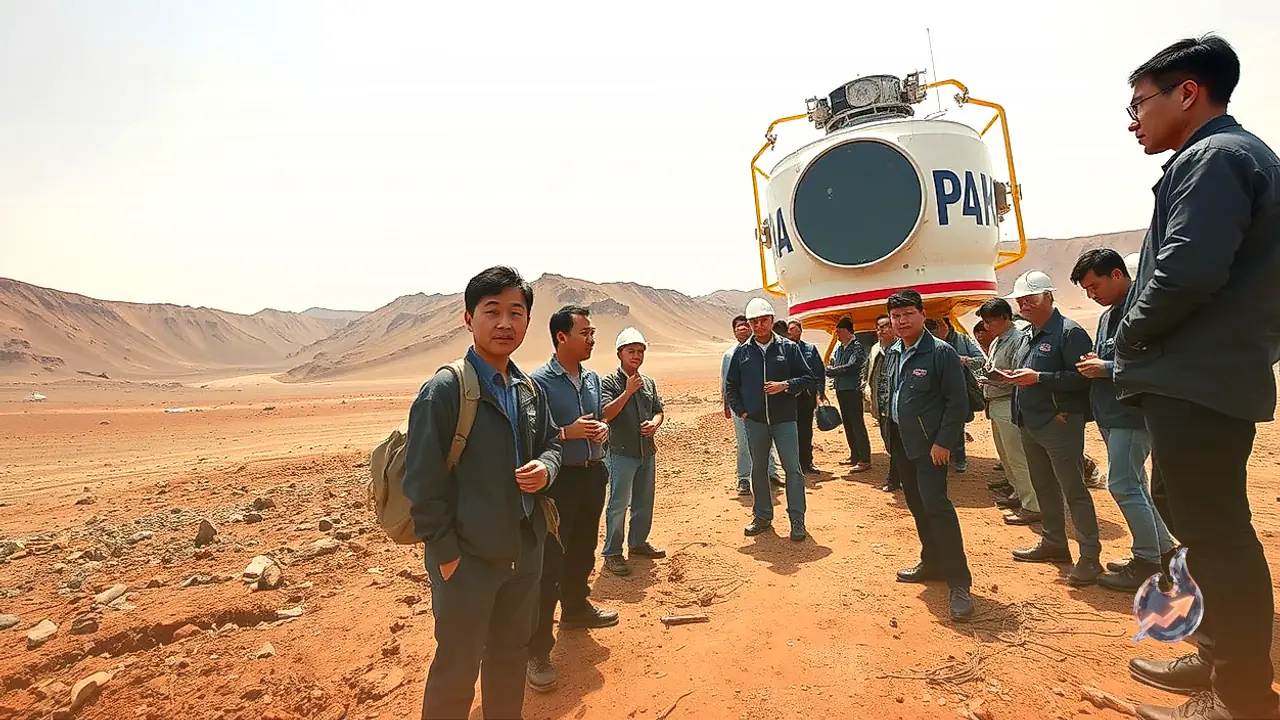
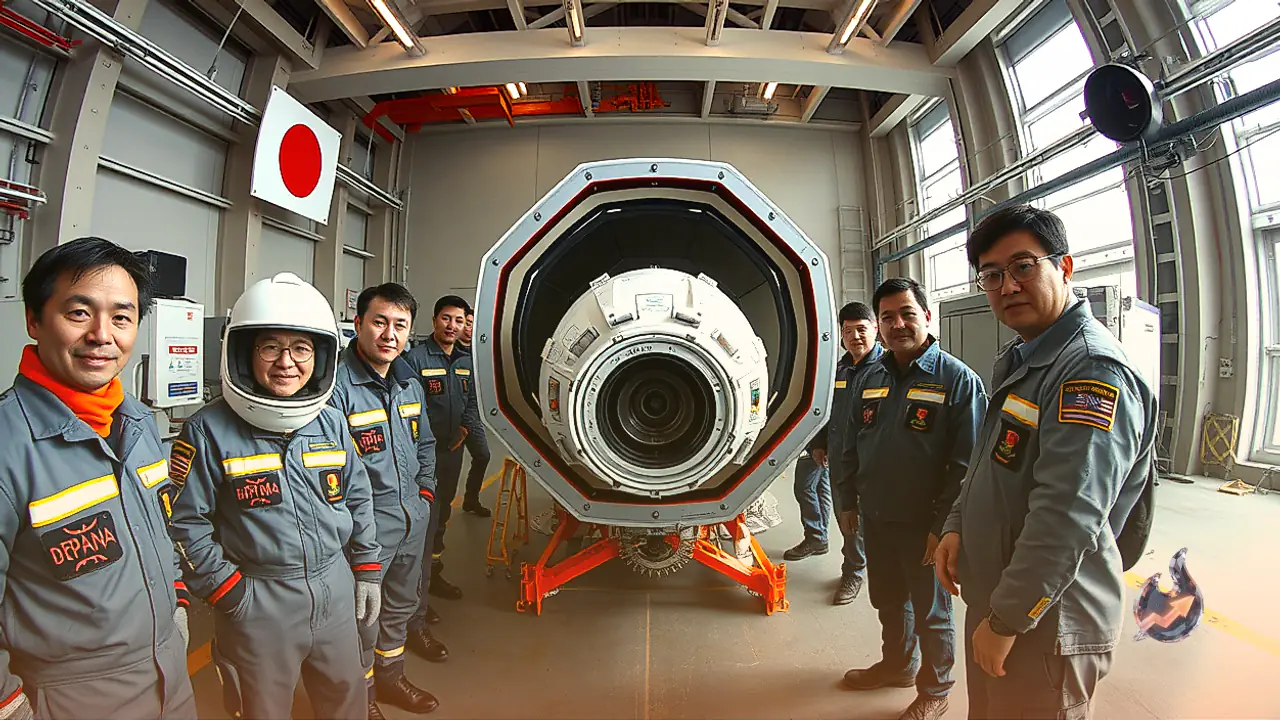























It is difficult to imagine a more daunting journey than one directed toward an alien moon named after the Greek mythological god of fear, particularly when three previous attempts to reach that destination have ended in failure. Yet, as the Japanese space agency JAXA and its collaborators prepare to dispatch a spacecraft to the formidable Martian moon, the participating researchers share a collective sense of anticipation.
Exploring the Martian Moons
The mission, officially designated as Martian Moons eXploration, is scheduled to launch from the Tanegashima Space Center during the early hours on Tuesday local time, corresponding to Monday afternoon in the United States. Following nearly a year of transit through deep space, the spacecraft will arrive at Mars and its two companion moons, Phobos, which translates to fear in Greek, and Deimos, meaning dread. MMX will observe both bodies from a distance and gather pristine samples from Phobos in order to resolve a longstanding scientific debate regarding the precise origin of these satellites. Researchers have spent decades attempting similar endeavors, with Russia having dispatched three unsuccessful probes toward Phobos since the 1980s.
Unresolved Questions of Origin
Despite past setbacks, scientists remain eager to conquer this difficult objective because the genesis of Phobos and its sibling continues to elude definitive explanation. Certain physical attributes, such as the specific light-reflection patterns they exhibit, suggest they may simply be passing asteroids captured by the gravitational pull of Mars. Conversely, their circular orbits aligned precisely with the Martian equator imply they could have coalesced from planetary debris left behind following a catastrophic collision between an infant Mars and a massive asteroid, as noted by Tom Statler during a formal mission briefing.
Advanced Instrumentation and Megane
The newly developed mission is engineered to settle this ongoing controversy by conducting detailed surveys of Mars and its moons utilizing an advanced suite of scientific instruments. Through the onboard MEGANE instrument, researchers will ascertain the elemental composition of Phobos by measuring the neutrino particles and gamma rays emitted from its surface. If analysis reveals higher concentrations of volatile elements like hydrogen or potassium, the data would favor the captured-asteroid theory, whereas lower volatile levels would support the impact hypothesis. David Lawrence, who directs the MEGANE team from Johns Hopkins University, notes that studying the elemental makeup represents an unprecedented measurement that has never been accomplished before.
Sample Return and Global Collaboration
Abigail Fraeman, an MMX team member at the Jet Propulsion Laboratory, emphasizes that while remote observations will provide valuable clues, the actual physical return of samples will definitively settle the fundamental questions. Following close-up reconnaissance of Phobos utilizing onboard instruments and a specialized rover designed to explore the terrain ahead of time, the main spacecraft will touch down to collect a minimum of 10 grams of material through two distinct sampling mechanisms. The ultimate objective is to deliver these samples safely to Earth by the year 2031, which would mark the first successful retrieval of material from any moon outside of our own.
Overcoming Obstacles and Past Successes
Executing such a complex undertaking requires overcoming significant technological hurdles, as scientists currently possess limited knowledge regarding the exact surface conditions of Phobos. Consequently, a precise landing site cannot be selected until the spacecraft arrives and conducts up-close reconnaissance. To mitigate risks, the mission incorporates two separate sampling methods as a safeguard against mechanical failure, acknowledging the unprecedented nature of retrieving material from a Martian moon. This ambitious endeavor is bolstered by robust international collaboration involving NASA, the European Space Agency, and national space programs in Germany and France, ensuring a deep pool of combined technical expertise. Furthermore, JAXA brings a proven track record in sample-return technology, having successfully retrieved materials from the asteroid Itokawa in 2010 and subsequently from Ryugu in 2020 through the Hayabusa missions, positioning the agency well for this historic undertaking.