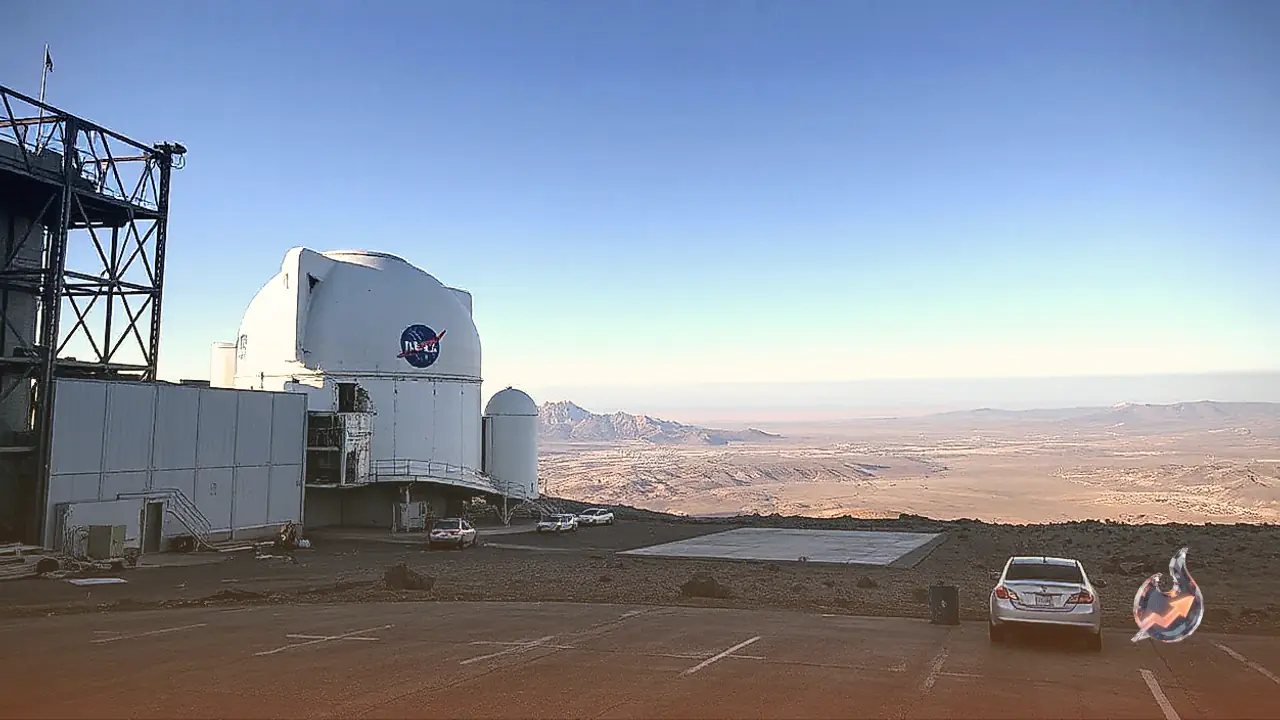























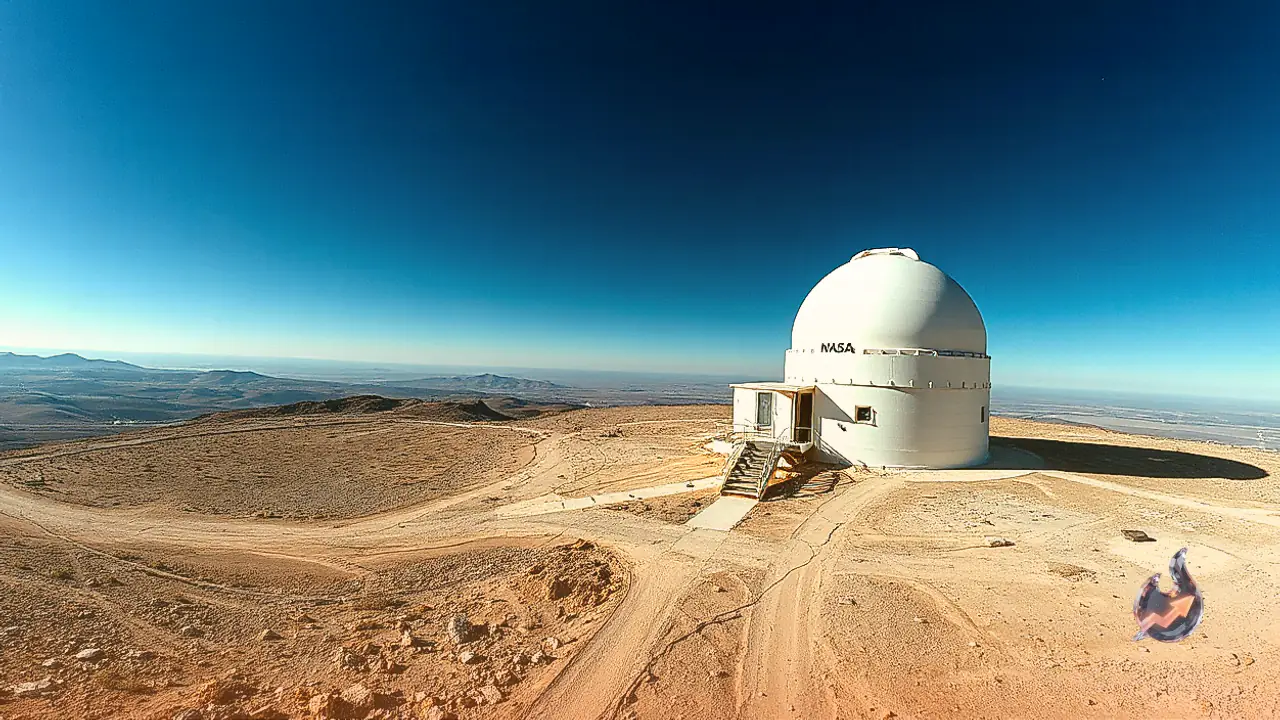

NASA's renowned 1500-kilogram space telescope, the Neil Gehrels Swift Observatory, has reached the final stage of its orbital existence and is spiraling down toward Earth's atmospheric envelope. As the massive scientific probe encounters the intense friction of atmospheric re-entry, the bulk of its structural components will vaporize and incinerate. However, orbital specialists project that certain resilient structural fragments may endure the thermal plunge and strike the surface. Should any incandescent debris impact human settlements or critical infrastructure, the fallout could reduce structures to cinders and cause notable local destruction. Because of this lingering hazard, scientific observatories are closely monitoring its final trajectory.
Over Two Decades of Unraveling the High-Energy Universe
The venerable observatory began its journey nearly 22 years ago, lifting off on November 20, 2004. Originally designated as the Swift Gamma-Ray Burst Explorer, the mission was initially planned to function for just two years. Defying early operational expectations, the spacecraft operated smoothly for decades beyond its initial service lifespan. Throughout its 22-year tenure, Swift delivered transformative discoveries across high-energy astrophysics, recording data on more than 2,000 gamma-ray bursts alongside tracking upward of 1,400 supernovae. Despite concerted orbital maintenance and management attempts by NASA teams, sustaining its deteriorating orbit was ultimately impossible, setting the stage for its uncontrolled descent.
Scheduled Entry Timeline and Geographic Risk Footprint
Orbital tracking models indicate that the telescope is scheduled to breach the upper atmosphere on November 4 at around 3:30 AM US time, corresponding to roughly 2:00 PM Indian Standard Time. Mission navigators have factored in an 11-hour contingency window to account for fluctuations in atmospheric density and solar activity. Brad Cenko, chief scientist for the mission at NASA, outlined that the re-entry hazard corridor spans between 20.6 degrees south latitude and 20.6 degrees north latitude. This planetary band encompasses portions of Africa, Australia, India, Southeast Asia, as well as Central and South America.
Over the Indian subcontinent, this latitudinal swath extends across all territory located south of an imaginary line drawn between Daman and Cuttack. Consequently, prominent urban centers including Mumbai, Hyderabad, Bengaluru, and Chennai fall inside the potential footprint. Conversely, northern regions including Delhi and Kolkata remain entirely outside the delineated impact corridor.
Assessing Debris Hazard and Probability of Terrestrial Impact
Specialists have emphasized that an urban center's presence within the broad latitudinal belt does not indicate an inevitable strike by falling debris. The actual landing point of any surviving hardware hinges strictly on the exact position, angle, and timing of the spacecraft at the moment of structural breakup. Given that approximately 70 percent of Earth's surface is blanketed by water, astronomers emphasize that any lingering fragments will most likely sink harmlessly into open oceans.
According to Brad Tucker, an astrophysicist at the Australian National University, statistical models demonstrate that space debris strikes dry land only about three times out of ten incidents. Echoing this measured perspective, Jonathan McDowell of Durham University remarked that it would be truly remarkable if even 100 kilograms out of the 1500-kilogram telescope were to survive atmospheric incineration and touch down intact. Scientists maintain that the overall likelihood of property damage or human casualties remains vanishingly small.
Tracking Protocols and Situational Awareness
Within India, the Indian Space Research Organisation (ISRO) maintains capabilities such as the Multi-Object Tracking Radar located in Sriharikota to watch low-Earth-orbit items and falling space debris. At present, however, no official statement has been released concerning specific domestic tracking runs dedicated to Swift's re-entry. Meanwhile, space surveillance networks worldwide continue logging telemetry in the final moments of the spacecraft's fiery conclusion.