





















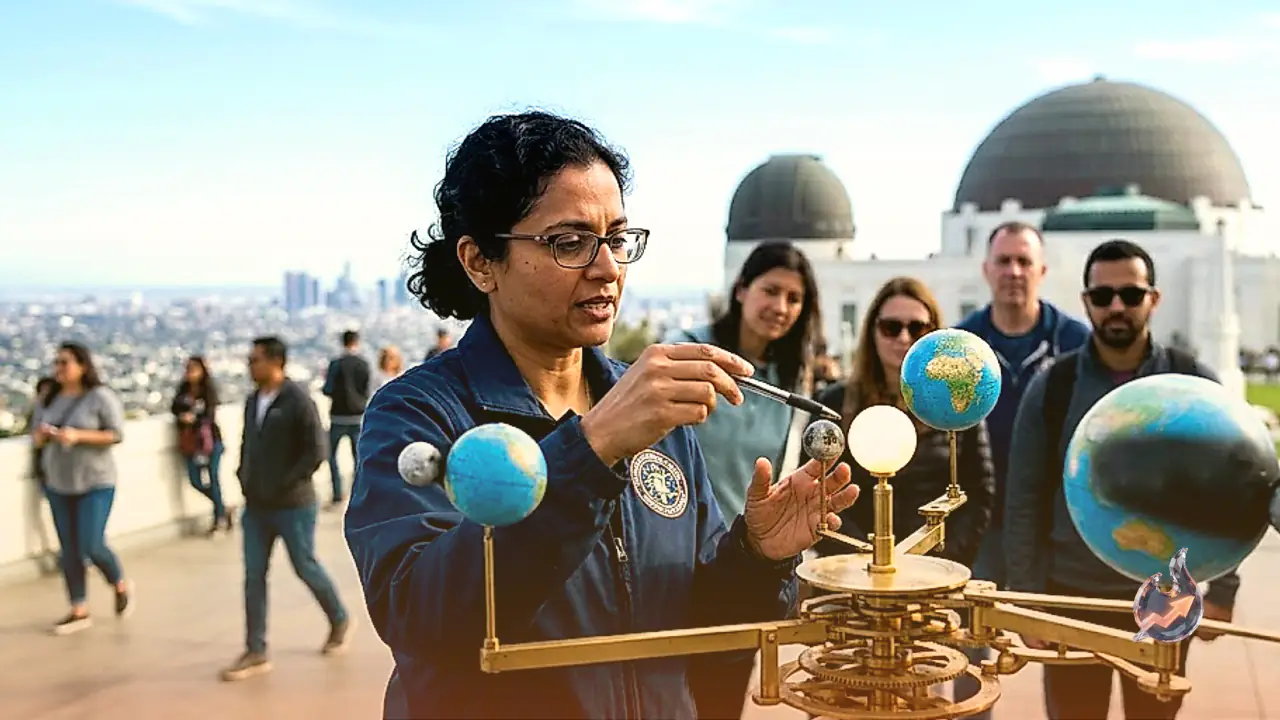

Celestial events such as solar and lunar eclipses have long captivated scientists and skywatchers across the globe. When observing these astronomical occurrences, a striking contrast immediately becomes apparent regarding their duration. A total solar eclipse witnessed from any single location on Earth typically lasts for merely a few short minutes before concluding. In contrast, the entire progression of a lunar eclipse can easily span several hours. Although both phenomena are driven by the exact same alignment of the Sun, Earth, and Moon in space, the dramatic disparity in their timeframes often raises intriguing questions. The explanation lies deep within orbital geometry, the relative physical dimensions of these celestial bodies, and the actual width of the shadows cast across space. When the Moon passes between the Sun and Earth, it casts a tiny, concentrated shadow onto Earth's surface. Conversely, when Earth moves between the Sun and Moon, its immense size projects a vastly broader shadow cone through which the Moon must travel, resulting in a much more prolonged event.
Astronomical Alignment and Shadow Formation During New Moon
A solar eclipse occurs exclusively during the New Moon phase, when the Moon in its monthly orbit shifts directly between the Sun and Earth. In this precise alignment, the Moon obstructs incoming sunlight from reaching portions of Earth's surface, casting a dual shadowed footprint into space. Astronomers divide this projected shadow into two primary zones: the dense inner core known as the umbra, and the lighter surrounding region known as the penumbra.
The umbra represents the dark central region where the Sun's light is entirely blocked by the Moon's body. Observers situated strictly within the path swept by this umbral cone experience a total solar eclipse. Surrounding the umbra is the expansive penumbra, where only a portion of the solar disk is obscured, producing a partial solar eclipse. Because the Moon is physically much smaller than both the Sun and Earth, its converging umbral shadow cone tapers significantly as it stretches toward Earth, covering only a limited geographic zone upon arrival. Consequently, the region experiencing total darkness at any given instant remains remarkably small.
Orbital Velocities and the Fleeting Duration of Solar Totality
The brevity of total solar eclipses at any specific viewing point is primarily governed by the small footprint of the Moon's umbra combined with rapid celestial motion. The physical diameter of the Moon is far smaller than that of Earth, resulting in an umbral shadow path on the terrestrial surface that is exceptionally narrow. Furthermore, this dark spot does not remain static; it sweeps rapidly across the globe.
This swift motion is driven by two simultaneous dynamics: the Moon moving along its orbit around Earth, and Earth rotating continuously on its axial axis. The combined effect of these planetary movements causes the Moon's dark umbral shadow to glide across Earth's surface at high speed. As a result, even though totality begins as soon as the umbra reaches an observer, the narrow dark cone quickly passes over that spot within just a couple of minutes.
According to astronomical calculations, the theoretical maximum duration of totality for a solar eclipse at any single observer position on Earth is approximately 7 minutes and 32 seconds. However, the vast majority of total solar eclipses fall well short of this theoretical limit, often lasting between 2 and 4 minutes. While the total global duration of a solar eclipse from its initial partial phase to final exit can span several hours across Earth as a whole, the window of total coverage for any fixed location remains fleeting.
Full Moon Geometry and the Mechanics of Lunar Eclipses
The geometry of a lunar eclipse stands in direct contrast to that of a solar eclipse. A lunar eclipse takes place around the Full Moon phase when Earth moves directly into position between the Sun and the Moon. In this orientation, Earth completely blocks sunlight from directly illuminating the lunar surface, projecting a massive shadow out into space toward the Moon's orbit.
The lunar eclipse sequence unfolds in distinct stages. The Moon first enters Earth's faint outer penumbral shadow, gradually losing its usual brilliance. As the orbital progression continues, the Moon penetrates deeper into Earth's dark inner umbral shadow cone. When the entire lunar disk is submerged within Earth's umbra, a total lunar eclipse occurs. After spending considerable time inside the umbra, the Moon slowly travels onward and exits through the opposite edge. Because of the vast distance the Moon must cover to traverse this shadow zone, the entire event lasts for hours.
Planetary Scale and the Width of Earth's Shadow Cone
To comprehend the duration difference between solar and lunar eclipses, one must examine the relative sizes of the shadows involved. During a solar eclipse, the small Moon casts its shadow onto the much larger Earth. During a lunar eclipse, the situation is inverted: Earth casts its shadow onto the smaller Moon. Mathematically, Earth's diameter is roughly four times larger than that of the Moon.
Although the exact taper and physical dimensions of a celestial shadow vary based on relative distances from the Sun, at the Moon's orbital distance Earth's dark umbral shadow is significantly wider than the Moon itself. Because the diameter of Earth's umbra far exceeds the Moon's physical width, the Moon requires a substantial amount of time to enter, cross through, and ultimately emerge from the shadow path. As a result, the total eclipse phase alone inside Earth's umbra can last for more than 1 hour. When combined with the initial and final penumbral phases, the full lunar eclipse phenomenon spans multiple hours.
The Tree and Building Shadow Analogy
This astronomical mechanism can be readily understood using a simple real-world comparison. Imagine a person walking along a sidewalk on a sunny day. Along the path stands a slender tree with a thin trunk, casting a very narrow shadow across the pavement. Walking through this narrow tree shadow requires only a few seconds.
Further down the street stands a massive skyscraper. Because of the building's immense height and width, it casts a broad, expansive shadow covering a large stretch of the road. Walking into, through, and out of this building's shadow takes a noticeably longer time. This scenario directly mirrors solar and lunar eclipses. The dark umbral shadow cast by the smaller Moon onto Earth during a solar eclipse is like the narrow tree shadow, quickly traversed. In contrast, the shadow projected by the vastly larger Earth during a lunar eclipse is like the wide skyscraper shadow, taking the Moon hours to navigate.
Geographic Visibility Paths and Global Observation Areas
Beyond total duration, another major difference between the two types of eclipses involves their geographic visibility from Earth. Experiencing a total solar eclipse requires an observer to be located precisely within the narrow, moving ground track of the Moon's umbra. Being even slightly outside this narrow swath means observing only a partial solar eclipse or missing the eclipse entirely. Consequently, total solar eclipses are visible from only a restricted strip of Earth's surface.
Conversely, observing a lunar eclipse carries no such narrow spatial restriction. Whenever a lunar eclipse takes place, anyone situated on the night side of Earth with a clear view of the Moon can witness the event simultaneously. As a result, lunar eclipses are not only significantly longer in duration, but they can also be enjoyed by over half of the planet's population at once.