























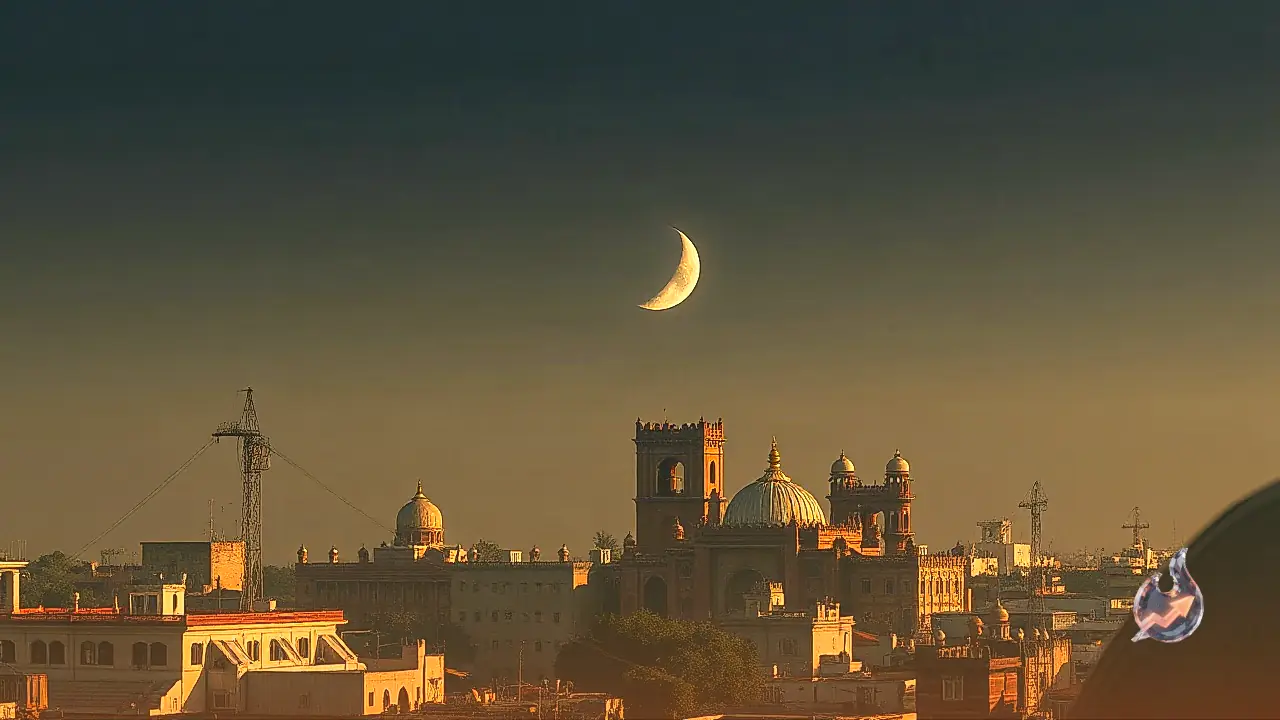

Skywatchers and astronomy enthusiasts across the globe are in for a major celestial event as August 2026 draws to a close. On August 28, 2026, the second and final lunar eclipse of the year will take place in the sky. According to precise astronomical calculations, this will not be a standard eclipse but a Deep Partial Lunar Eclipse. During this event, a substantial portion of the lunar disk will pass directly through the densest part of Earth's shadow. At its maximum magnitude, approximately 92 percent of the Moon's surface will be submerged within Earth's umbral shadow, creating a striking spectacle for viewers located in the visibility zone.
Scientific Significance and Visual Features of the Eclipse
This event holds special interest for astronomers because a 92 percent umbral coverage brings the Moon very close to a total eclipse appearance. When sunlight passes through Earth's atmosphere, shorter blue wavelengths scatter while longer red wavelengths refract onto the lunar surface. As a result, the Moon takes on a characteristic deep red, reddish-orange, or coppery hue. This visual phenomenon is frequently termed the 'Blood Moon effect'. However, experts clarify that despite the deep reddish tint, the event remains classified scientifically as a partial lunar eclipse rather than a total lunar eclipse.
Visibility in India: Why Observers Will Miss the Sight
The primary concern for astronomy enthusiasts in India is whether this impressive celestial alignment will be observable from the domestic sky. The definitive answer is no; the lunar eclipse will not be visible anywhere across India. This invisibility occurs because the Moon will remain positioned below the local horizon throughout the entire duration of the eclipse phase in the region. Consequently, observers in major cities including Delhi, Jaipur, Bengaluru, and Bhopal will not be able to witness the event directly from their rooftops or open fields. For observers located in India, viewing live online streams broadcast by global observatories will be the sole option to track the event in real time.
Complete Timeline and Phase Duration in Indian Standard Time (IST)
Astronomical calculations and panchang data indicate that the entire celestial phenomenon will span a total duration of roughly 5 hours and 35 minutes. Within this period, the critical partial eclipse phase will last for about 3 hours and 16 minutes. Expressed in Indian Standard Time (IST), the sequence of phases unfolds as follows
- Penumbral Phase Begins: The eclipse commences with the penumbral stage at 6:55 AM IST on August 28, 2026.
- Partial Eclipse Begins: The Moon starts entering Earth's dark umbral shadow at 8:04 AM IST.
- Maximum Eclipse Peak: The peak of the eclipse occurs at 9:43 AM IST, when shadow coverage reaches nearly 92 percent.
- Partial Eclipse Ends: The partial phase comes to an end at 11:21 AM IST.
- Penumbral Phase Ends: The eclipse concludes completely as the penumbral shadow recedes at 12:30 PM IST.
Global Regions and Major Cities in the Visibility Zone
While the Indian subcontinent misses out, large swathes of the globe will have an unobstructed view of this partial lunar eclipse. According to global visibility tracking, the eclipse will be observable across extensive regions of North America, South America, Europe, and Africa. Observers located in parts of the Pacific Ocean and Atlantic Ocean will also experience clear visibility. Among major international destinations, residents in cities such as Paris, London, Rome, New York, and Johannesburg will fall within the visibility zone, enjoying a dramatic view of the coppery Moon as it hangs above their local horizons.
Sutak Rules and Traditional Astronomical Context in India
In accordance with traditional Indian panchang principles, religious observances and restrictions associated with Sutak Kaal apply exclusively when an eclipse is physically visible in the sky above a given location. Because the August 28 lunar eclipse occurs while the Moon is below the Indian horizon, Sutak rules will not be applicable anywhere in India. Official astronomical listings for Delhi explicitly denote the start and end of Sutak as 'Not Applicable'. As a result, routine daily schedules, temple visits, and domestic activities across India will proceed without traditional eclipse-related interruptions.
Looking Back at the March 2026 Eclipse and Future Significance
The year 2026 features two distinct lunar eclipses. The first lunar eclipse of 2026 occurred on March 3, 2026, and was observed in varying phases across multiple continents. The upcoming event on August 28 serves as the final lunar eclipse of the year. Although viewers in India will rely on digital broadcasts rather than direct observation, the event provides researchers worldwide with valuable data regarding Earth's atmospheric conditions and lunar orbital dynamics during a high-magnitude partial alignment.