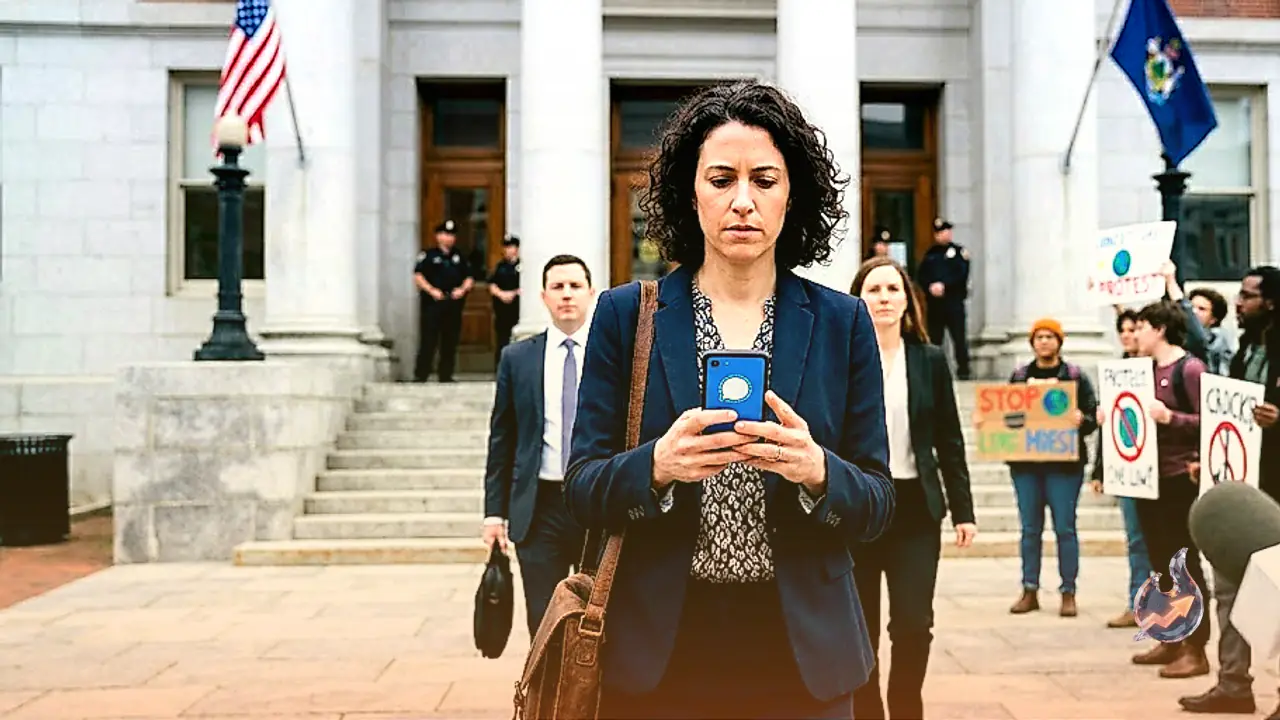






















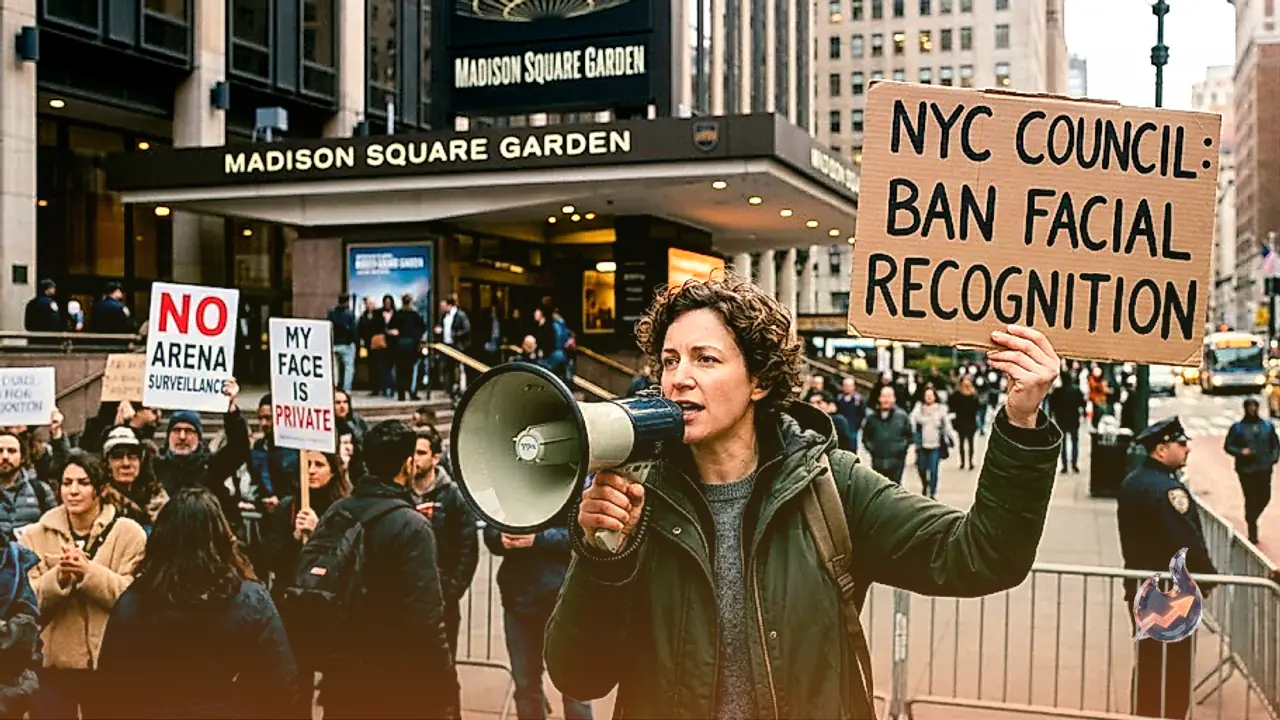

Momentum is building in New York City to prohibit major sports arenas and entertainment venues from using automated facial recognition systems on patrons. City Council member Shahana Hanif led a public demonstration opposing biometric scanning practices, specifically calling out Madison Square Garden and its CEO, James Dolan. The legislative push has now crossed a critical threshold, securing formal backing from a majority of the city's lawmakers.
Mounting Legislative Pressure to Ban Biometric Scanning
The campaign centers on a bill introduced in January by Shahana Hanif, which seeks to outlaw biometric recognition technology across public assembly venues in New York City. Opponents of arena surveillance gathered at a Friday rally to highlight concerns over automated tracking. The demonstration brought together a broad coalition of advocates, including Brooklyn country musician Paisley Fields, representatives from the democratic-socialist group NYC DSA Tech Action, and members of the digital rights organization Fight for the Future. The proposed legislation has now gathered 27 co-sponsors within the 51-member City Council, representing more than half of the legislative body. Lawmakers are currently in discussions with speaker Julie Menin to advance the measure toward a full council vote.
Tracking Spectators and Legal Opponents at Madison Square Garden
Madison Square Garden has come under intense scrutiny for its extensive biometric data collection operations. Arena security systems cross-reference attendees against internal watchlists, where fans critical of venue management or the New York Knicks basketball franchise can find their faces indexed in a central database. In one documented incident, security personnel continuously tracked a fan throughout a Knicks game down to the minute, documenting their movements, interactions with others, dining habits, and exact seating location. Furthermore, venue management enacted a policy prohibiting hundreds of attorneys involved in active litigation against Dolan or his corporate entities from entering Dolan-owned properties. This enforcement extended to blocking a mother from attending a show with her daughter at Radio City Music Hall.
Risk Scores and Profile Dossiers on High-Profile Visitors
Concerns surrounding arena security operations deepened following revelations regarding the scope of internal monitoring. In July, details surfaced showing that Madison Square Garden maintains a database assigning risk scores to approximately 400 celebrities and VIP guests. These dossiers catalog personal attributes of attendees, including details regarding their race and sexual orientation. Following the public exposure of these records later that month, Madison Square Garden management filed a defamation lawsuit regarding the disclosures. Addressing the opposition to facial tracking, an MSG spokesperson stated, "People have been recognizing each other’s faces since the beginning of time, we just do it electronically."
Civil Liberties Concerns and Public Safety Risks
Lawmakers and civil rights advocates argue that widespread biometric scanning creates severe risks for public privacy and civil liberties. Reflecting on her background as a Muslim growing up in post-9/11 New York, Hanif noted that surveillance is not a novel concept to her community, yet average sports fans and concertgoers remain largely unaware of the extensive tracking they encounter when attending events at Madison Square Garden or affiliated facilities. Hanif voiced further apprehension over data collection managed by Dolan, citing his longstanding relationship with President Donald Trump. Emphasizing the broader implications for city residents, Hanif stated, "New Yorkers need to understand, right now, between AI and all these tools that are being sold to us as being for … our city’s safety, are actually making us less safe."