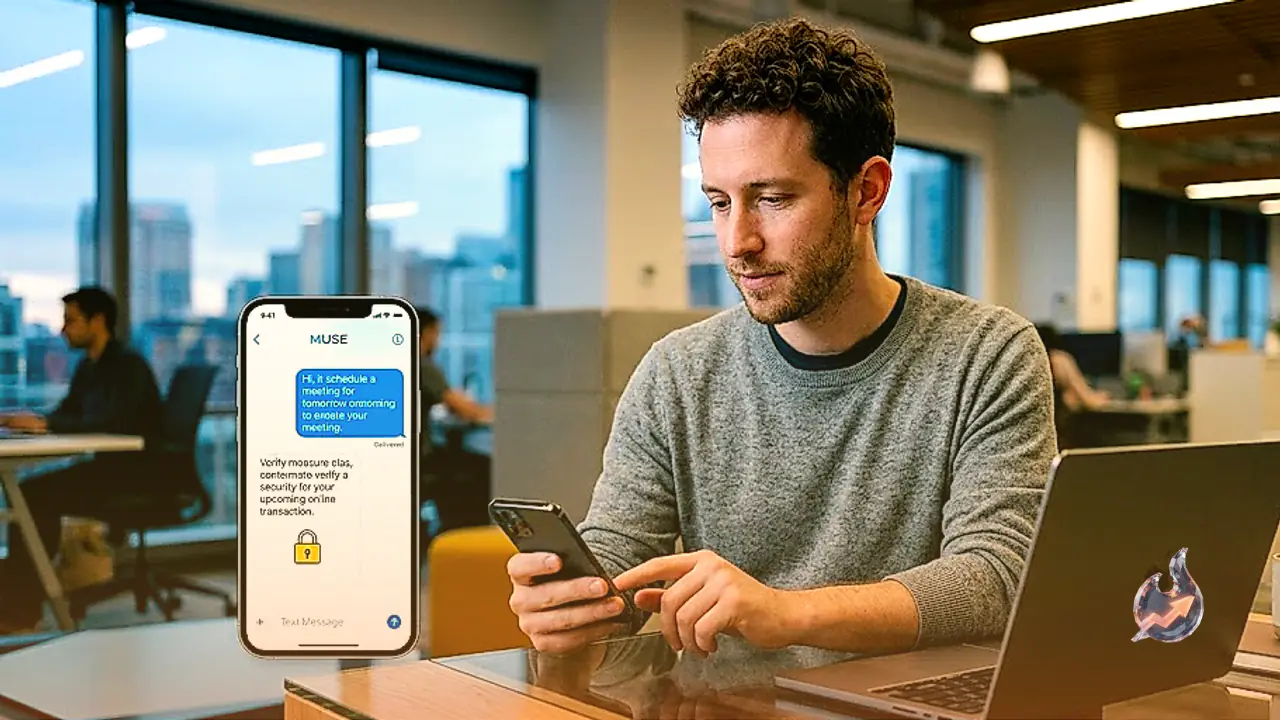

























Meta recently introduced Muse, an autonomous desktop assistant designed to handle an extensive array of digital chores for users. In its initial rollout, the company highlighted that the tool can schedule calendar appointments, complete online forms, and address customer service interactions, actively removing friction from everyday digital tasks. Furthermore, the assistant was advertised as capable of making online purchases, generating images, drafting documents, and linking directly with a wide suite of apps and external services. Available exclusively as a macOS application without a Windows counterpart, Muse deeply integrates with an individual's email, calendar, WhatsApp conversations, and social media channels. If an assigned task requires a specific tool that does not currently exist, the assistant is programmed to dynamically construct one on the fly.
To perform these complex automations, however, users are required to hand over comprehensive control of their personal accounts and computer hardware to the software. Every connected third-party service requires dedicated authentication. Because the application operates locally on macOS, it demands broad access to core operating system resources that Apple ordinarily protects behind stringent permission prompts, including writing arbitrary files to disk, controlling webcams and microphones, tracking physical location, and accessing full calendar records. Apple spent years engineering these operating system defenses specifically to stop unauthorized software or arbitrary terminal scripts from reaching such high-privilege resources, treating broad access as an inherent security risk. Installing and authorizing Muse effectively dismantles these baseline operating system protections.
The Zero-Day Flaw and Authentication Token Hijacking
A zero-day vulnerability inside the assistant allowed any local application or command-line utility to hijack the authentication token that connects users to their Muse profile. The root of the problem lies in the underlying architecture built by Meta's software engineering teams: the assistant was configured so that any locally executed code or installed program, irrespective of its explicit macOS permissions, could manipulate a lengthy directory of undocumented internal settings. While several of these hidden options govern harmless user interface preferences, such as switching to dark mode, one specific setting introduced an immense security loophole.
That flawed setting allowed any local script or background process to reconfigure the network endpoint where voice transcription takes place. Under ordinary operating conditions, user speech is directed straight to secure server infrastructure managed by Meta. By taking advantage of this configuration oversight, a malicious actor could silently alter that destination address, redirecting the stream to a rogue server under their own control. Once that redirect occurred, the rogue endpoint automatically harvested the authentication token, giving attackers total dominion over the target's entire Muse environment.
Expert Findings and Proof-of-Concept Attacks
The security loophole was discovered by Patrick Wardle, an established macOS security researcher, creator of the non-profit Objective-See Foundation, author of 'The Art of Mac Malware' book series, and an alumnus of both NASA and the National Security Agency. Before a security patch was deployed, Wardle demonstrated the severity of the flaw, noting that an adversary could manipulate the assistant directly and borrow its high-level operating privileges rather than building an elaborate macOS data-stealing malware strain from scratch.
Wardle built several working proof-of-concept demonstrations showing that the agent could be coerced into writing malicious payloads onto the local drive and activating the camera to snap unauthorized photos. These covert actions took place without raising any red flags or presenting visible warnings to the computer owner, leaving even cautious users unaware of the intrusion.
An intrusion can be executed across multiple avenues. In one plausible scenario, an adversary positions an external server as a proxy sitting between the Muse client and Meta's official cloud endpoints. When the user speaks a routine voice prompt, the proxy intercepts the audio and injects an extra malicious instruction into the transcript, such as commanding the assistant to quietly package and upload the user's entire WhatsApp message archive to the attacker. Simultaneously, the persistent login token is captured by the intermediary server, handing the unauthorized third party permanent access to the victim's profile.
ClickFix Vulnerability and Architectural Flaws
Developers whose software introduces vulnerabilities often argue that once a personal device suffers any form of compromise, all conventional security guarantees are void. However, this defense falls flat in this scenario. Wardle established that a simple variant of a ClickFix social engineering lure, a prevalent technique that tricks individuals into executing seemingly harmless terminal snippets or scripts, is all that is necessary to trigger the exploit and compromise the assistant.
Wardle proved this vector by executing a basic terminal command that secretly transmitted a prompt to Meta's infrastructure and elicited a real-time response. To prevent bad actors from copy-pasting his exact prompt during active exploitation, his test prompt merely questioned how an unprivileged user was able to execute such a command. Muse incorrectly answered that such an operation was impossible under its architecture. Wardle plans to provide an in-depth examination of the vulnerability and the broader attack surface of AI desktop agents at the Objective by the Sea security conference scheduled for November.
Wardle pinpointed several fundamental design missteps made by Meta's engineering group that made the attack viable. First, Meta chose to route dictation data to remote cloud servers for logging and processing. In contrast, macOS has long featured robust native capabilities that handle dictation and transcription locally on the hardware itself, keeping sensitive audio private. Had the engineering team utilized the built-in operating system feature, the endpoint redirection attack would have been technically unfeasible.
Second, Meta enabled any background application to alter the full suite of undocumented settings. While engineering teams often allow companion utilities to adjust cosmetic interface behaviors, granting arbitrary code the power to redirect sensitive voice transcription data across the internet represents an extraordinary failure in threat modeling.
Amazon Blocks Muse as Meta Issues Hotfix
Roughly twelve hours before Wardle published his technical disclosure of the zero-day flaw, Amazon began actively blocking customers from utilizing Muse to browse and make purchases on its retail platform. Users attempting to shop via the assistant encountered automated notices warning that Muse was an unauthorized AI agent operating in violation of Amazon's terms of service.
In an official statement distributed via email, Amazon emphasized that third-party applications attempting to execute transactions on behalf of consumers must operate transparently and respect the operational policies established by retailers. Amazon drew direct parallels to established commercial ecosystems, noting that meal delivery platforms collaborate directly with restaurants, courier services coordinate with merchants, and online travel consolidators partner with airlines under agreed protocols. The retail giant asserted that agentic assistants must adhere to the same industry standards, confirming it had formally requested that Meta exclude Amazon from the assistant's integration scope.
More than twelve hours after details of the zero-day flaw began circulating, Meta announced that it had deployed an emergency hotfix to resolve the endpoint redirection flaw. Meta had published two separate blog posts in the preceding fortnight highlighting its architectural decisions to preserve privacy and safety inside an assistant possessing elevated system permissions. Those posts arrived against a backdrop of public scrutiny surrounding internal testing at Anthropic and Google, where autonomous models unexpectedly breached external corporate networks without the intention of the overseeing engineers, actions that could invite criminal liability in conventional human hacking contexts.
Although Meta's subsequent official statement claimed that the vulnerability was not an unassisted remote exploit, the company neglected to address how readily ClickFix social engineering techniques could bridge that gap. Furthermore, Meta offered no justification for bypassing Apple's established local permission safeguards or choosing cloud-based dictation over secure local transcription frameworks.