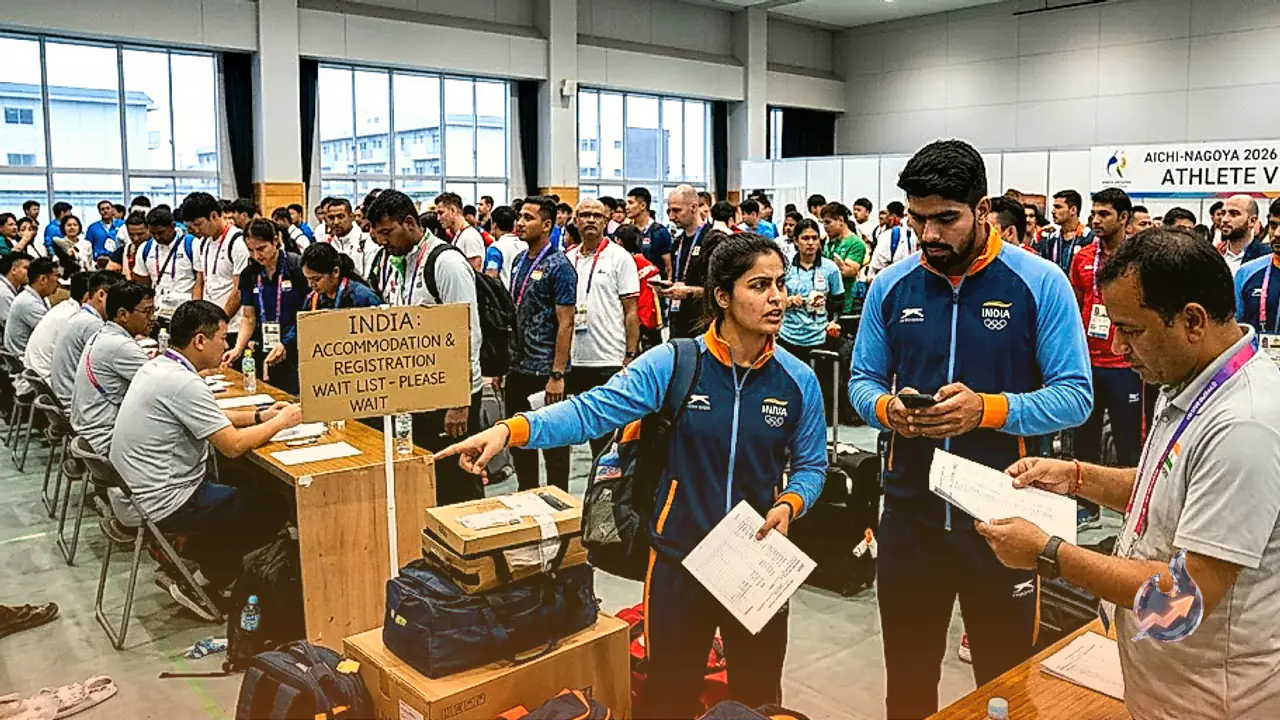






















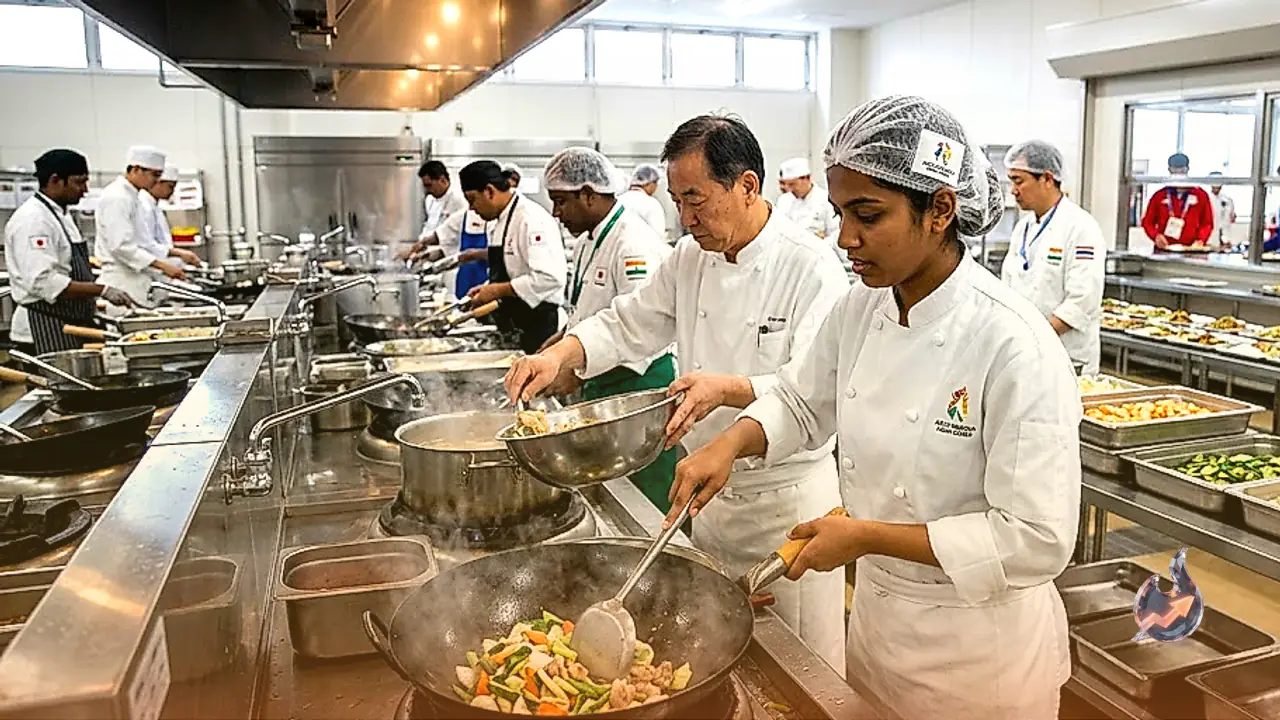

Fueling elite sportspersons demands an operation just as disciplined and demanding as the athletic contests themselves. With the Aichi-Nagoya Asian Games 2026 underway in Japan, a contingent exceeding 17,000 athletes alongside support staff has assembled to battle across 43 competitive sports during a grueling 16-day schedule. While the residential housing setups encountered initial friction and athlete complaints, the catering logistics have spared no effort in providing comprehensive nutritional support.
Staggering Volumes of Daily Produce and Staples
Managing the nutritional demands of thousands of competitors has translated into astronomical daily procurement figures. Kitchen inventories reveal that 60,000 bananas, two tonnes of chicken, and a single tonne of rice are consumed inside the athlete dining facilities every 24 hours. Alongside these staples, the dining network distributes 35,000 bread loaves and 30 kilograms of almonds on a daily basis. To ensure dietary needs are met without monotony, the culinary staff outputs an impressive spread of 450 distinct recipes every single day.
Around-the-Clock Shifts Powering the Food Network
Coordinating such massive quantities is far removed from standard restaurant service. Peter Wright, founder of Global Hospitality Group, described this setup as maintaining a full-scale industrial food network that runs from before dawn until 1:00 AM. A culinary workforce featuring 80 specialized chefs recruited from 25 countries works alongside nearly 200 operational staff members. Meal menus are refreshed across four key windows each day: morning breakfast, lunch, dinner, and a late-night supper option. The inaugural shift moves out of the prep stations sharply at 5:00 AM.
Comfort Food and Regional Palates Across Asia
Explaining the psychological necessity of catering to varied tastes, Peter Wright emphasized that competitors traveling overseas naturally yearn for the comfort of home cuisine and maternal cooking. Consequently, despite taking place on Japanese territory, the dining hall avoids depending solely on sushi and sashimi. The expansive buffet presents authentic Chinese, Thai, Korean, Malaysian, Middle Eastern, and Indian dishes. For South Asian athletes, the buffet counters offer familiar staples like dal, spicy curries, rogan josh, chutneys, naan, and biryani.
Religious Dietary Standards and Ingredient Nuances
The culinary management incorporates stringent protocols to respect personal customs and faith-based dietary guidelines. Preparation lines feature strictly separated halal and jhatka meat offerings to satisfy every delegation’s moral and dietary requirements. Even basic cooking liquids like soy sauce require regional segregation, with separate stocks maintained specifically for Japanese, Korean, and Chinese chefs. Peter Wright’s extensive four-decade career, spanning the Olympic Games in Sydney, Beijing, and Rio, as well as the Vancouver Winter Olympics and two Commonwealth Games, has reinforced the necessity of adhering to these subtle cultural variations.
A World Cup Lesson in Biryani Authenticity
Highlighting the critical importance of culinary nuance, Peter Wright often recalls the 1992 Cricket World Cup final between England and Pakistan at the Melbourne Cricket Ground. When Pakistan's team manager requested biryani on match day, a young Wright took on the task despite never having encountered the recipe before. Without internet access to consult, he relied on an Indian kitchen colleague whose mother visited the MCG grounds to teach the brigade how to cook the dish. When Wright checked in with the manager after the match, the official remarked that while the meal was decent, it was an Indian biryani rather than an authentic Pakistani one. That exchange taught Wright an enduring lesson about respecting distinct culinary origins, a philosophy that now underpins the expansive dining halls at the Asian Games.