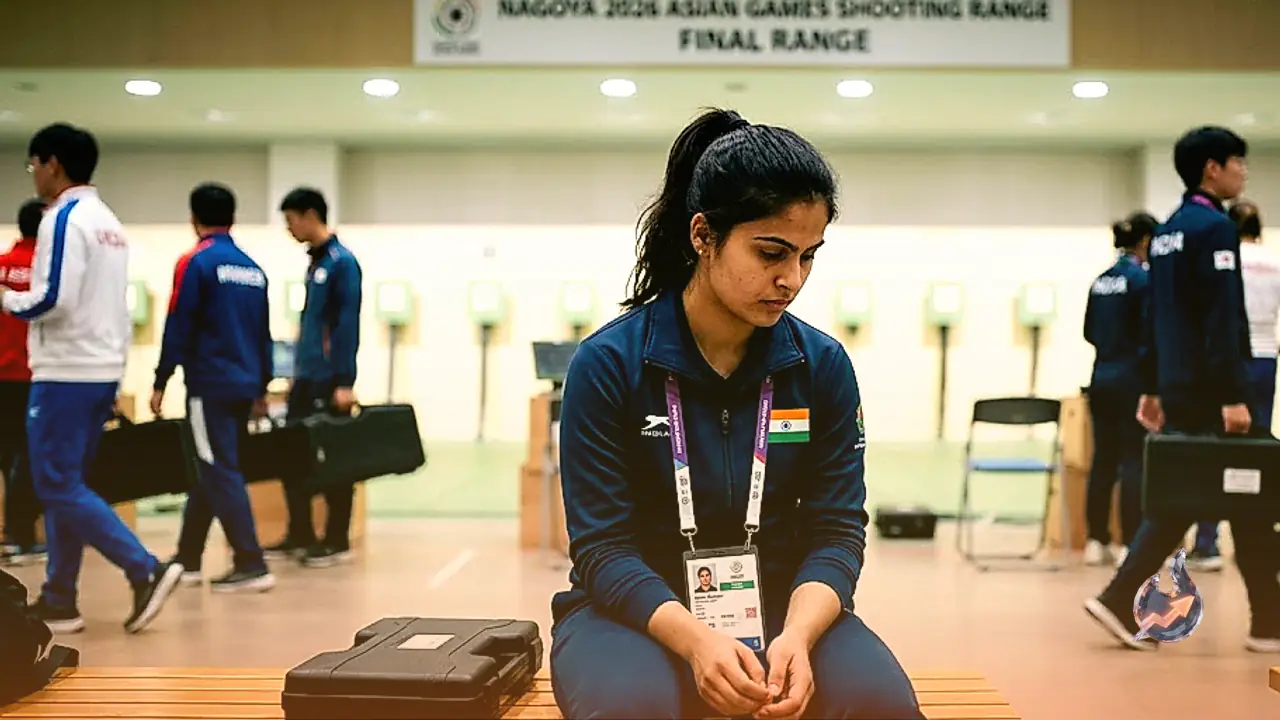




















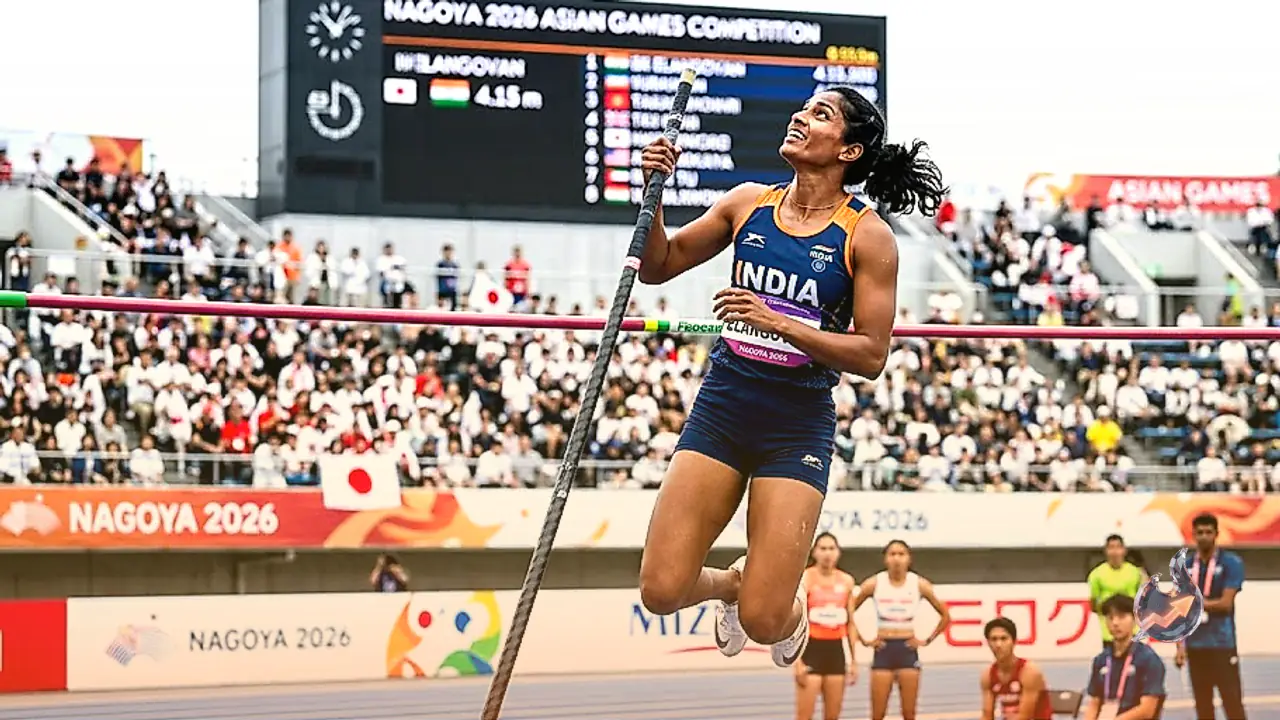

A historic milestone was scripted at the Asian Games track and field competitions in Nagoya, Japan, as 29-year-old athlete Baranica Elangovan secured a breakthrough bronze medal for India in the women's pole vault final. Hailing from Mayiladuthurai in Tamil Nadu, Baranica delivered a clean clearance of 4.15 meters on the continental stage, marking the first time any Indian athlete, across both men's and women's divisions, has earned an Asian Games medal in this technical discipline. During the intense final, Baranica and Russian vaulter Polina Ivanova both successfully negotiated the bar at 4.15 meters before subsequently faltering at the 4.25-meter standard. Under the official countback regulations, both athletes were jointly awarded the bronze medal.
Roots in Track and Transition to the Pole
Born on February 3, 1997, Baranica did not start her athletics journey in pole vaulting. When she initially moved from her hometown of Mayiladuthurai to Chennai for higher collegiate studies, she dedicated her athletic energies to horizontal leaps, competing in long jump and triple jump events. Weighing a mere 42 kilograms during those early college days, she was self-conscious about her frail frame and doubted whether she possessed the physical strength required to sprint down a runway while carrying a fiberglass pole. The sheer physics and upper-body demands of the discipline initially made it seem entirely out of reach.
Her athletic path took a decisive turn in 2016 when the physical education director at Ethiraj College noticed her raw physical potential and introduced her to coach Milber Bertrand Russell. Watching fellow collegiate competitors launch themselves over towering crossbars ignited a fresh curiosity within her. Inspired by the aerial freedom of the discipline, she decided to transition away from horizontal jumps and master the pole vault. Given the intricate mechanics and explosive demands of the sport, she spent considerable time conditioning her physique, building core strength, and absorbing the technical nuances of the run-up, plant, and bar clearance.
The Devastating Knee Injury and Road to Recovery
Just as her career was beginning to take flight, a severe catastrophe struck in 2019 during a training routine. A faulty landing mat caused her to miss the cushioned area completely and plunge directly into the metallic pole-vault planting box. The impact resulted in torn anterior cruciate ligament (ACL) and meniscus tissue in her left knee. Because her left leg was her designated take-off limb, the traumatic injury posed an existential threat to her competitive career. She was forced to undergo surgical repair followed by an arduous, prolonged period of rehabilitation.
Returning to elite performance after the surgery was fraught with immense challenges. Hindered by a lack of specialized sports care and state-of-the-art rehab infrastructure at the time, she lived with chronic physical pain for years. Her physical strength was compromised to such an extent that she could only manage alternate-day training sessions. Nevertheless, Baranica persisted through the agonizing setbacks, managing her recovery protocols meticulously and gradually regaining functional mobility and confidence on the runway.
Relocation to Odisha and Technical Renaissance
In search of professional infrastructure to revive her career, Baranica made the strategic choice to shift her training base from Tamil Nadu to Odisha in 2023. Gaining access to the high-performance training environment at the Kalinga Stadium in Bhubaneswar provided the catalyst she desperately needed. Despite having collected three national outdoor championship titles, she endured a painful no-mark result at the 2023 Asian Championships. Rather than letting the setback derail her ambitions, she used it as motivation to reconstruct her technique, setting the foundation for an explosive 2026 outdoor and indoor campaign.
Record-Breaking Spree Across the 2026 Season
The 2026 domestic season witnessed Baranica emerge in peak competitive form, rewriting the record books multiple times. In March 2026, competing at the Indian Open Jumps event in Bengaluru, she took gold with a leap of 4.10 meters, successfully breaching the Asian Games qualification benchmark. Barely days later, during the inaugural National Indoor Athletics Championships held in Bhubaneswar, she soared over 4.22 meters to erase Rosy Meena Paulraj's earlier national record of 4.21 meters.
Five weeks later, on May 3, she returned to the runway in Bhubaneswar for the Indian Indoor Open Combined Events and Pole Vault competition. There, on her third attempt, she cleared 4.23 meters to eclipse her own freshly established national mark. Her closest competitors in that event, Nitika Anoop Akare and Blessy Kunjumon, both finished far behind at 3.90 meters as Baranica sealed gold. She followed this up in June with a second-place finish at the National Inter-State Senior Athletics Championships, clearing 4.20 meters.
Podium Glory Under Pressure in Nagoya
Entering the Asian Games in Nagoya with a personal best of 4.23 meters, Baranica had spent the entire competitive year in a tight domestic rivalry with her training partner and fellow finalist, Sindhushree Ganesha. That internal competition helped both athletes push their performance limits. In the high-stakes final in Nagoya, Sindhushree bowed out early following three consecutive failed clearances. Baranica, however, handled the pressure with composure, securing the clearance at 4.15 meters to guarantee herself a spot on the continental podium and deliver a milestone achievement for Indian athletics.