



















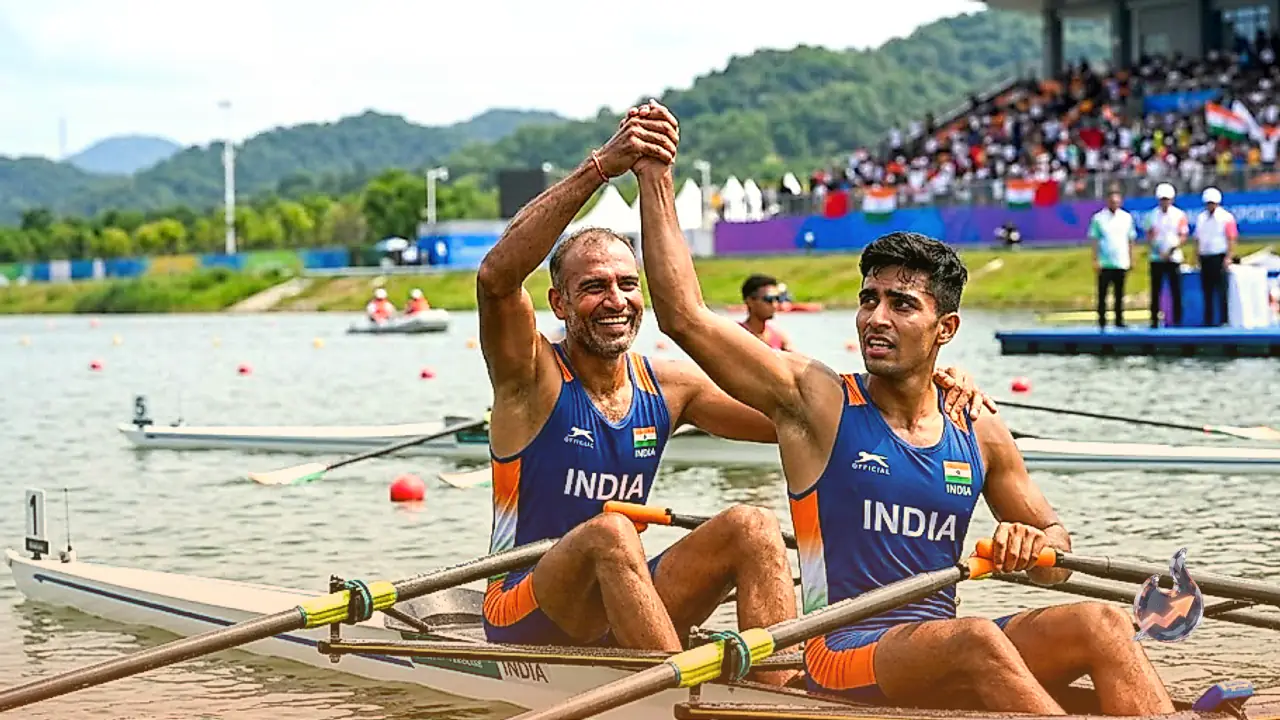

It is widely presumed that water sports require athletes to be completely at ease in the aquatic element, but Indian rower Salman Khan completely shattered that notion on the continental stage. Salman cannot swim and harbors a lingering fear of water, yet he joined forces with seasoned rower Satnam Singh to secure a historic bronze medal in the men's double sculls at the Asian Games. The spectacle of a competitor terrified of water dominating its surface is extraordinary in itself, made all the more staggering by the fact that the two rowers were paired up a mere five days before the final.
Historic Race on the Nagaragawa Water Course
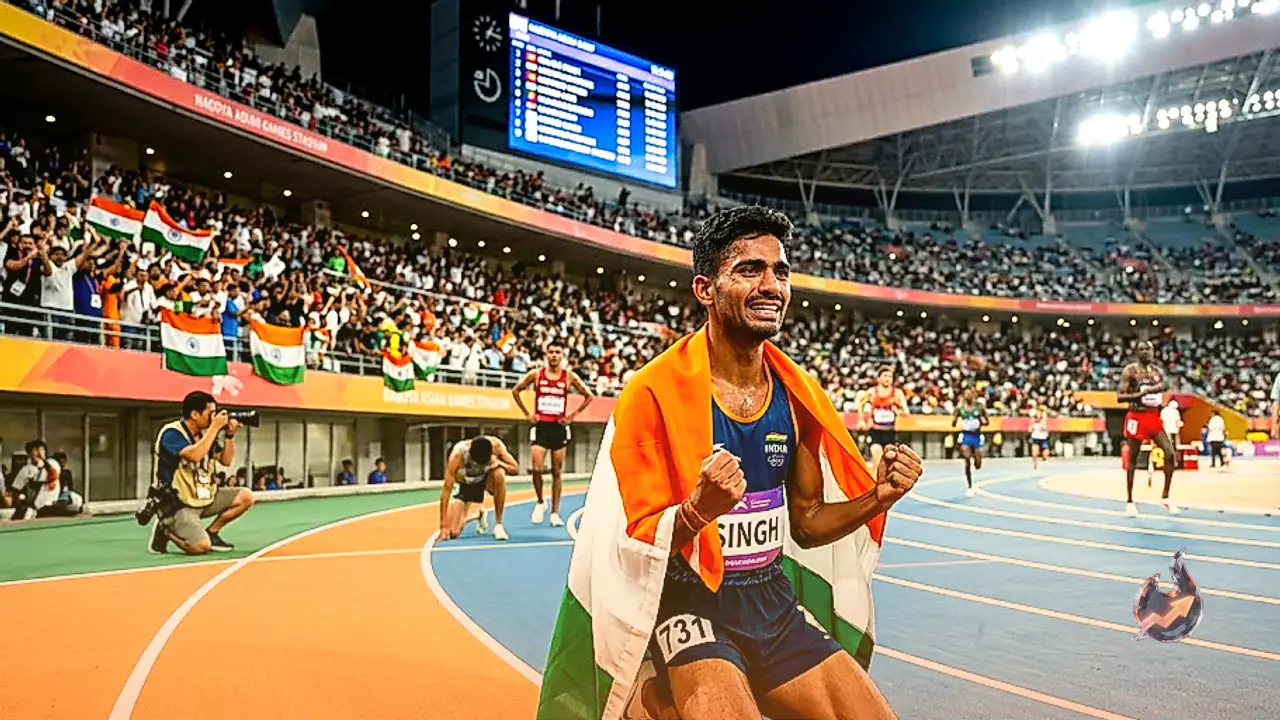
Competing on the waters of the Nagaragawa course in Japan, the newly forged Indian crew showcased tremendous poise, rhythm, and grit. Salman Khan and Satnam Singh clocked a time of 6:13.25 to cross the finish line in third position and secure the bronze medal. The Indian duo finished just 3.48 seconds behind the gold-winning Chinese crew and trailed the silver medalists from Uzbekistan by 2.76 seconds. This performance marked India's first ever medal in the men's double sculls event since rowing was introduced to the Asian Games program in 1982.
The race dynamic kept spectators on edge from the start. Throughout the 2000-meter course, the Indian pair mounted a formidable challenge and held onto second place through the 1500-meter mark, appearing firmly on track to capture silver. However, over the grueling final 500 meters, the Uzbek boat launched a blistering surge to push ahead, relegating the Indian crew to third place. Despite missing out on silver by the narrowest of margins, the bronze stood as a monumental breakthrough for Indian rowing.
From Driving Cabs in Delhi to Joining the Indian Armed Forces
Salman Khan's journey to the international podium was paved with severe economic hardship and personal tragedy. Long before picking up an oar, he navigated the chaotic streets of Delhi behind the wheel of a taxi. Following the sudden death of his father, the family was left without its primary breadwinner. Faced with the daunting task of supporting six children, consisting of four brothers and two sisters, a seventeen or eighteen-year-old Salman stepped forward to shoulder the entire household burden alone.
To keep the family afloat, Salman drove cabs for ride-hailing services like Ola and Uber, while taking on any other odd job that came his way. Observing his robust physical frame, relatives and neighbors repeatedly urged him to attempt recruitment into the armed forces. His initial attempt ended in heartbreak, leaving him disheartened to the point where he told his family he would abandon that ambition and stick strictly to driving commercial vehicles. Nevertheless, he mustered the courage to try a second time, cleared the examination, and enlisted. Once inside the military, his superior physical conditioning prompted instructors to draft him into sports training, even though rowing was an athletic discipline he had never requested or envisioned for himself.
The Trauma of Early Accidents and Water Phobia
Entering the sport of rowing brought an unexpected psychological barrier to the forefront. During the early days of his training, Salman was involved in an accident where his boat capsized. The terrifying ordeal left an indelible psychological scar, instilling an intense dread of water that he never completely shook off. Even today, Salman does not know how to swim. Despite this persistent fear, the rigorous discipline instilled by the army enabled him to confront the water day after day, channelling his anxiety into explosive physical effort on the water.
Satnam Singh's Pedigree and a Chaotic Five-Day Turnaround
At the other end of the boat sat Satnam Singh, an athlete hailing from Punjab who originally competed at the national level in handball. His transition to rowing occurred when Olympian Swarn Singh Virk, who had clinched gold in the lightweight double sculls at the 2018 Jakarta Games, spotted his natural talent and took him under his wing. Satnam built on that foundation to claim a bronze medal in the quadruple sculls event at the 2023 Hangzhou Asian Games.
However, the road to the podium in Nagoya was disrupted by sudden administrative chaos. An eleventh-hour crew reshuffle completely unraveled months of meticulous preparation, which Satnam described as creating an atmosphere of deep frustration and deflation across the training camp. Two rowers who lacked shared technical chemistry or combined training mileage were abruptly handed oars and instructed to produce an international-standard performance within five days. Blending their stroke profiles and cadence under such intense time constraints seemed improbable, yet the duo synchronized their efforts to mount an unforgettable podium finish.
Morning Prayers and Emotional Scenes at Home
While the duo battled on the waters in Japan, Salman's household back in India endured an agonizing vigil. His mother, Zabrun Nisha, spent multiple sleepless nights anticipating the race. On the morning of the final, the family gathered around four in the morning to offer prayers for his success. Relief and jubilation arrived shortly after five in the morning as news of the bronze medal reached them.
Zabrun Nisha later reflected that the joy went far beyond their immediate home, extending to neighbors, their village, and the entire nation, celebrating a son who had brought pride to India. Behind the celebratory images of two athletes smiling with medals around their necks lies a story of grueling sacrifices, financial distress overcome behind the steering wheel of a taxi, and the steadfast faith of a family.