



















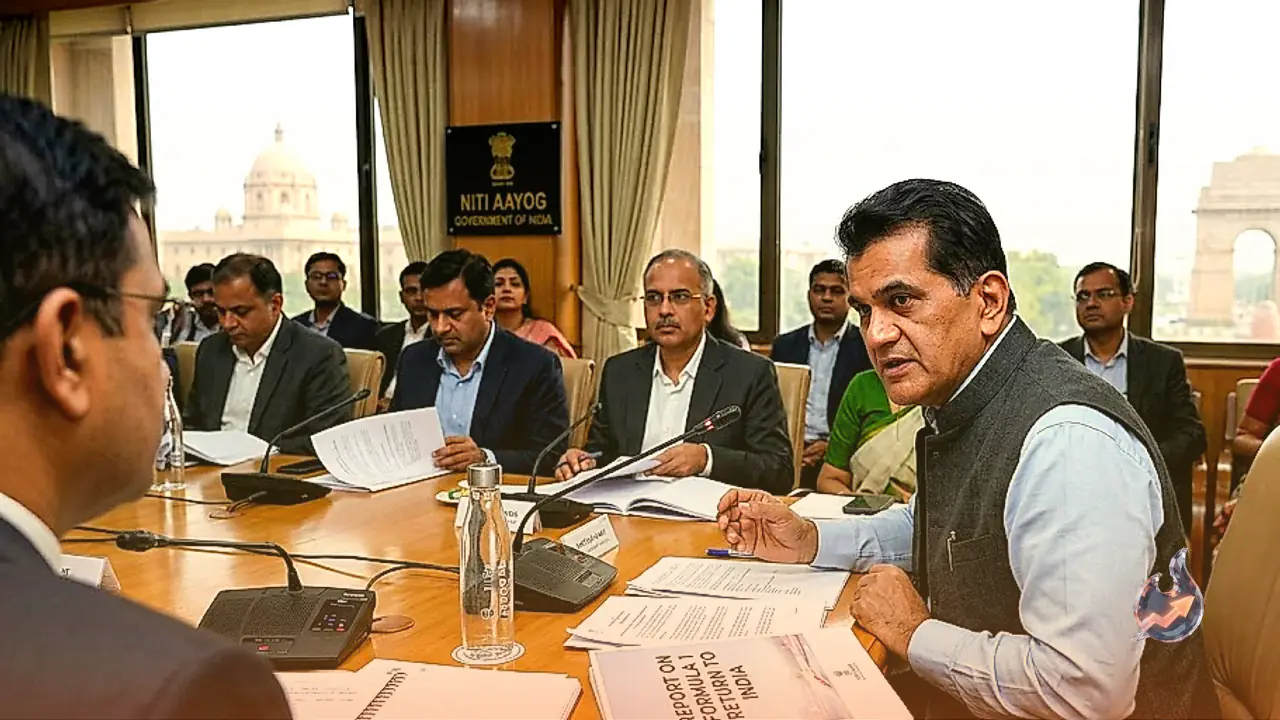

Motorsport enthusiasts across the country have received a significant boost as concrete official steps begin toward reviving elite car racing on domestic tracks. The central government has constituted a specialized task force dedicated to exploring the revival of Formula 1 and broader motor sports in India. The primary directive of this initiative centers on assessing the feasibility of hosting a Grand Prix by the year 2028 while introducing necessary structural modifications.
Ten-Member Panel Headed by NITI Aayog
The newly established task force will operate under the leadership of NITI Aayog, comprising approximately 10 members. Yugal Kishore Joshi has been entrusted with directing this team. Beyond examining event logistics, the panel is tasked with reviewing the entire motor sports ecosystem in the country. The group will analyze what changes must be implemented to reinstate international racing standards and accommodate high-profile events seamlessly.
Resolving Taxation Hurdles and Policy Frameworks
Navigating historical tax challenges and regulatory blockades represents the primary test for the committee. The task force is mandated to evaluate existing fiscal conflicts, discover workable resolutions for taxation disputes, and build an actionable roadmap enabling Formula 1 to return. To verify the overall viability of staging a 2028 Grand Prix, the team will integrate expertise from the Ministry of Youth Affairs and Sports, the Ministry of Commerce and Industry, and the Ministry of Tourism, alongside veteran motor sports consultants.
Buddh International Circuit Legacy and Early Departures
The last time India hosted an official Formula 1 contest was on October 27, 2013, at the Buddh International Circuit situated in Greater Noida. The country witnessed a total of three Grand Prix editions across 2011, 2012, and 2013, with champion driver Sebastian Vettel capturing victory in all three races. Following that initial three-year run, top-flight international motor racing exited the country due to mounting logistical and financial conflicts.
Impact of Entertainment Tax and Operational Burdens
The departure of Formula 1 from Indian shores was heavily influenced by contentious fiscal classifications. At the time, the Uttar Pradesh government categorized the racing event as entertainment rather than an athletic sport, subjecting the organizers to substantial entertainment tax levies. Cumulative burdens such as steep customs duties, regulatory license fees, and limited state-level backing significantly increased financial pressure on the promoters. Nearly 15 years later, this fresh inter-ministerial push signals renewed optimism for seeing elite racing machines return to compete on an Indian race circuit.