

















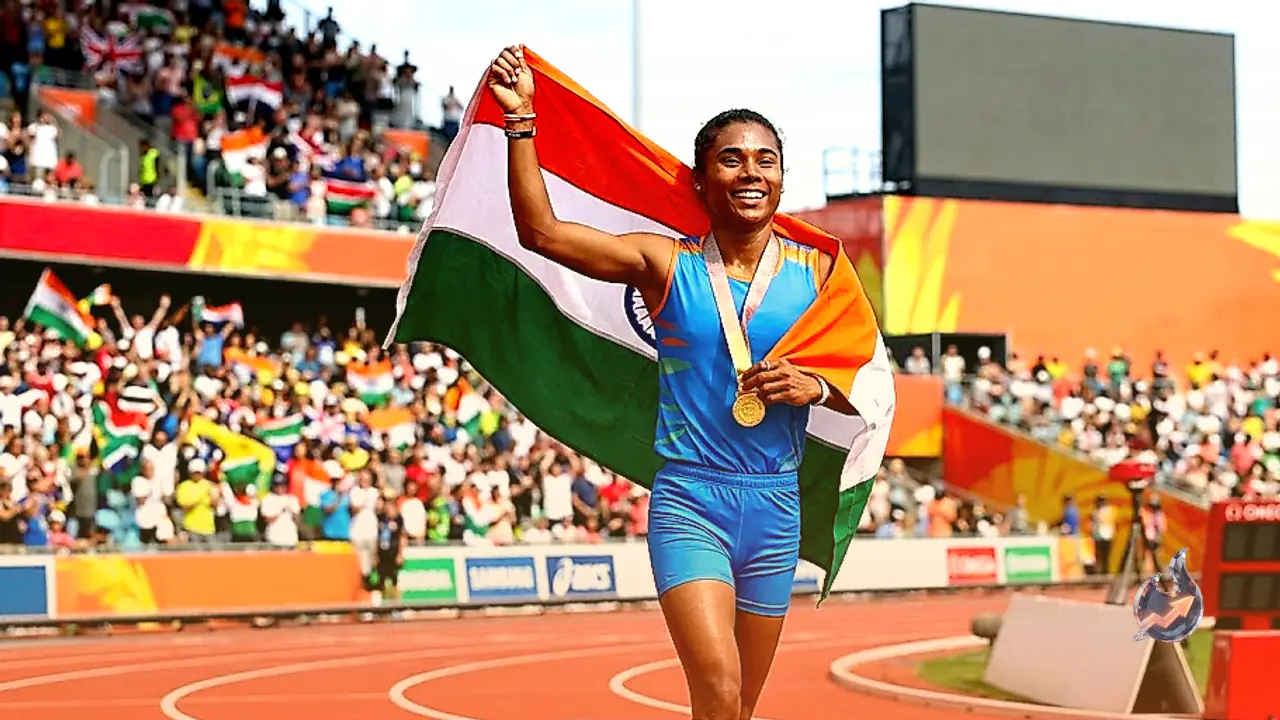

Whenever major multi-sporting events take place on the international stage, the enthusiasm among global sports fans reaches a fever pitch. From living room televisions to office desktop screens, viewers find participating fully in the electric atmosphere. The ongoing Commonwealth Games have similarly grabbed the attention of sports enthusiasts worldwide. Featuring a diverse range of athletic disciplines including athletics, swimming, gymnastics, wrestling, javelin throw, cycling, and judo, the tournament offers high-octane sports entertainment. When discussing mega-sporting spectacles, the Olympic Games and the Asian Games usually dominate conversations. However, the Commonwealth Games stand out as another prestigious international tournament where elite athletes gather to compete for national glory. Indian competitors participate with formidable energy, routinely claiming numerous podium finishes. Understanding what the Commonwealth Games represent, how they earned their name, and how they differ from the Olympics and Asian Games provides valuable insight into the global sporting landscape.
Origins and Historical Context of the Commonwealth Games
The Commonwealth Games represent an international multi-sport competition with a unique organizational backdrop. The fundamental distinguishing factor of this tournament lies in its entry criteria. Historically, participation is restricted to nations and territories that were once part of the British Empire. As these colonies gradually attained independence from British rule, they established a voluntary association aimed at fostering mutual peace, international cooperation, and cultural exchanges. This international coalition was named the Commonwealth of Nations.
Given that all member territories shared a historical connection to British governance, the initial multi-sport event organized among them was christened the British Empire Games. Over subsequent decades, as political structures evolved and member nations asserted their sovereign identities, the event was officially rebranded as the Commonwealth Games. In contemporary editions, the tournament features up to 74 participating nations and territories. Interestingly, the roster includes a few nations that were never directly colonized by Britain but chose to join the Commonwealth network. In terms of overall scale and prestige, the Commonwealth Games are widely regarded as the second-largest multi-sport gathering in the world, trailing only the Olympic Games. Much like the Olympics, the Commonwealth Games take place on a quadrennial schedule, recurring every four years.
Comparative Analysis: Commonwealth Games vs Olympics vs Asian Games
While the Olympic Games, Commonwealth Games, and Asian Games are all celebrated as pinnacle sporting festivals, significant distinctions define their competitive scope, geographical boundaries, and participant volumes.
The Olympic Games represent the world's largest and most prestigious multi-sport competition. Modern Olympic Games officially commenced in 1896, although their historical roots extend nearly 3,000 years back to ancient Greek civilization. The Olympics welcome virtually every sovereign nation on the globe, boasting a participant list of over 200 countries. Bringing together the world's finest athletes across all sports, Olympic competition represents the ultimate benchmark of global athletic excellence.
In contrast, the Commonwealth Games are not open to all global nations. Participation is strictly limited to member states of the Commonwealth network, such as India, Australia, England, Pakistan, and Canada. In modern iterations, up to 74 nations and territories compete. Consequently, both the athlete count and the total number of sporting events are smaller than those found at the Olympics.
Meanwhile, the Asian Games, often referred to as Asiad, are geographically restricted to member nations located on the Asian continent. Governed by the Olympic Council of Asia, the tournament features 45 recognized member nations. The competition includes South Asian representatives like India and its neighbors, Middle Eastern countries such as Iraq, Iran, and Syria, as well as East and Southeast Asian powerhouses including Singapore, Malaysia, Korea, China, and Japan.
India's Dominance and 500-Plus Medal Tally at the Commonwealth Games
Throughout India's sporting history, the Commonwealth Games have proven to be one of the country's most successful competitive arenas. Because the intensity of field competition at the Commonwealth Games is generally less overwhelming than at the Olympics, Indian athletes consistently deliver world-class performances. Over the history of the Commonwealth Games, Indian contenders have accumulated more than 500 total medals, spanning gold, silver, and bronze.
India's athletic dominance is particularly pronounced in specific disciplines, most notably shooting, badminton, weightlifting, boxing, and wrestling. In these events, Indian athletes regularly sweep podium spots and secure top positions on the medal tally. This sustained success has played a pivotal role in strengthening India's domestic sports infrastructure and inspiring younger generations of athletes.
Historic 100-Medal Asian Games Milestone and the Olympic Battleground
In the Asian Games, India's trajectory has also witnessed remarkable growth in recent years. During recent editions of the Asiad, India achieved a historic breakthrough by surpassing the 100-medal mark for the first time in its history. Strong showings in athletics and shooting, coupled with stellar performances by flagship stars like javelin thrower Neeraj Chopra, have established India as a dominant force within Asian athletics.
Conversely, India's journey at the Olympic Games has historically been a story of grit and uphill struggle. Apart from India's legendary dominance in field hockey, securing podium finishes in individual Olympic events has required immense exertion. However, recent Olympic editions have signaled a transformative shift. Celebrated athletes such as Neeraj Chopra, P.V. Sindhu, Mirabai Chanu, and Manu Bhaker have etched their names in history by capturing Olympic gold and other medals. Nevertheless, when evaluated by overall medal counts, India's historical Olympic record remains considerably behind its impressive achievements at the Commonwealth Games and the Asian Games.