


















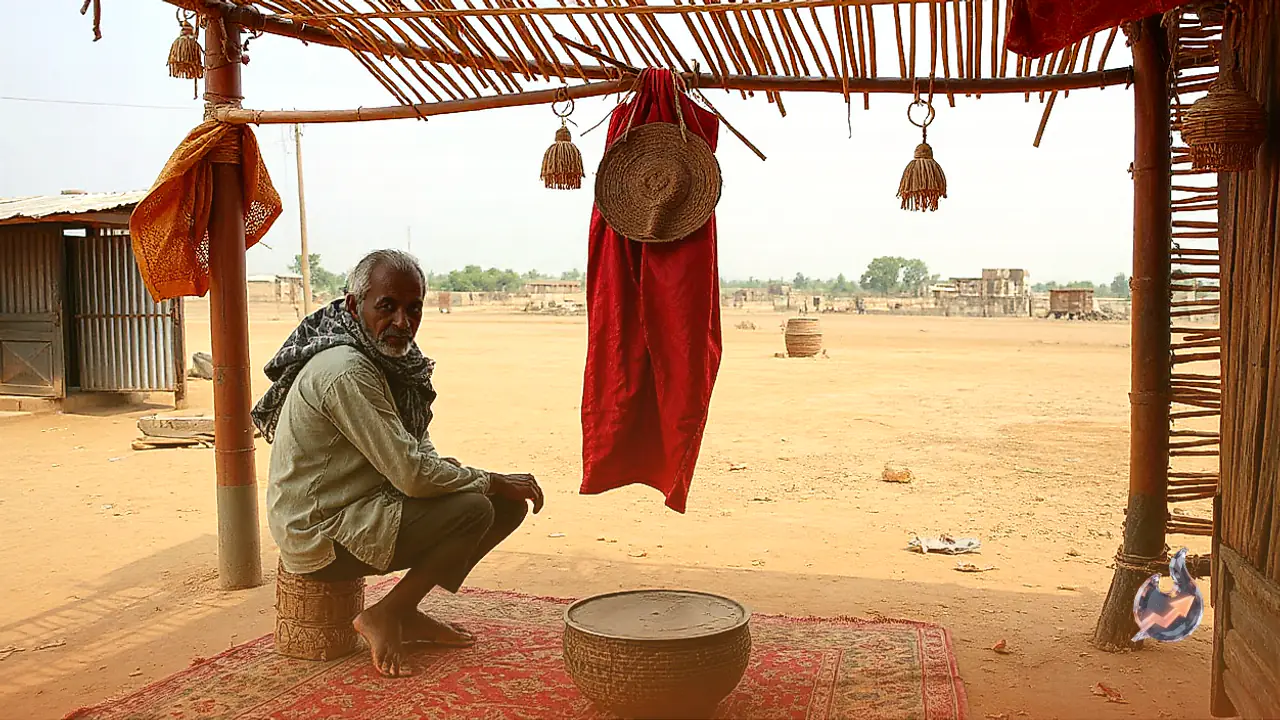

Eco-friendly home decor and handcrafted wooden utilities are seeing renewed interest, providing dependable self-employment opportunities across rural India. In Dongari village of Chhattisgarh's Gariaband district, artisan Mahendra Kumar Dhruw utilizes raw bamboo to design a wide range of functional and decorative household items. The craft enhances domestic spaces with natural aesthetics while functioning as an effective source of household income for rural artisans.
Furniture Range and Workshop Equipment
The artisan produces diverse functional utilities suited for living and study spaces. Dhruw's product range includes tables, chairs, sofas, stools, book racks, footwear stands, pen stands, flower vases, and letterboxes, all built entirely out of bamboo. Constructing these pieces requires specific traditional woodworking instruments alongside standard joining supplies, including handsaws, chisels (batasi), specialized curved blades (daav), emery paper (regmaal), adhesive glue (fevicol), and nails to assemble sturdy frameworks.
Intensive Preparation and Shaping Process
Transforming raw bamboo stalks into finished homeware demands significant manual effort and precision at every stage. The workflow begins with stripping and peeling the tough outer layer of the bamboo culm, a phase requiring careful physical labor. Once cleaned, the bamboo is measured, sliced, bent, and carved into designated modular shapes before final assembly. This patient transformation converts basic timber into balanced, attractive, and highly usable utility products.
Output-Linked Earnings and Rural Employment
Monthly compensation in this craft depends directly on production volume and completed unit deliveries. Craftsmen generate income strictly based on the quantity of finished goods turned out in a given period. By assembling varied household furniture and decorative accents, an artisan earns around 10,000 to 20,000 rupees per month, establishing the trade as a steady economic lifeline in the village.