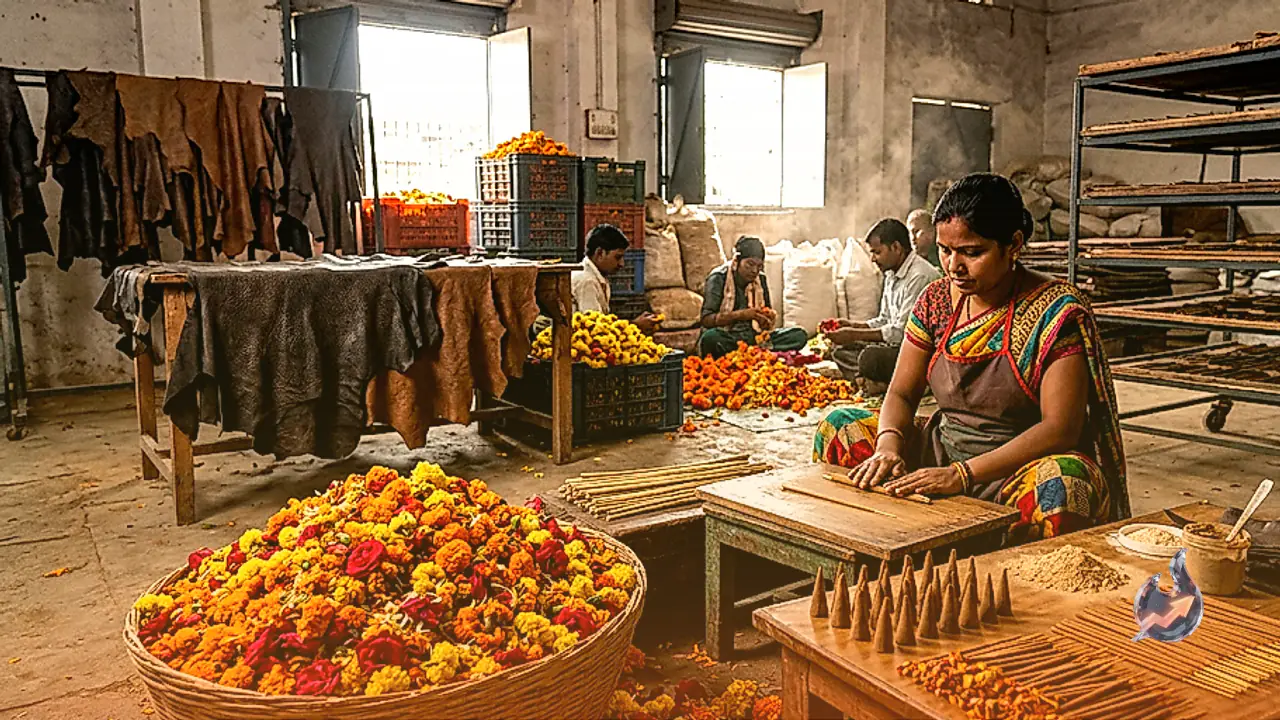

















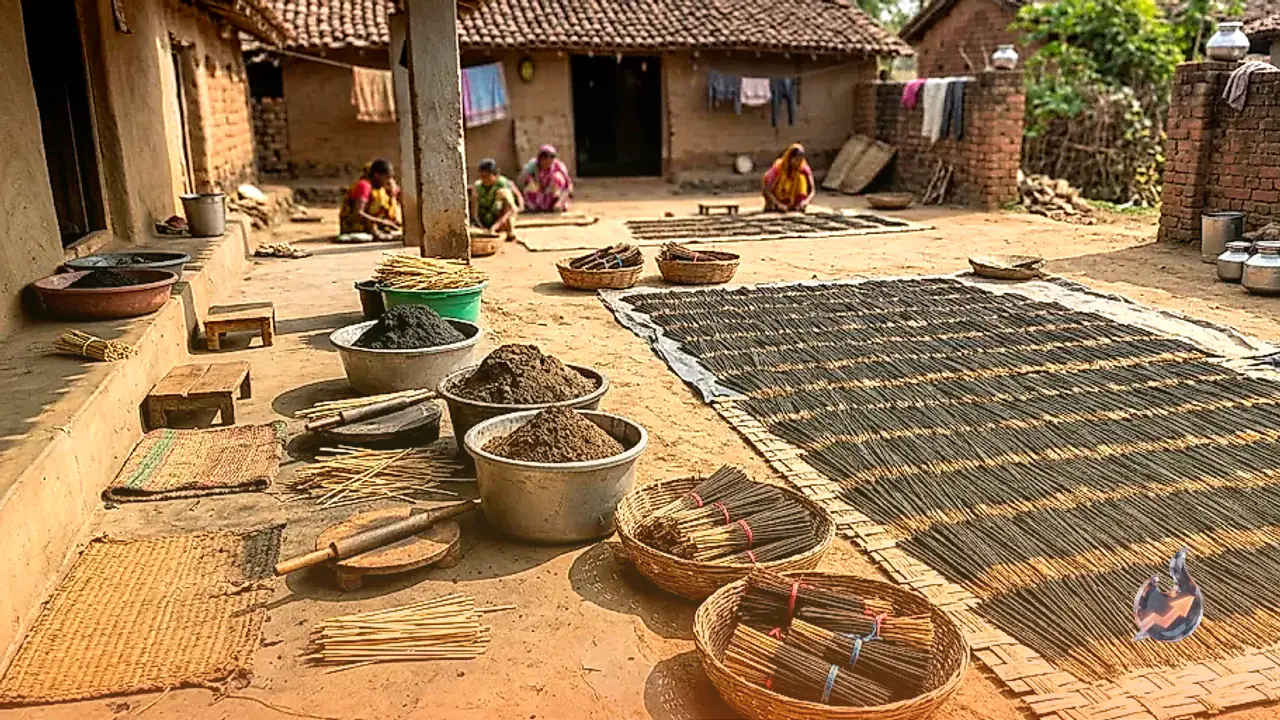

A collective of 11 rural women from Chhediya village in Balod district, Chhattisgarh, has demonstrated how targeted skill training can reshape rural livelihoods. Previously dependent on agricultural labor and seasonal farm work, these women have successfully built a micro-enterprise around manufacturing and selling scented incense sticks. By taking charge of the complete production lifecycle, from raw materials to local distribution, each woman in the collective now earns an average of roughly Rs 400 per day, providing their households with a dependable year-round income.
Skill Transfer and the Spark of Rural Enterprise
The transition began roughly four years ago, driven by Asha Sagar, an active member of the local women's collective. She secured an opportunity to participate in a structured incense stick manufacturing training program in Durg. After completing the course and acquiring practical knowledge in ingredient preparation, fragrance blending, and production techniques, she returned to Chhediya with the objective of sharing her skills with fellow villagers.
Rather than working independently, Asha Sagar focused on mobilizing other village women who relied on erratic agricultural wages. She trained them step by step in creating quality incense sticks. While taking on a commercial venture alongside household chores was initially daunting, the women gradually gained confidence. Soon, a dedicated group of 11 members came together, establishing a coordinated workflow to produce incense sticks right from their village.
Five Fragrances and Direct Local Marketing
The women's collective manufactures incense sticks in five distinct fragrances, including rose, sandalwood, lavender, and mongra. Among these varieties, rose and mongra consistently record the highest demand across nearby markets. A defining strength of the enterprise is its end-to-end management by the members themselves, completely eliminating middle agents.
The members directly procure the necessary raw materials, process and scent the sticks, manage packaging, and handle product marketing. This hands-on involvement has given them real-world business acumen and commercial awareness alongside manufacturing expertise. To distribute their finished goods, the women set up sales stalls directly outside the Janpad administrative office and near venues holding government meetings. They also distribute through local retail shops and participate in regional Saras Mela exhibitions to access broader customer bases.
From Initial Losses to Reliable Round-the-Year Work
On an operational level, each participating woman processes approximately 40 kilograms of raw material daily to roll and prepare incense sticks. This consistent output directly translates into their steady daily earnings of approximately Rs 400 per person. Unlike traditional farming tasks that are dictated by seasons, monsoon patterns, and harvest cycles, this cottage enterprise guarantees work throughout the entire year.
The road to viability required resilience. Asha Sagar noted that during the opening months, the venture generated minimal returns, raising financial doubts. Despite initial setbacks, the group stayed committed to refining product quality and finding direct sales avenues. As word of mouth grew and the fragrance quality gained trust among local customers, orders began to rise steadily. Today, their initiative stands as a practical blueprint for rural self-reliance, proving that collective determination and practical vocational skills can build durable economic independence.