





















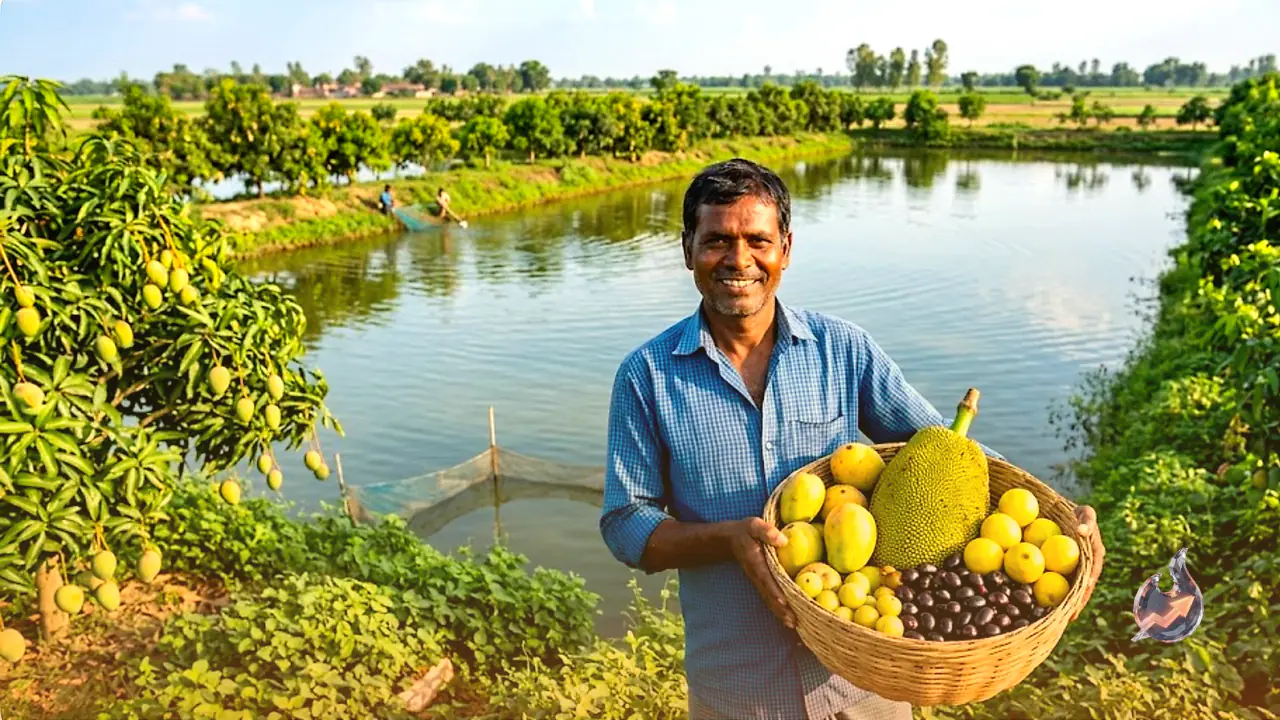

At first glance, the fish ponds of Nandlal Bhagat in Bihar's Purvi Champaran district look more like an orchard than an aquaculture farm. Dense rows of fruit trees line the embankments, their canopies stretching over the water. The sight is unusual, but the reasoning behind it is sharply practical and has delivered results that other fish farmers are now taking notice of.
Fruit Trees on Every Embankment
Bhagat has planted fruit-bearing trees on the banks of all three of his large ponds. Mango trees dominate, but the lineup also includes jackfruit, lemon, amla, and jamun. Across the three ponds, the tree count stands at 70, 35, and 30 respectively, giving each water body a ring of green cover that is both productive and visually striking.
How the Roots Reinforce the Structure
Bhagat points out that this method only works if the embankment is built thick and wide enough to accommodate large root systems. Once mango trees with their deep, spreading roots take hold in the embankment soil, they bind the earth firmly, reinforcing the structure from within. The practical outcome is a dramatically lower risk of the embankment giving way under the pressure of heavy monsoon rains. With a stronger bund holding the water in, his fish are now considerably safer than they were before the trees were planted.
Shade, Food and Natural Balance
The benefits of the orchard extend directly to the fish as well. During the hottest months of summer, the tall mango trees cast a wide shadow over the pond surface, giving the fish a cool refuge from the intense heat. Beyond shade, the trees contribute to the fish's diet in an unexpected way: when ripe fruits fall into the pond and begin to ferment slightly, the fish eat them readily. This amounts to a free, naturally occurring food supplement that requires no additional investment from Bhagat.
Rs 82,000 in Additional Income Every Year
The orchard on Bhagat's pond banks translates into real money. He earns Rs 82,000 in extra income from the trees each year, layered on top of what he already makes from fish. This dual-revenue setup has made his farming enterprise more resilient and profitable. His experience demonstrates that the same stretch of land and water can be made to yield two independent income streams when approached with a bit of unconventional thinking.