




















In an era where agriculture is often viewed as an unprofitable venture driving people toward urban jobs, one man from southern India is entirely redefining the narrative. Venkatesh, a dedicated agriculturist hailing from Palahalli village in the Srirangapatna taluk of Karnataka's Mandya district, has turned a modest five-acre plot into an international attraction. Instead of relying solely on the traditional cycle of harvesting crops and selling them at local wholesale markets, he has pivoted to an innovative agri-tourism model. Today, his land is not just a place where crops are grown, but it functions as a vibrant, living farm and an immersive training center. Visitors from across the globe flock to this small village, not merely to observe rural life, but to actively participate and learn the rigorous art of cultivation, generating an impressive annual revenue of around Rs 10 lakh for the farm.
A Global Destination for Hands-On Agriculture
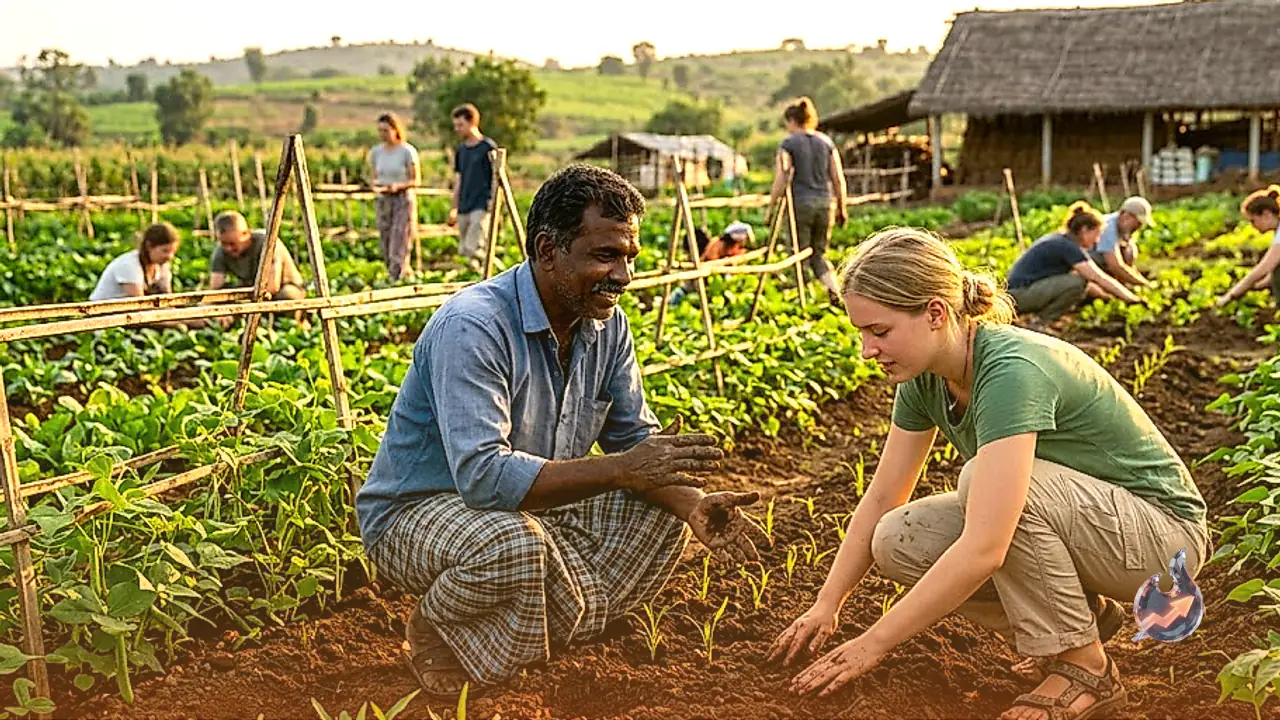
The scene at this Mandya farm is a striking departure from standard Indian agricultural settings. Upon arriving at the property, it is common to witness a diverse group of international volunteers fully engaged in heavy manual labor. Young travelers from countries as varied as Ireland, France, Australia, Hungary, and Zimbabwe can be seen wading through mud to transplant paddy saplings. Others dedicate their time to preparing organic fertilizers or harvesting mature crops under the intense sun. These individuals do not come seeking luxury resorts or typical vacation leisure. They arrive with the specific intention of stepping into the shoes of an Indian agriculturist for a period of 10 to 15 days. By immersing themselves in the daily routine of rural labor, they sometimes end up working even harder than local farmhands, fully embracing the strenuous yet rewarding lifestyle of living close to the earth.
Attracting Domestic Learners and Enthusiasts
The appeal of this immersive agricultural experience extends well beyond international borders. The farm has become a significant draw for people from various Indian states, including Delhi, Uttar Pradesh, Maharashtra, and Punjab. These domestic visitors, often exhausted by fast-paced city life, travel to Karnataka to reconnect with the soil and understand exactly where their food comes from. During their stay, they are integrated completely into the daily operations of the farm. The hands-on training ensures that they do not just watch demonstrations but actually execute the tasks themselves. This rigorous involvement covers the entire spectrum of farming operations, offering a practical, ground-level education that no textbook or video tutorial can adequately provide.
The Transition to Sustainable and Organic Practices
The transformation of this property into a thriving hub of education and tourism was not an overnight success. For many years, Venkatesh operated much like any other local farmer, cultivating his land using conventional, chemical-dependent methods and relying strictly on crop sales for his livelihood. The turning point arrived following a fateful interaction with two IT professionals from Bengaluru, J. Franklin and Sangeeta. Observing his operations, they strongly advised him to abandon chemical fertilizers and pesticides in favor of pure organic cultivation. This pivotal advice shifted his entire approach. Recognizing the growing global interest in sustainable living, the idea was born to transform the property into a space where people could learn organic techniques directly on the land. Visitors are now taught the intricate processes of creating natural fertilizers like Jivamrit and Panchgavya, producing vermicompost, and managing a sustainable dairy farming setup.
Leveraging the Internet for International Reach
The critical leap from a local organic farm to an international agri-tourism destination was catalyzed by the power of the internet. About five years ago, Sangeeta took the initiative to list the Palahalli farm on prominent international volunteering platforms, specifically WWOOF and Workaway. These digital networks are designed to connect travelers and eco-volunteers with organic hosts around the world, offering them a chance to learn local customs and farming techniques in exchange for their labor. This online presence firmly placed the Mandya property on the global map. Currently, the farm hosts approximately 15 batches of foreign tourists annually. Each batch typically consists of about four individuals who initiate contact via email to secure a spot for their immersive 10 to 15-day learning experience.
A Business Model Built on Trust
Perhaps the most remarkable aspect of this agri-tourism venture is its unconventional financial model. Unlike commercial farm stays that charge premium rates for rural experiences, there is no fixed tariff for food or accommodation at this facility. Whether the guests are Indian citizens or international travelers, they are provided with simple lodging and meals prepared using fresh vegetables harvested directly from the fields they work in. When their stay concludes, visitors are simply asked to pay whatever amount they feel is fair and appropriate for the knowledge and experience they have gained. Remarkably, this honor-based, flexible payment system, which is rooted entirely in human trust, is highly successful. It constitutes the bulk of the farm’s revenue, allowing the owner to earn roughly Rs 10 lakh per year just from the tourism and training aspect, far surpassing the income derived from standard crop sales.
An Ecosystem of Integrated Farming
The agricultural foundation supporting this tourism model is a highly diversified, integrated farming system. Rather than monocropping, the five acres are meticulously managed to support a wide variety of flora and fauna. The fields yield traditional, indigenous varieties of crops, most notably Siddhasanna paddy, alongside staple grains like ragi and jowar. The cultivation extends to various fruits, vegetables, and leafy greens, creating a self-sustaining food source for both the host family and their guests. The ecosystem is further enriched by the inclusion of livestock and aquaculture. Cows and goats are raised on the premises, while fish are bred in designated ponds. The dairy component is robust, producing desi cow milk and high-quality ghee for sale. Additionally, dedicated vermicompost units ensure that all organic waste is efficiently recycled back into the soil, completing the sustainable loop.
Inspiring the Next Generation of Cultivators
Beyond hosting tourists and volunteers, the property has officially evolved into a recognized training center for the local agricultural community. Collaborating with state agriculture, horticulture, and dairy departments, the farm regularly organizes structured training programs. These sessions educate local farmers on crucial subjects such as maintaining soil health, transitioning to organic farming, implementing dairy operations, and the benefits of integrated farming models. This journey from a conventional chemical-dependent plot to a thriving educational enterprise proves that agriculture is not limited to merely growing and selling produce. By adopting innovative approaches, a modest piece of land can become a center for tourism, a classroom for global citizens, and a highly profitable business, serving as a powerful inspiration for thousands of rural families.