






















The Apple that today sits among the most valuable companies on the planet once stood dangerously close to the edge. The middle years of the 1990s read like a nightmare for the firm. Losses piled up quarter after quarter, employees were being let go in large numbers, and the stock kept sinking on the market. Things looked so grim that plenty of observers had quietly concluded the company simply would not survive much longer.
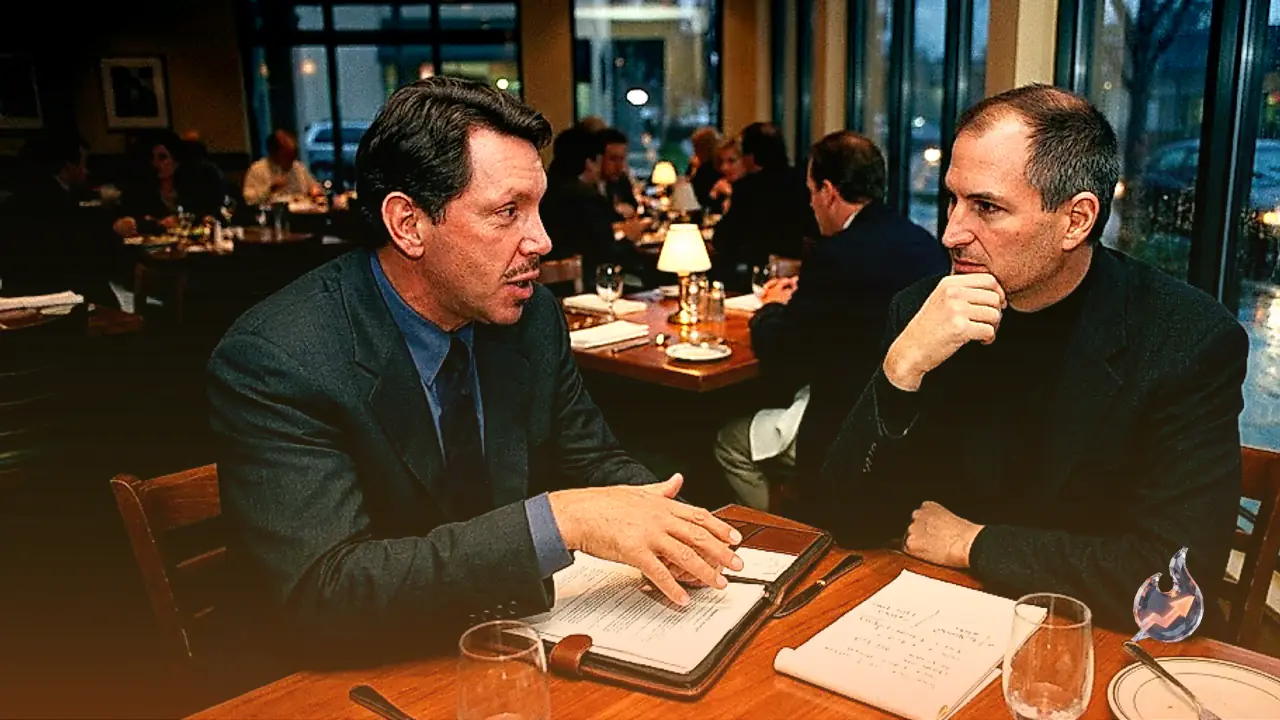
It was at this fragile moment that Oracle founder Larry Ellison came up with a bold idea. He wanted to buy Apple in its entirety and hand the reins back to his old and close friend Steve Jobs. To pull it off, he had gone as far as preparing to raise billions of dollars. But the story took a turn few could have predicted. Jobs flatly refused the offer.
Ellison Had the Whole Plan Ready
Ellison himself recounted the episode during a public event. At that time Apple was valued at roughly five billion dollars, which works out to around ₹41,500 crore in today's terms. He had worked out exactly how to gather that kind of money. His thinking was blunt and simple, buy the company first and, on the very same day, name Jobs its CEO. Apple's finances back then were in a terrible state, the bleeding refused to stop and investor confidence was thinning out by the day. Ellison was convinced that only Jobs coming back could keep the sinking ship afloat. Yet the entire plan never moved beyond paper, because Jobs simply would not agree to it.
Why He Walked Away From Such a Chance
In those days Jobs was busy running his own company, NeXT. His argument was that he had no interest in returning merely to occupy a chair. His condition was different, he wanted Apple to step forward and buy NeXT itself, then bring him back on its own terms as and when it needed him. Jobs also made it plain that his goal was not to earn money. He worried that slipping into the top job through a buyout or a takeover would send the wrong signal to employees and to the wider industry. He firmly believed that only a proper, dignified return would let him win people's trust and steer the company in a fresh direction.
How the Picture Changed
Eventually, in December 1996, Apple bought NeXT for about 429 million dollars. Jobs first joined the company as an advisor and then, in 1997, stepped into the role of interim CEO. Under his watch Apple took a string of big and risky decisions. What followed became history. Products like the iMac, the iPod and the iPhone completely flipped the company's fortunes. The result is there for everyone to see, Apple now stands in the front row of the world's largest companies, with a market value that has crossed even the 3.7 trillion dollar mark. Had Ellison's buyout gamble gone through back then, Apple's story might well have unfolded very differently. But the road Jobs picked is the one that brought him back to the helm and lifted Apple to heights now counted among the greatest comebacks in the history of business.