





















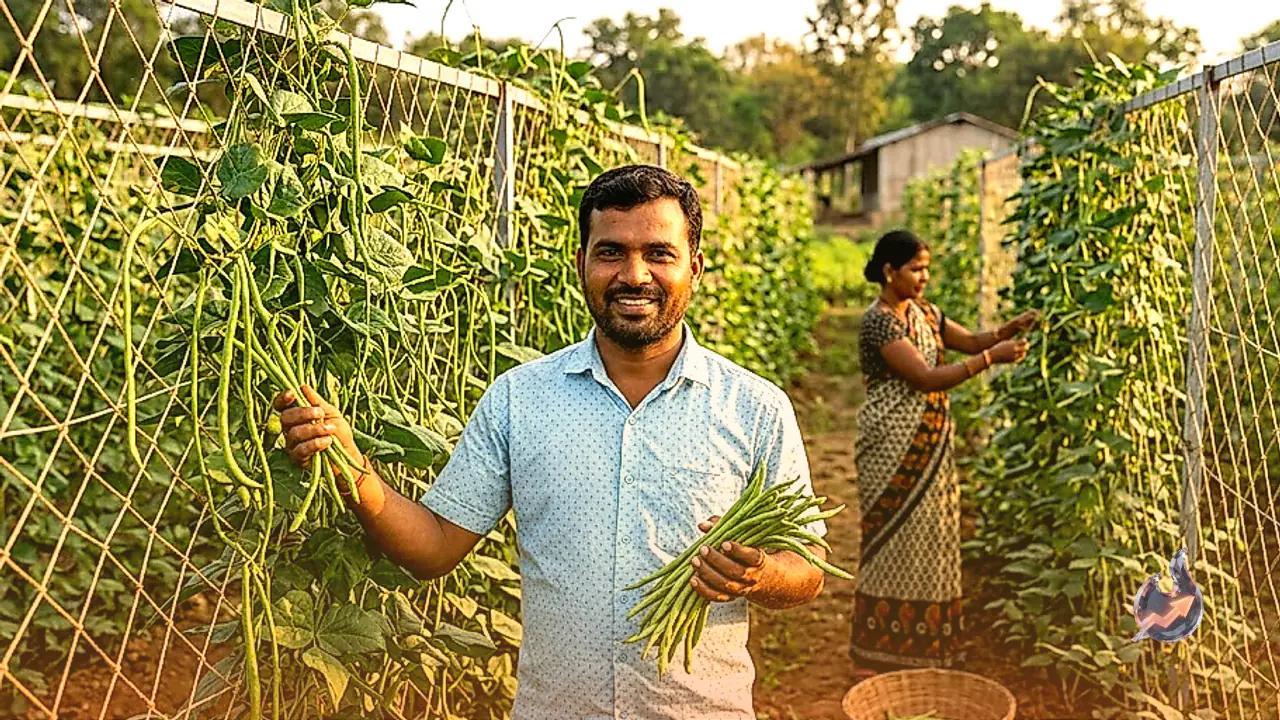

A farmer in Jharkhand's Bokaro district has proven that generating substantial agricultural income does not strictly require massive landholdings; instead, smart planning and scientific techniques can make all the difference. Santosh Kumar Mahto, a resident of Saraiyatand village in the Peterwar block, has achieved remarkable success by cultivating cowpea (Barbati) on a modest plot of just 50 decimals. By stepping away from traditional sprawling methods and adopting the vertical Machan (trellis) system, he has managed to secure a bumper harvest with minimal investment. His innovative approach is now serving as a powerful blueprint for other small-scale farmers looking to maximize their earnings from limited resources.
Scientific Approach to Small-Scale Farming
Santosh Kumar Mahto identifies himself as a professional farmer, having inherited a deep passion for agriculture from his ancestors. Watching his father and grandfather toil in the fields inspired him to turn farming into a highly efficient livelihood. Given the restricted size of his land, he specifically chose a crop that offers high yields per square foot. He implemented the Machan method, which involves guiding the plant vines upwards using a structured support system of bamboo and wire. This vertical orientation prevents the vegetables from rotting on the damp soil, ensures maximum sunlight exposure, and significantly reduces the risk of soil-borne diseases.
Planting Cycle and Continuous Harvesting
The farming cycle began in the month of May when Santosh sowed the cowpea seeds in his prepared field. One of the primary advantages of this specific crop is its rapid growth cycle. The plants take only 45 to 60 days to mature and start yielding vegetables. Once the harvesting phase begins, the vines continuously produce cowpeas for about two full months. This extended harvesting window is extremely beneficial, as it allows the farmer to pick and sell fresh produce regularly. Such a steady stream of daily or weekly income helps maintain a healthy cash flow for the household.
The Mathematics of Investment and Profit
The financial breakdown of this agricultural venture is highly encouraging. According to Santosh, the entire process of cultivating cowpeas on 50 decimals of land requires an initial investment of approximately ₹20,000, which covers the cost of seeds, fertilizers, and building the trellis structure. With diligent care and proper nourishment, this small area can produce an impressive yield ranging from 60 to 70 quintals. In the local markets, fresh cowpeas consistently fetch an average price of ₹25 to ₹30 per kilogram. Selling the entire yield at these rates generates gross revenue of up to ₹1.50 lakh. After deducting the initial ₹20,000 investment, he takes home a clear, net profit of ₹1.30 lakh.
Pest Management and Crop Protection
Despite the lucrative returns, cultivating cowpeas comes with its own set of distinct challenges. Santosh Mahto points out that the crop is highly susceptible to pest infestations, particularly from cutworms and other foliage-eating insects. If ignored, these pests can quickly decimate the plants and ruin the expected yield. He emphasizes that the secret to a successful harvest lies in strict crop management. Farmers must conduct regular inspections of their fields and ensure the timely spraying of appropriate pesticides. Proactive pest control and consistent care are the ultimate requirements for securing high yields and protecting the farmer's financial investment.