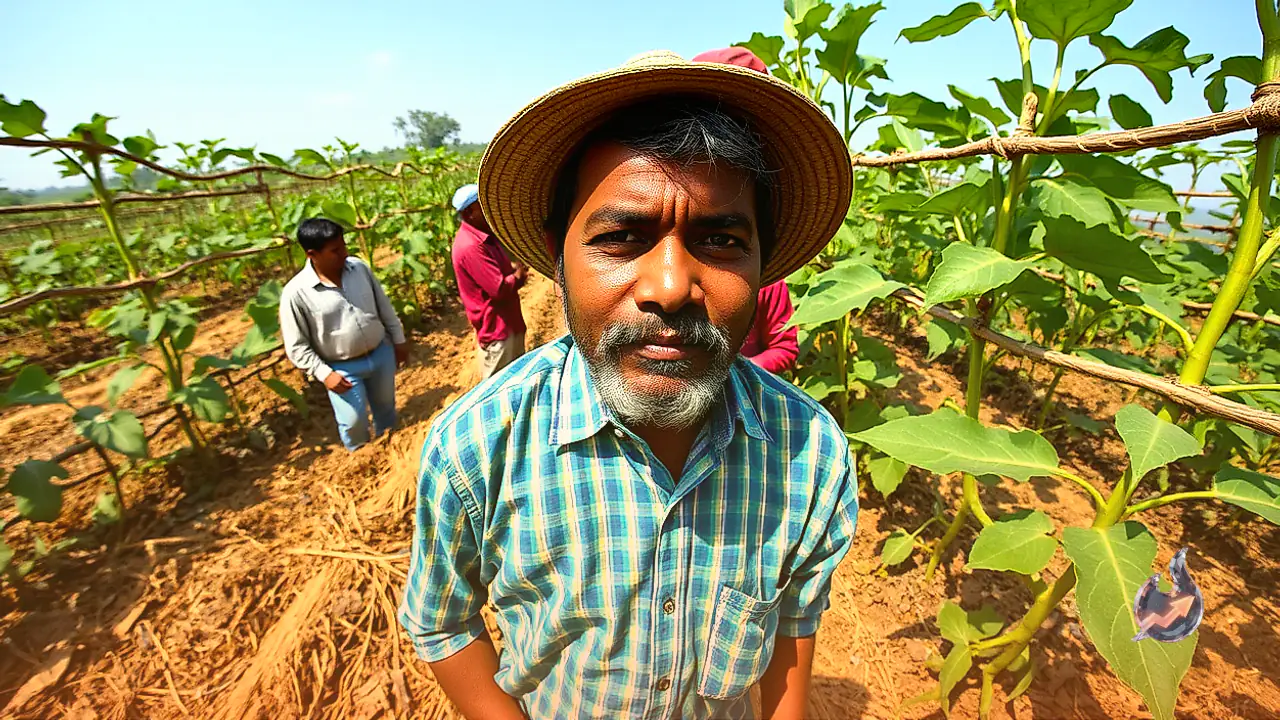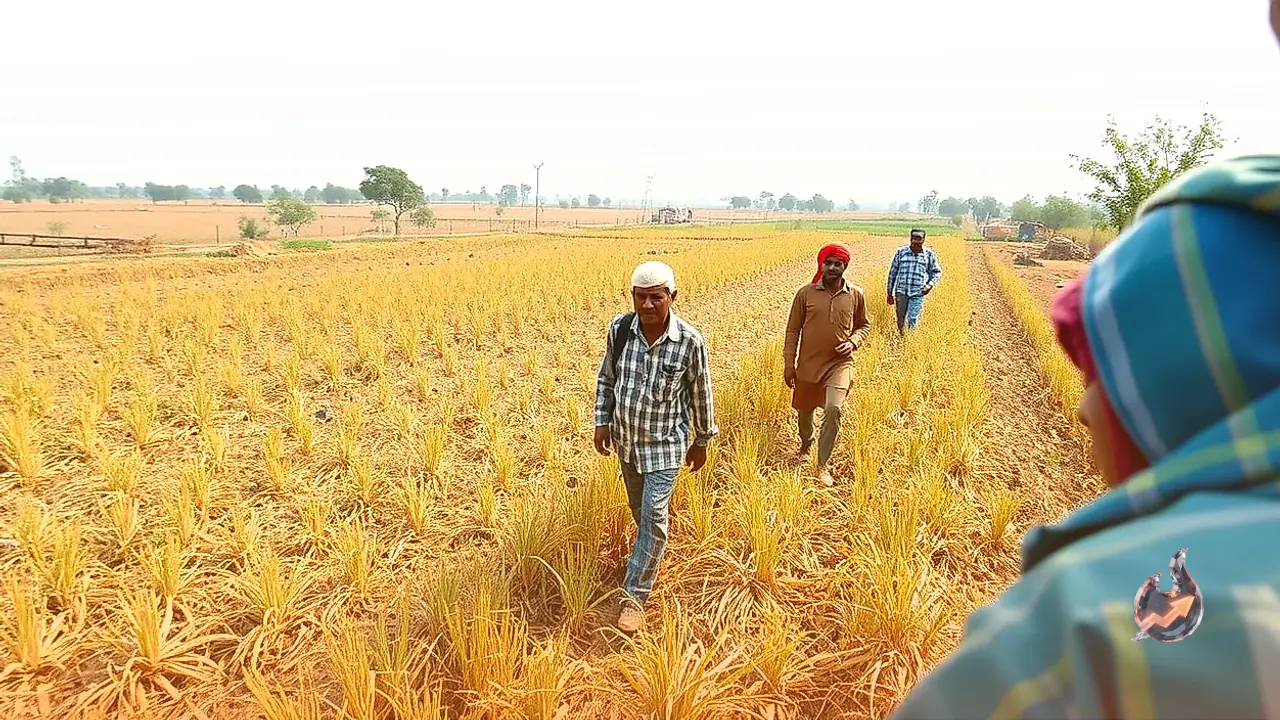























Yuvraj Mahato, a progressive farmer from Ambadih village in the Petarwar block of Bokaro district, is setting a remarkable example in agricultural profitability. By shifting away from traditional crop patterns to commercial cash crops, he has transformed his agricultural income. On a 70 decimal plot of land, he cultivates groundnuts to earn high returns within a short time frame and with minimal input costs. His successful model is now motivating neighboring farmers to transition toward cash crop farming.
Transitioning to Cash Crops and Honoring Family Legacy
Yuvraj Mahato has been actively engaged in groundnut farming for the past 15 to 20 years. He derived his foundational knowledge of agriculture and initial inspiration from his parents and grandparents. Motivated by his family heritage, he chose agriculture as his full-time profession. In the early years, he relied primarily on traditional crop varieties, which yielded modest financial returns relative to the labor invested. Realizing that conventional farming alone could not guarantee long-term economic stability, he gradually shifted his focus toward commercial cash crops, with groundnut emerging as his primary income generator.
Investment Breakdown: Turning 10 Thousand into 60 Thousand Profit
Explaining the financial dynamics of groundnut cultivation, Yuvraj Mahato shared details regarding cost, yield, and market pricing. He sowed groundnuts on his 70 decimal land at the beginning of June. Depending on the crop variety, groundnut crops mature completely within three to four months. The entire operational cost for cultivating groundnuts on 70 decimals of land, including seed procurement and field preparation, totals approximately 10,000 rupees.
From this 70 decimal plot, he achieves a total harvest yield of around 20 quintals. In the local agricultural market, the average price for groundnuts stands at approximately 35 rupees per kilogram. Selling 20 quintals (equivalent to 2,000 kilograms) at 35 rupees per kilogram yields a gross revenue of roughly 70,000 rupees. After deducting the initial investment cost of 10,000 rupees, the net profit comes to approximately 60,000 rupees. This represents a sixfold return on investment within a short span of three to four months.
Key Agricultural Practices: Seed Selection and Monsoon Timing
To achieve optimal yield and maximize earnings from groundnut cultivation, Yuvraj Mahato offers practical recommendations for fellow agriculturalists. He emphasizes the importance of selecting high-quality, large-grained improved seed varieties, as seed quality directly determines overall yield volume and final market value.
Furthermore, timing the sowing schedule accurately is crucial for crop development. Early June, coinciding with the arrival of monsoon rains, serves as the ideal period for planting groundnuts. Rainwater ensures that soil retains natural moisture levels, significantly reducing the necessity for manual irrigation and providing vital nourishment during early plant growth. By adhering to these essential farming management practices, growers can secure high financial returns with low expenditure and minimal time investment.