






















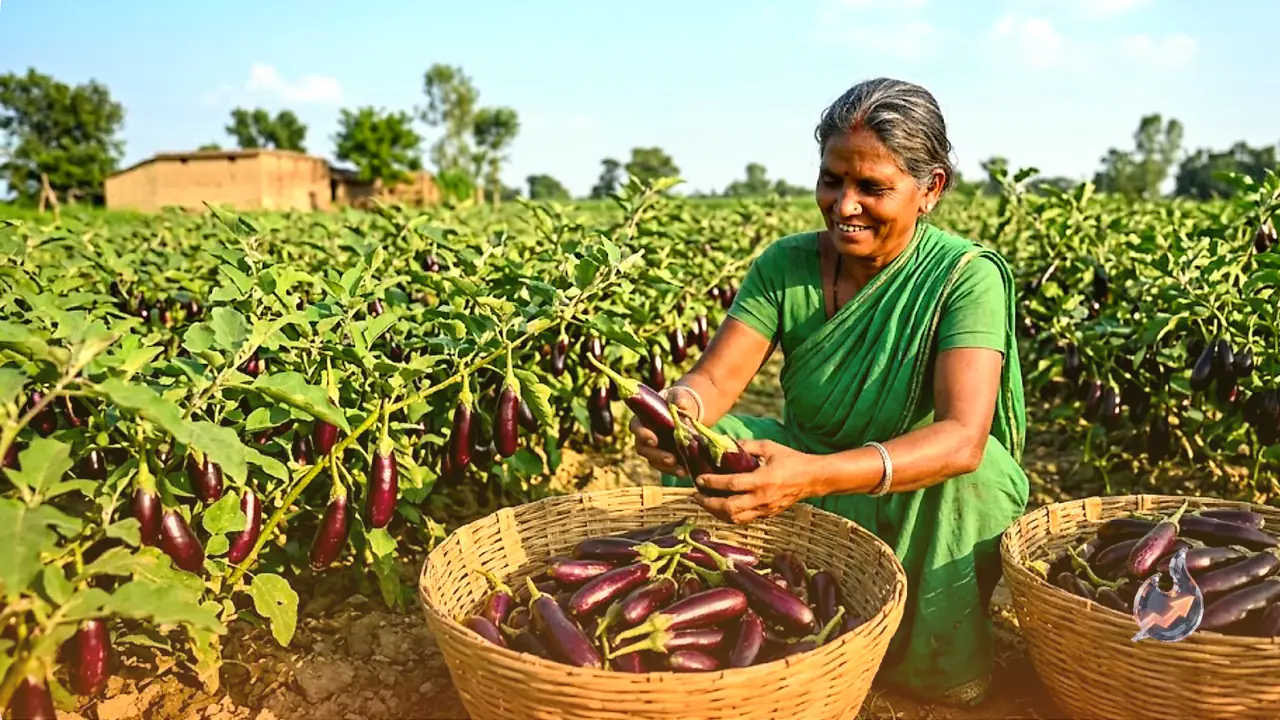

In Shivhar district, the shift away from traditional farming towards large scale vegetable cultivation is picking up pace, and one woman farmer, Sumitra Devi, has become a striking example of that change. Growing brinjal using a scientific, well planned method, she has completely transformed her family's finances. She currently farms one bigha of land under brinjal, while a second bigha is being readied for the same crop.
Planting In Chait, First Fruit Within Three Months
Sumitra Devi says brinjal saplings are mainly planted in the month of Chait, that is March-April. The early days bring weather swings and various challenges, which is why the young plants need careful attention. Giving the right fertiliser at the right time, regular irrigation, and mounding soil around the roots are the three most crucial steps. Once the plants get proper care and nutrition, they become fully ready and capable of yielding fruit continuously for several months. Fruiting begins roughly three months after planting.
Five To Six Quintals Harvested Daily, Right Up To Kartik
The biggest strength of this crop is its long production cycle. Once planted, the crop keeps fruiting for eight to nine straight months, meaning Sumitra Devi's field stays occupied by this single crop for almost the entire year and keeps generating income continuously. Once production hits full swing, an average of five to six quintals of brinjal is harvested every single day. This harvesting run continues till the month of Kartik, that is October-November, delivering a large quantity of fresh vegetables to the market daily and keeping her hold on the trade strong.
Staged Spraying Keeps Pests And Disease Away
Behind this large output lies not just Sumitra Devi's hard work but also careful attention to protecting the crop. To guard the brinjal plants from pests and diseases, medicines are sprayed in stages. Different types of spray are needed at different points, from sowing the seed, to flowering, to the fruiting stage, and each one is essential to keeping the crop safe and the yield unaffected.
The Produce Travels To Sitamarhi's Bajitpur Mandi
Sumitra Devi does not limit her produce to nearby local markets alone. She sends her brinjal all the way to the well known Bajitpur mandi in Sitamarhi. Demand for this brinjal runs high there, and during the season dozens of motorcycles and pickup vehicles load up produce directly from the field and carry it straight to the market. That ensures the crop fetches the right price at the right time.
Rs 30 A Kilo, Far Better Returns Than Pumpkin
At present, the brinjal is selling easily in the market at around Rs 30 per kilo, that is a wholesale rate of about Rs 3000 per quintal. Sumitra Devi proudly says that compared to common, traditional vegetables like pumpkin, brinjal farming brings far better and safer profit. This steady, year round income has given her family a better standard of living and real financial stability.
The Whole Family Works The Field, Earning Triple A Labourer's Wage
What stands out most is that Sumitra Devi's husband and both her sons work alongside her on this same farm. Nobody in the household needs to step outside for work. Together, the three of them earn nearly three times what a single daily wage labourer would make. That is exactly why Sumitra Devi's brinjal farm has become an example for other farmers in Shivhar too, proving that farming done with the right management and hard work can make a family genuinely self reliant.