





















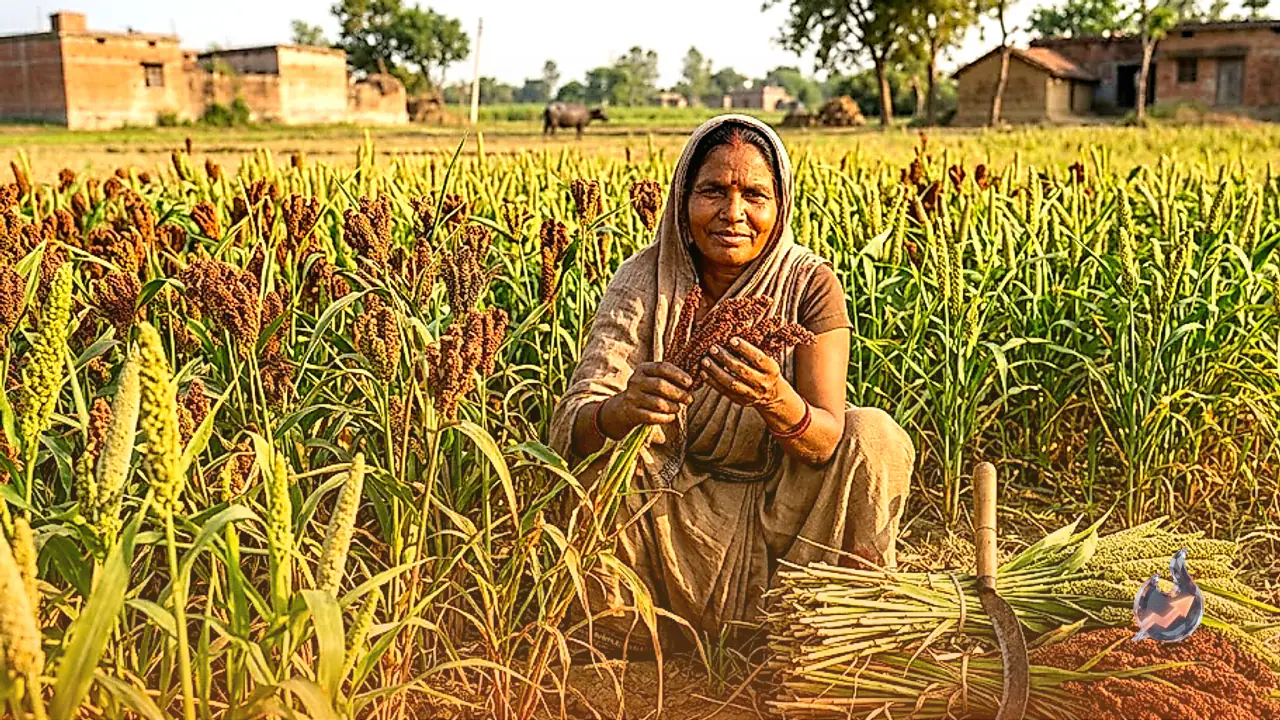

Girija Devi, a progressive woman farmer from Jhanjhari block in the Gonda district of Uttar Pradesh, has set an inspiring example for the agricultural community by shifting away from conventional farming. Replacing traditional crops with nutrient-rich coarse grains, she is currently cultivating Barnyard Millet, locally known as Sanwa, and Finger Millet, known as Ragi, across roughly 1 Bigha of land. Looking ahead, she aims to expand her cultivation footprint further. Operating without the need for additional artificial irrigation or chemical fertilizers, her crops thrive entirely on seasonal rainfall, delivering strong returns while encouraging neighboring farmers to diversify their agricultural practices.
High Yields with Minimal Water and Zero Chemical Inputs
According to farmer Girija Devi, the primary advantage of growing Sanwa and Ragi lies in their extremely low maintenance requirements. Following the initial sowing process, the crops require neither repetitive watering nor expensive chemical fertilizers, depending almost completely on rain water to reach maturity. The crops become ready for harvest approximately 4 months after sowing. This low-input approach significantly reduces overall cultivation expenses, allowing farmers to secure healthy crop yields at a fraction of standard production costs. She emphasizes that maintaining a strict schedule for sowing and performing timely weed management are key to maximizing harvest volumes.
Rich Nutritional Profile and Rising Consumer Demand
Both Finger Millet and Barnyard Millet belong to the coarse grain family, celebrated for their high nutritional value and health benefits. Ragi is particularly rich in essential minerals such as calcium and iron, along with high dietary fiber content, while Sanwa offers valuable health benefits as well. Driven by expanding health awareness among urban and rural consumers, products made from these grains, including millet flour, porridge, and healthy snacks, are experiencing surging market demand. This shift in dietary preferences directly benefits smallholder farmers, who can now command favorable market prices for their harvests.
Climate Resilience and Strategic Guidance for Regional Farmers
In an era marked by unpredictable weather patterns and climate variability, resilient coarse grain crops provide a vital safety net for agriculturalists. Furthermore, both central and state government initiatives are actively promoting millet farming to bolster food security and rural prosperity. Urging her peers to adopt these resilient crops, Girija Devi advocates for a strategic transition away from water-intensive traditional farming toward low-cost millet production. Her achievement in Gonda demonstrates that combining innovative agricultural thinking with resource-efficient practices can effectively elevate farm income while building long-term agricultural sustainability.