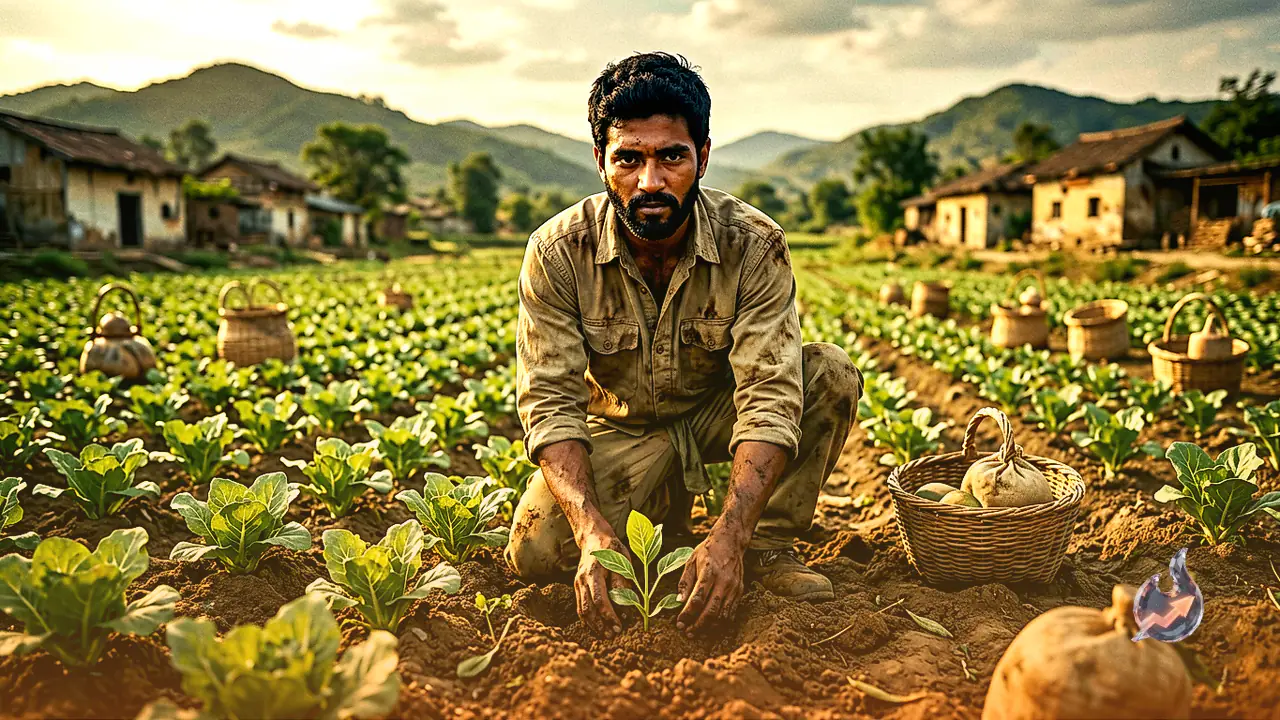























The success story of Gora Basor from Chhatarpur district in Madhya Pradesh stands as a remarkable illustration of rural self-employment and economic independence. Having previously worked as a manual laborer in distant cities across other states, Gora faced continuous struggles to sustain his family on a meager income ranging between 15,000 and 20,000 rupees per month. Seeking relief from the uncertainty and hardship of urban wage labor, he decided to return to his native village and build a sustainable business. By capitalizing on local resources, he established a commercial poultry farming operation that now generates a consistent net monthly income of approximately one lakh rupees after clearing all operational expenses.
Transitioning from Urban Wage Labor to Rural Enterprise
During his years working in cities, Gora Basor found it increasingly difficult to meet his family's daily living costs, healthcare needs, and household expenses on his limited monthly wages of 15,000 to 20,000 rupees. Recognizing that city labor offered little long-term security, he searched for opportunities to create a self-sustaining enterprise in his village. During this period, a friend residing in the city encouraged him to pursue poultry farming. Although Gora's family had traditionally engaged in pig farming, they had no prior experience in managing poultry livestock.
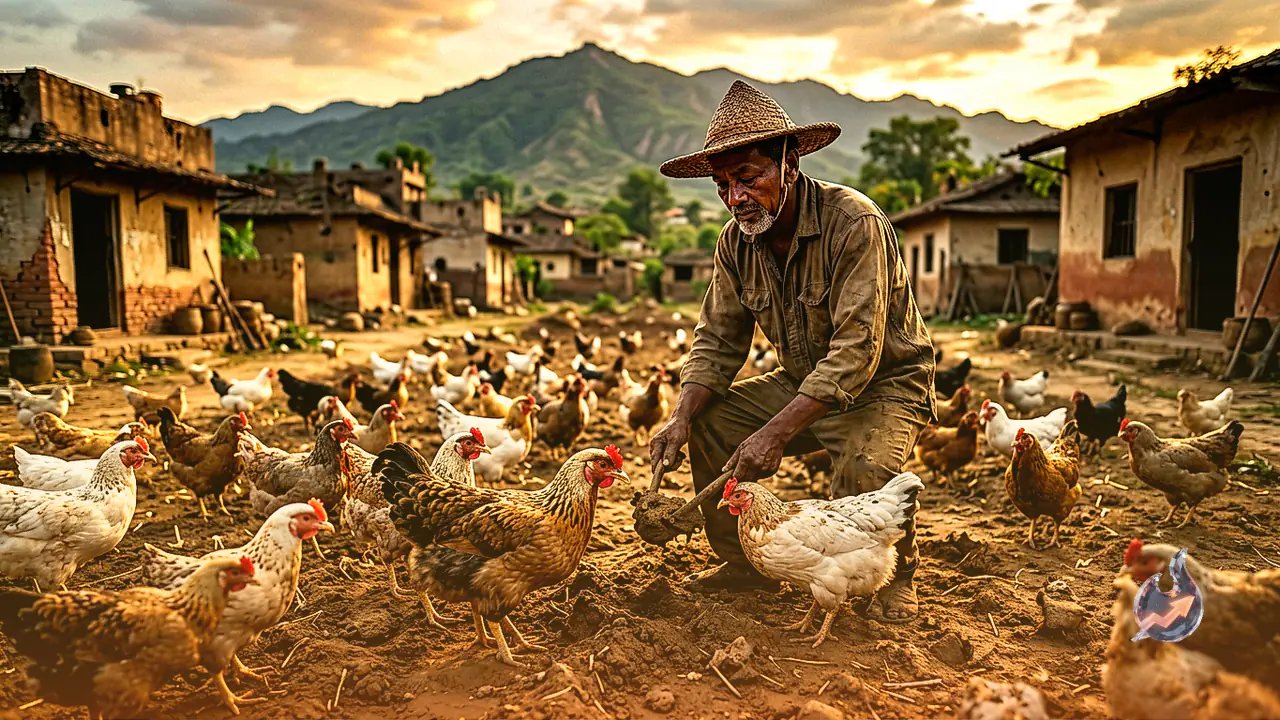
Because Gora lacked sufficient initial capital to fund the business independently, he joined hands with his friend to launch the enterprise as a joint partnership. Before initiating farm construction, Gora undertook formal technical training in poultry farming to learn essential management practices and disease prevention protocols. Following his training, the partners developed a large poultry shed spanning approximately 15,000 square feet on vacant land in the village. Today, this modern facility holds the capacity to rear around 10,000 chickens per production cycle.
Chick Procurement, Rearing Standards, and Weather Precautions
The daily operation of the farm centers around purchasing young chicks from suppliers at a rate of 50 rupees per chick. Gora recently acquired a fresh batch of 5,000 young chicks just 5 days ago. This new purchase followed the successful rearing and market delivery of an earlier batch of 5,000 full-grown chickens. With the previous batch sold and dispatched, farm workers are currently cleaning and sanitizing the second tin shed to receive the next set of livestock.
Nurturing young chicks requires meticulous dietary management and environmental monitoring. The chicks are fed a primary diet of maize grains, complemented by an uninterrupted supply of clean drinking water. Gora notes that during the current season of humid rainfall combined with intense summer heat, vigilant water and ventilation management is critical because the newly arrived chicks are only a few days old and extremely vulnerable. He emphasizes that poultry farming must strictly adapt to seasonal conditions, as extremes of heat or cold can trigger health complications and mortality, leading to severe financial losses.
The 30-Day Rearing Cycle, Cost Breakdown, and Profit Margins
According to Gora Basor, the primary operational advantage of poultry farming lies in its swift 30-day production turnaround. After 30 days of intensive feeding and care, the chicks reach maturity and are ready for commercial sale. Retaining the chickens beyond 30 days is financially disadvantageous, as feeding and maintenance costs escalate rapidly without yielding proportional increases in market value. Consequently, the birds are supplied to market buyers immediately upon completing the 30-day milestone. A 30-day-old chicken sells for an average price of 100 rupees, depending on its weight.
Explaining the financial breakdown, Gora states that after accounting for the initial purchase price, maize feed, water infrastructure, and maintenance overheads, the net profit comes to 20 rupees per chick. If a batch of 10,000 chicks experiences no mortality, the overall net profit for the cycle reaches approximately 2 lakh rupees, which is split equally between the two partners. Following each sale, workers clean out the accumulated organic waste material from the shed floor. Rather than discarding this waste, it is repurposed as high-quality organic manure in local agricultural fields, enriching soil fertility and promoting sustainable farming practices.