






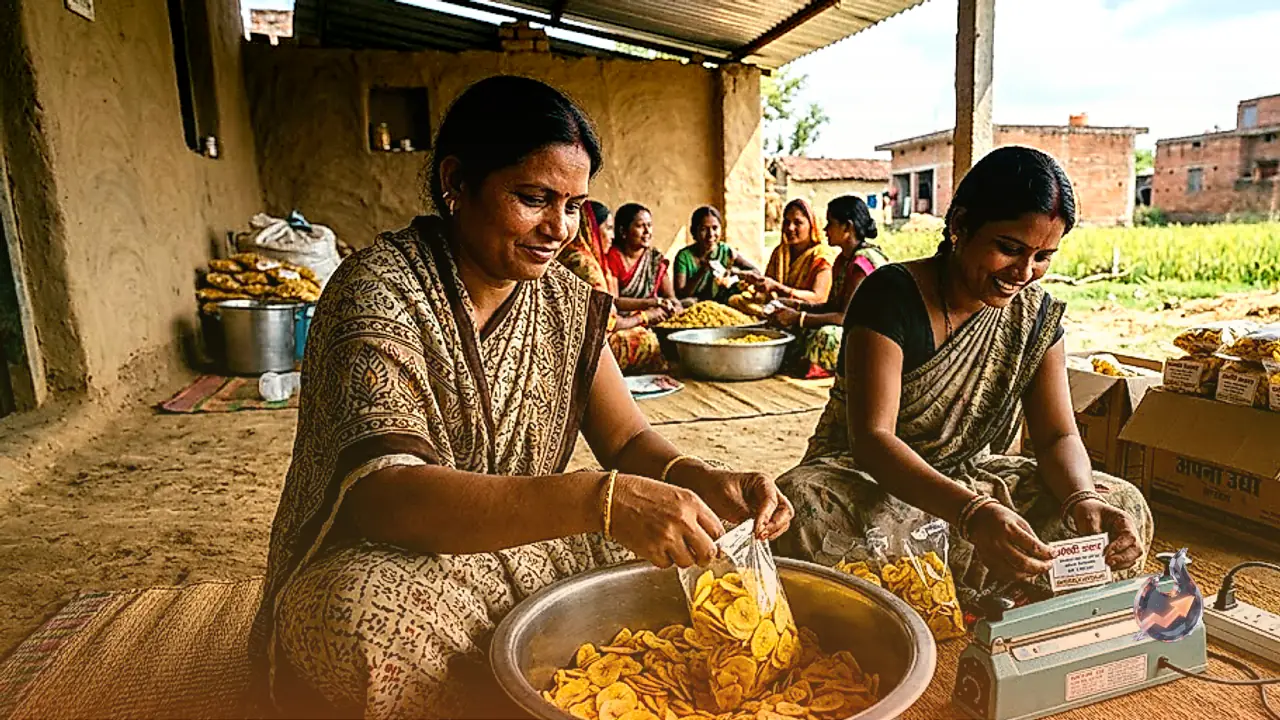














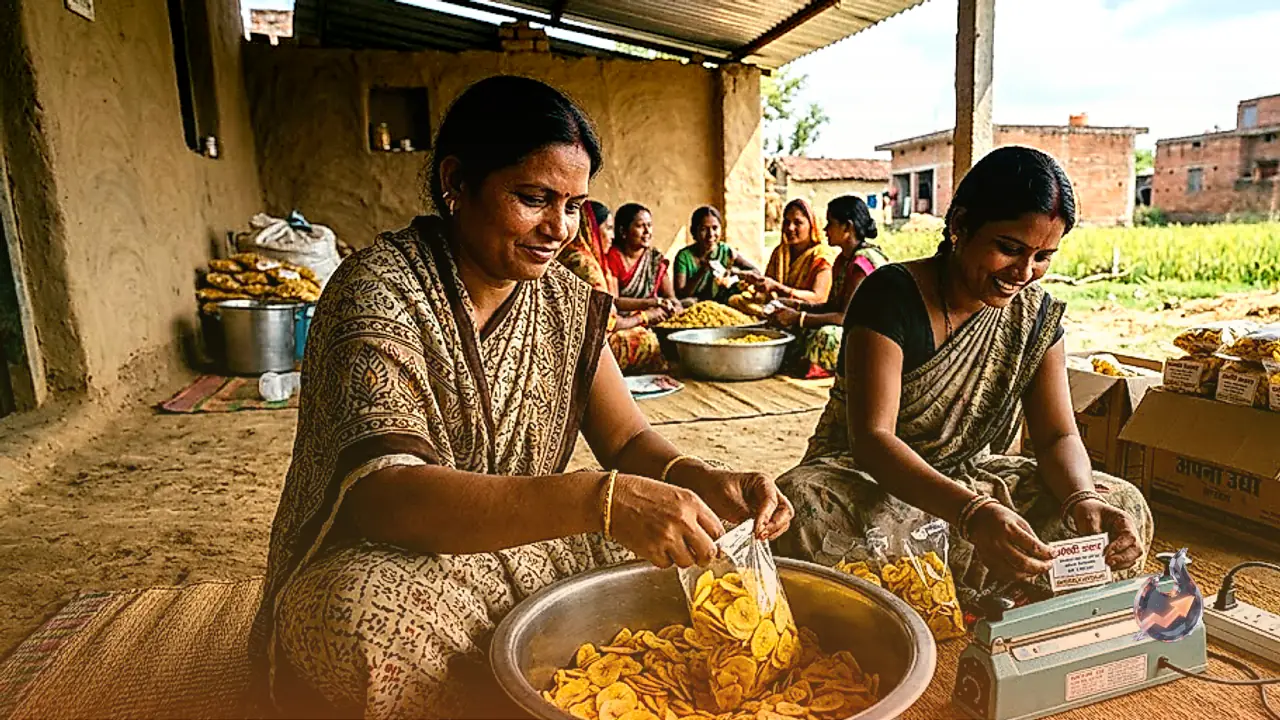

In the rural expanses of Amethi, women who once struggled with scarce employment opportunities are redefining community commerce through local self-help groups. Moving past informal labor, these women are establishing decentralized cottage industries that not only secure their personal financial footing but also generate regular jobs for others across their villages.
Diverse Product Lines from Food Processing to Household Essentials
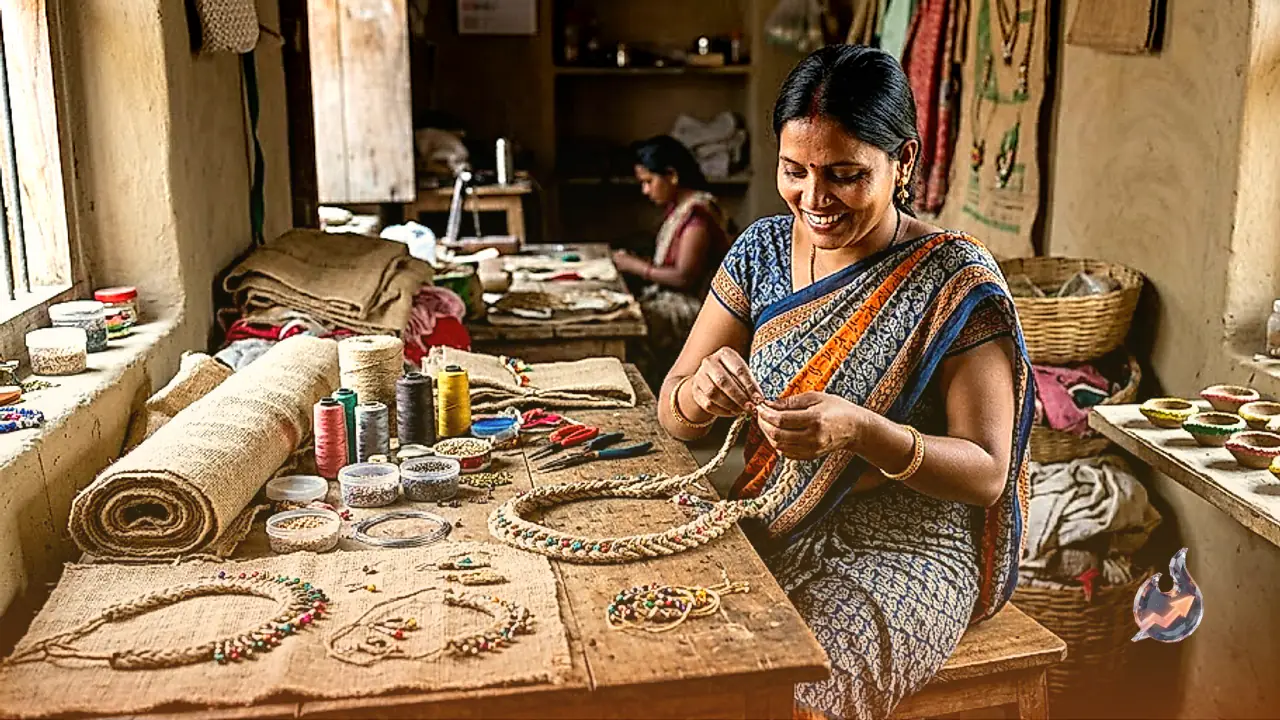
Working within cooperative structures, women across Amethi have developed diverse consumer product portfolios that cater to regional demand. Their product catalog features traditionally processed food items such as pickles, papads, potato chips, and preserves, alongside textile garments, embroidery work, and handcrafted terracotta items. They also produce essential home hygiene and utility products, including floor cleaner, toilet cleaner, sweeping brooms, incense sticks, candles, and toys.
These goods are manufactured locally through sustained manual effort and household production units. A major structural hurdle for rural artisans has long been distribution and access to retail buyers. Under the self-help framework, administrative coordinators organize designated sales stalls and exhibitions for direct retail distribution. Furthermore, steady consumer footfall directly at community production hubs allows patrons to purchase inventory on-site, effectively bypassing commission-heavy intermediaries.
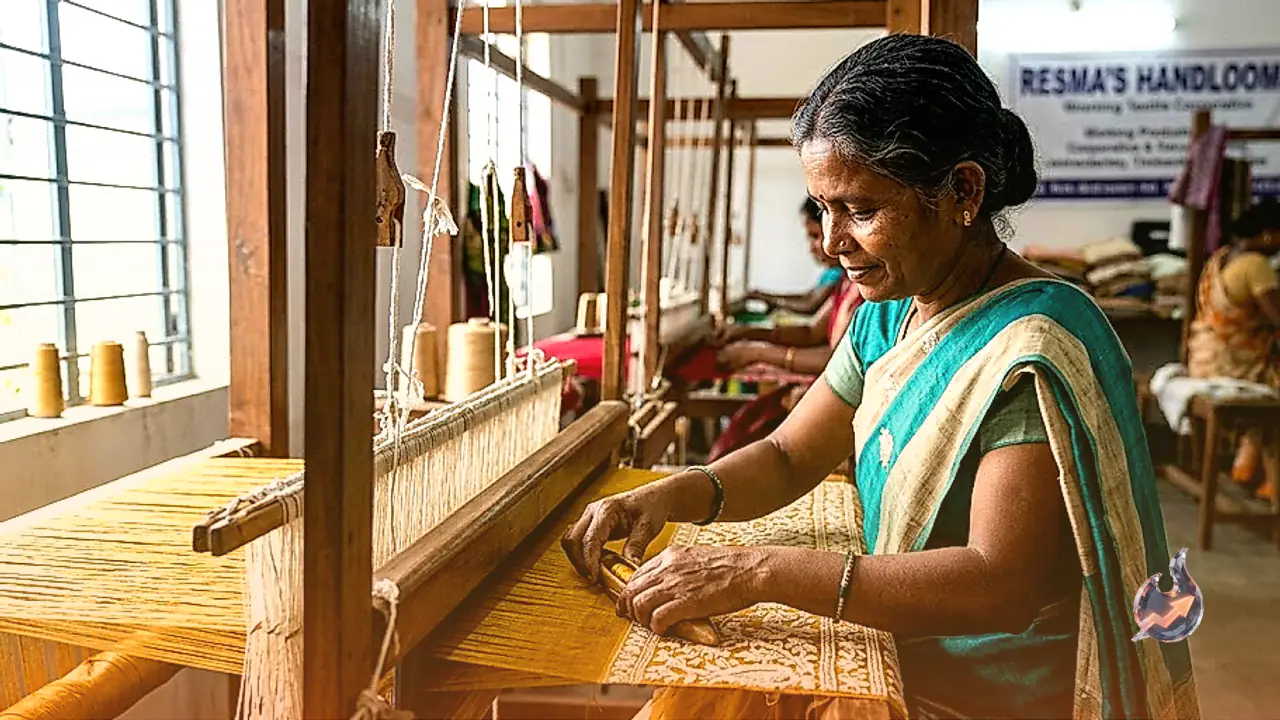
Sudha Devi's Textile Venture and Local Job Creation
The practical benefits of this cooperative model are best captured by individual participants who have turned state assistance into sustainable enterprises. Sudha Devi explains that she previously faced severe income scarcity and lacked formal work opportunities. Upon learning about the state's Mukhyamantri Yuva Udyami Yojana, she submitted an application and successfully secured a government grant. Supplementing this grant with two to two and a half lakh rupees from her personal funds, she launched a textile venture.
Today, her enterprise yields a steady monthly operating profit between 40,000 and 50,000 rupees. In addition to expanding her personal income, she employs five to six local workers within her production workflow. She notes that the cooperative group mechanism provided the foundational support necessary to scale her operations safely.
Millets Enterprise and Collateral-Free Bank Financing
Renu Devi, another active participant, shares that her daily routine previously revolved entirely around household duties, with financial shortages forcing her family to rely on high-interest private debt during emergencies. Seeking an alternative, she organized an enterprise around coarse grains and millets through her self-help group. Processing and retailing value-added millet products has since delivered consistent returns, enabling her to onboard neighboring village women into collaborative production.
For Neelam, the transition brought institutional credibility where informal barriers once existed. She recalls that before joining the group, local commercial lenders regularly turned down her credit requests for lack of formal standing and physical collateral. Supported by the verified track record of the self-help cooperative, she now accesses collateral-free bank loans without friction, running an independent trade that guarantees steady income and personal recognition.