




















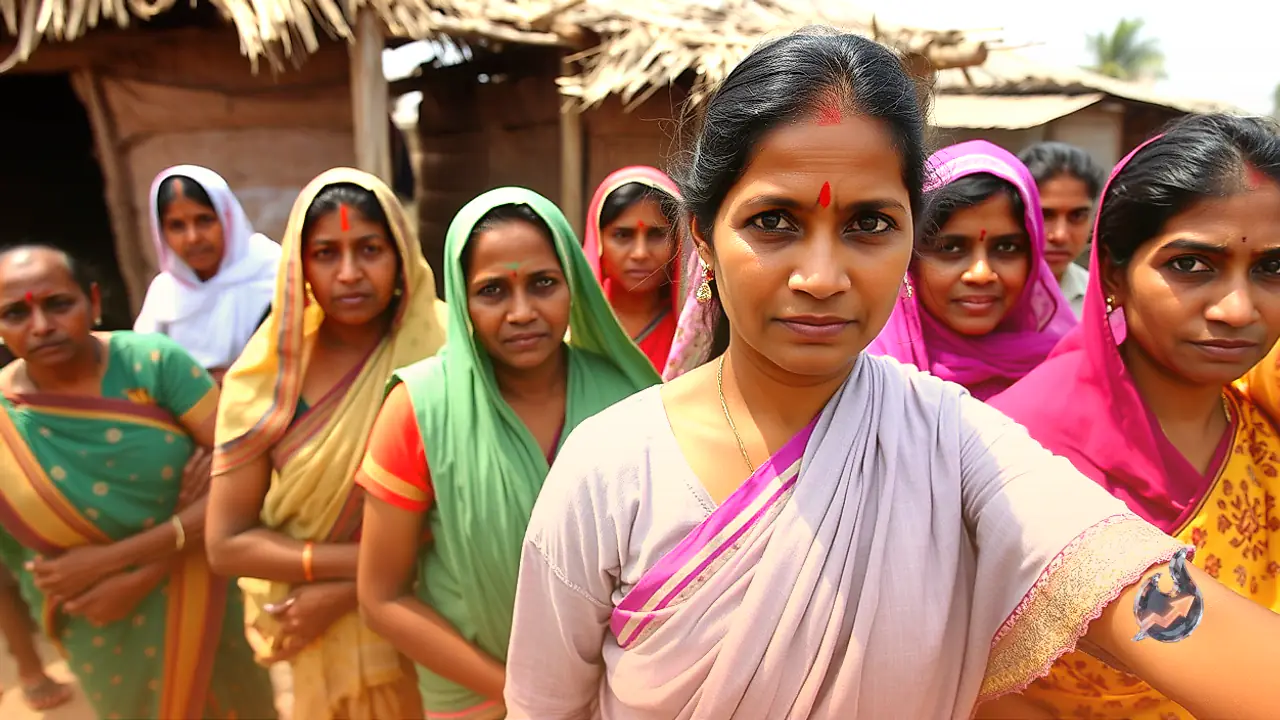

In Mawai Kala village, situated within the Niyamatabad block of the Mughalsarai assembly constituency in Chandauli district, self-help groups (SHGs) have become an effective instrument for transforming the lives of rural women. At the forefront of this socio-economic shift is Geeta Devi, who has been actively working as a Samooh Sakhi (group coordinator) since 2019. By connecting local women with regular institutional savings, banking networks, and government assistance, she has helped many establish sustainable micro-enterprises. Under her guidance, women in the village have taken up vegetable cultivation, retail stores, goat rearing, and allied trades to strengthen household financial security. Alongside mentoring others, Geeta Devi has demonstrated self-reliance by taking land on lease to build a profitable vegetable-growing livelihood, even as flood vulnerabilities and tenant-compensation rules continue to present steep obstacles.
The 2019 Turning Point Through Community Resource Persons
The transition toward financial independence in Mawai Kala began in 2019 when Community Resource Person (CRP) workers arrived in the village. Prior to their visit, Geeta Devi's family experienced severe economic distress and persistent financial insecurity. The CRP workers mobilized local women, explaining the foundational mechanisms and benefits of establishing self-help groups, maintaining disciplined monthly savings, and setting up formal bank accounts.
Crucially, the visiting resource persons introduced rural women to institutional financial pathways provided under the National Rural Livelihoods Mission (NRLM). These included key funding mechanisms such as the Startup Fund, the Revolving Fund (RF), and the Community Investment Fund (CIF). Taking advantage of this structural guidance, Geeta Devi and several other local women organized themselves into groups and accessed accessible credit. These resources allowed them to invest in crop production and small commercial activities, steadily boosting their earnings and enabling them to retire long-standing debts.
Building 15 Self Help Groups with Plans to Add 10 More
Since taking on the role of Samooh Sakhi, Geeta Devi has organized 15 functioning self-help groups across Mawai Kala. Her objective is to set up 10 additional groups in the near future so that an even larger segment of rural women can secure microcredit and initiate independent livelihoods. She routinely visits households, encouraging women to join the network and maintain strict financial savings.
Geeta Devi explains that participating in an SHG removes the reliance on exploitative private moneylenders. Members can secure funds tailored to their specific vocational plans. Today, women affiliated with these groups run beauty parlors, operate grocery shops, and engage in dairy and goat rearing, as well as agricultural activities. Under the National Rural Livelihoods Mission framework, Geeta Devi receives performance-based incentive payments for her mobilization work. She emphasizes that rural women work with tremendous dedication and argues that broader livelihood interventions are needed to match their efforts with consistently higher income levels.
Intensive Vegetable Production on Leased Land
In addition to her community mobilization responsibilities, Geeta Devi works directly as an agricultural producer. Because her family does not own sufficient farmland, she rents agricultural land on a lease basis, paying an annual rate of approximately 1,000 rupees per biswa. Her husband, Dinesh Maurya, works alongside her full-time, handling fieldwork, irrigation, and crop management.
Operating across roughly 4 bighas of rented land, the couple incurs around 50,000 rupees in input expenses per season, covering seeds, land preparation, fertilizers, and routine care. When seasonal weather remains stable and market rates are favorable, harvesting and selling the crop yields gross revenues of around 100,000 rupees. Geeta Devi notes that this headline figure represents gross sales, from which the 50,000 rupees in farming costs must be deducted to arrive at net profit. Earnings naturally fluctuate based on climate factors and prevailing wholesale demand.
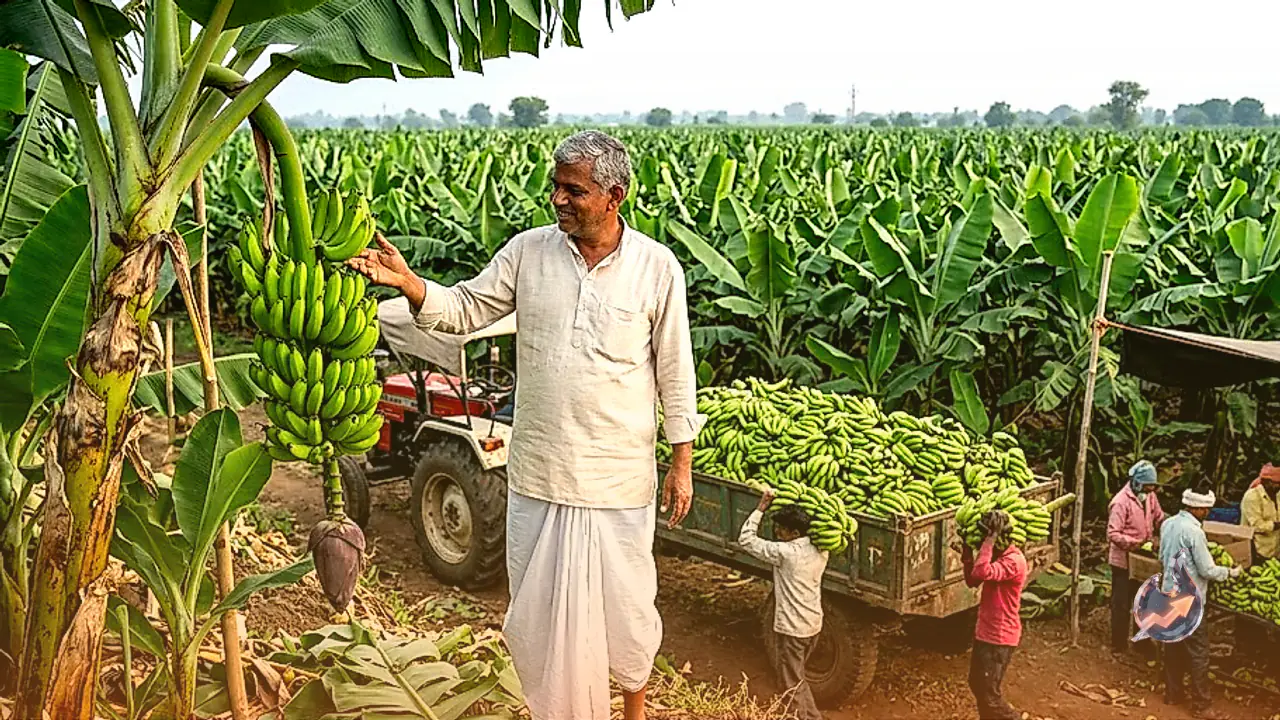
To optimize returns, she practices round-the-year multi-cropping so that no field remains unproductive between seasons. The farm produces cucumbers, bitter gourd, okra, ridge gourd, bottle gourd, cauliflower, spinach, coriander, capsicum, watermelon, and muskmelon according to the season. The harvest is transported and sold at the Mughalsarai wholesale vegetable market, generating the necessary cash flow to support the family.
Ganga Floodwaters and Crop Compensation Disparities
Despite steady progress in vegetable farming, Geeta Devi and her husband face recurring setbacks caused by monsoon floods from the Ganga River. Given the village's geographic setting near the river basin, excess water frequently inundates the low-lying farmlands. Floodwaters submerge standing crops and destroy recently planted seeds, forcing the family to borrow additional money just to replant their fields once the water recedes.
This environmental vulnerability is compounded by administrative rules governing disaster relief. Dinesh Maurya points out that tenant farmers who lease agricultural land are routinely excluded from government compensation programs when natural disasters wipe out crops. Under existing procedures, disaster relief funds are credited directly to the registered land titleholder, leaving the tenant cultivator—who actually invested capital, labor, and inputs—without financial recovery. The family stresses that government authorities must establish targeted relief frameworks for tenant cultivators so that unavoidable natural calamities do not derail children's education and basic household welfare.