















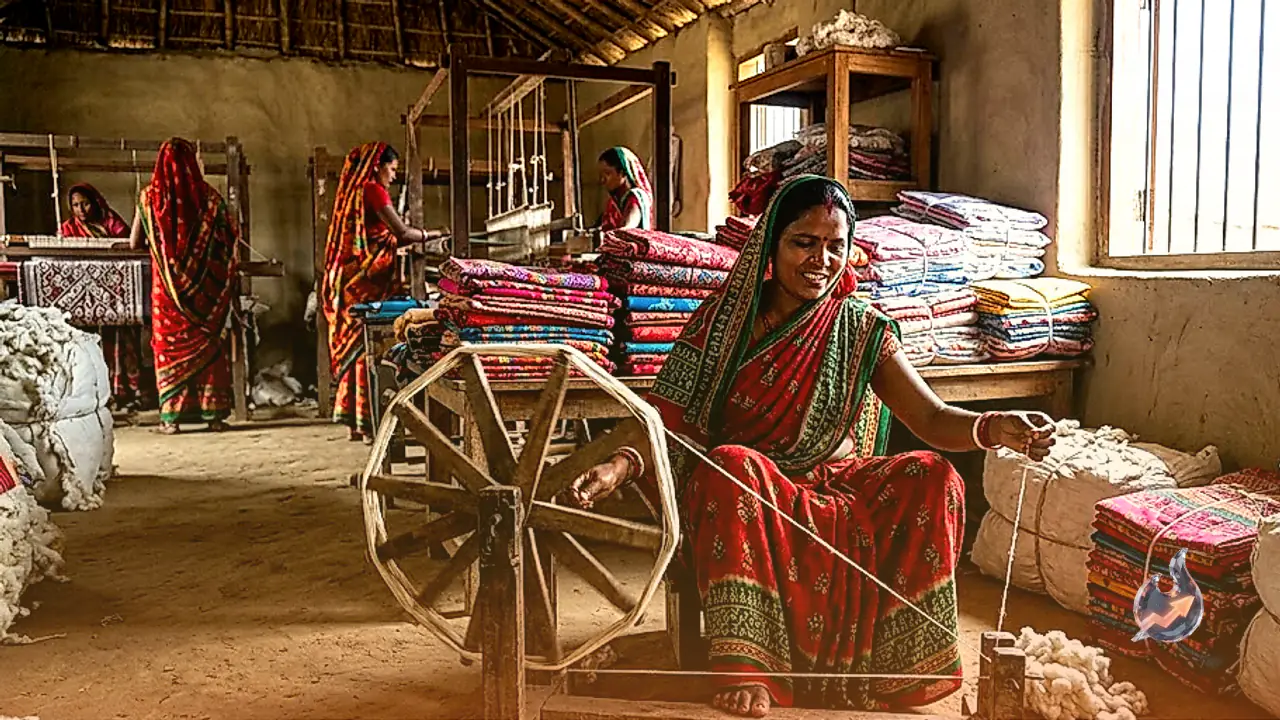

Every year on August 7, National Handloom Day is celebrated throughout India to highlight the historical importance of handcrafted weaving and honor traditional artisans. Handloom weaving is a traditional technique where women use wooden charkhas, plates, and structural frames to craft time honored textiles including sarees, blouses, curtains, and bed sheets. In today's modern fashion landscape dominated by high speed industrial machinery and rapidly changing factory designs, hand woven garments maintain high consumer demand. In West Champaran, which holds the status of being the largest district in Bihar by geographical area, handloom centers run by Tharu tribal women exemplify this sustainable success. The traditional garments crafted on spinning wheels by these rural women have generated widespread commercial demand spanning from the national capital Delhi to the financial capital Mumbai.
Tharu Community and Traditional Weaving Heritage
Specific administrative blocks within West Champaran district, such as Bagaha 2, Ramnagar, and Gaunaha, serve as the traditional habitat for the Tharu tribal population. Within these rural households, daily livelihood responsibilities are neatly divided between men and women. Men primarily handle agricultural farming and cattle rearing to maintain family income. On the other hand, women take charge of weaving fabrics on wooden frames and traditional charkhas. This intricate artistic skill has been preserved and handed down through multiple generations of Tharu women. When artisans execute this ancestral craft onto fabrics, the fine detail, exceptional durability, and striking visual appeal win over consumers who value handwoven quality over mass production.
Operations at Mishrauli Center and Daily Output
Located in Mishrauli village within Bagaha 2 block, a prominent handloom enterprise led by Rukmani Devi operates as a hub for local artisans. A team of 30 Tharu women works systematically at this facility every day. Each morning, the artisans use wooden spinning wheels to carefully untangle and align raw cotton and wool threads. Once the yarn is prepared on charkhas, it is placed onto wooden frames to weave items such as shawls, gamchhas, bed sheets, pillow covers, and sweaters. In terms of daily capacity, an individual woman produces approximately 15 shawls, 8 gamchhas, 5 bed sheets, and 10 pillow covers each day, demonstrating remarkable artisan efficiency.
Pricing, Market Demand, and Quality Standards
Pricing for these hand-crafted items is structured according to the complexity of the artwork and manual labor involved. For example, handcrafted shawls are priced between 400 and 600 rupees, while double size bed sheets are sold in the price range of 300 to 500 rupees. The combination of sturdy stitching, authentic traditional designs, and harmonious color palettes makes these products visually appealing and long lasting. As a result, demand remains consistently high across local markets in Bihar as well as major metropolitan centers and states including Delhi, Mumbai, Jharkhand, Madhya Pradesh, Uttar Pradesh, and various North East states. Handloom products made on charkhas have built a distinct and loyal consumer fanbase that eagerly purchases these traditional crafts.