






















The incident during Operation Sindoor served as a wake-up call for global defense strategies. In Lahore, the Chinese-made HQ-9 air defense system, which Pakistan relied upon for protection, was neutralized by a small Harpy drone. This encounter demonstrated that compact, inexpensive drones could effectively dismantle sophisticated defense architectures that once seemed impenetrable.
Strategic Collaborations for Modern Defense
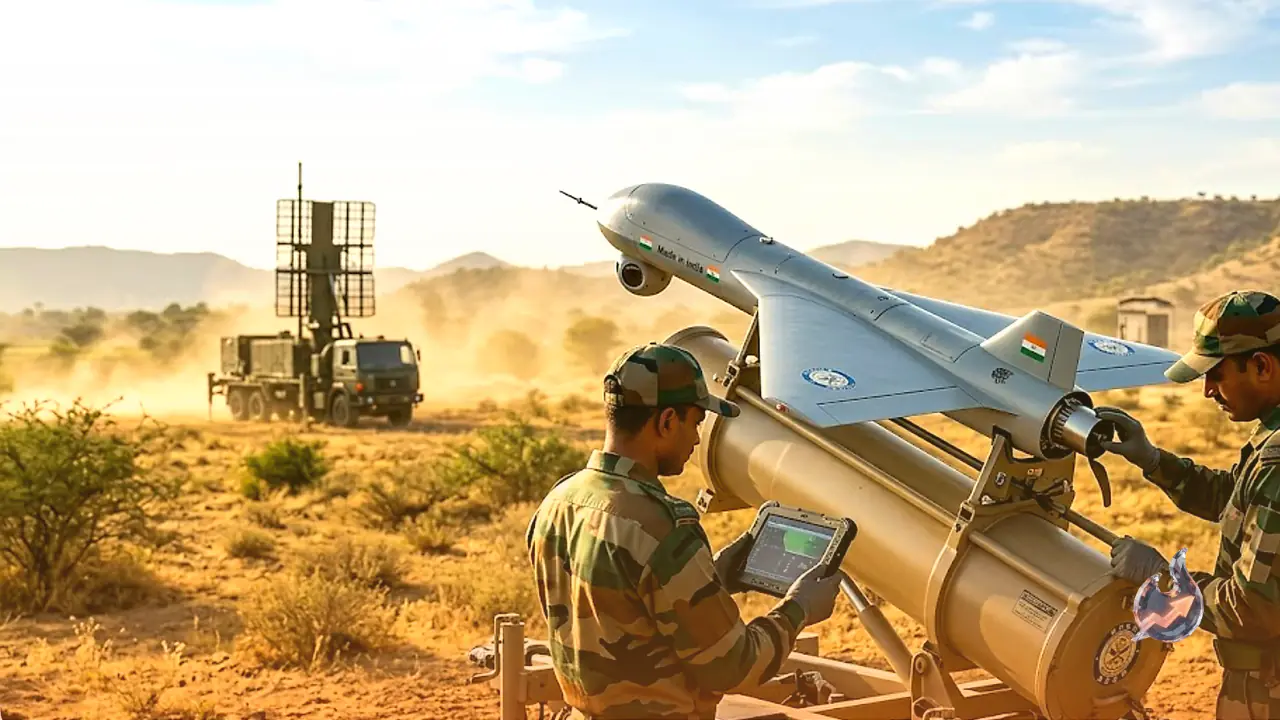
As reported by TrendKia, India is proactively modernizing its offensive capabilities. The Indian firm SMPP has entered into a strategic agreement with the European defense giant KNDS. This partnership will facilitate the production of advanced loitering munitions within India, specifically incorporating systems like Colibri, Larinae, Velos, and Rodeur. These drones offer remarkable endurance, capable of remaining airborne for durations ranging from 45 minutes to 3 hours, allowing them to stalk military targets like radars, tanks, or missile launchers until the perfect moment to strike.
Why Loitering Munitions Change Warfare
These so-called suicide drones provide a distinct tactical advantage over conventional missiles. While a standard missile follows a fixed trajectory toward a locked coordinate, loitering munitions function as persistent airborne surveillance. They can track targets that shift position, making them ideal for engaging mobile artillery or radar systems that only activate for short windows of time. By the time a threat is identified, these drones can descend rapidly to destroy the asset.
The Rise of Indigenous 'Agniveg'
India is also prioritizing self-reliance in this sector. SMPP has successfully developed an indigenous loitering munition named 'Agniveg,' with 106 units already delivered to the Indian Army. 'Agniveg' boasts an operational range of approximately 180 kilometers. Crucially, it is engineered to function in high-intensity electronic jamming environments where enemies might attempt to disrupt GPS or communication signals. As global military powers increasingly shift funding from expensive missiles to these cost-effective smart drones, India is positioning itself to leverage this technology as a core pillar of its border security.