






















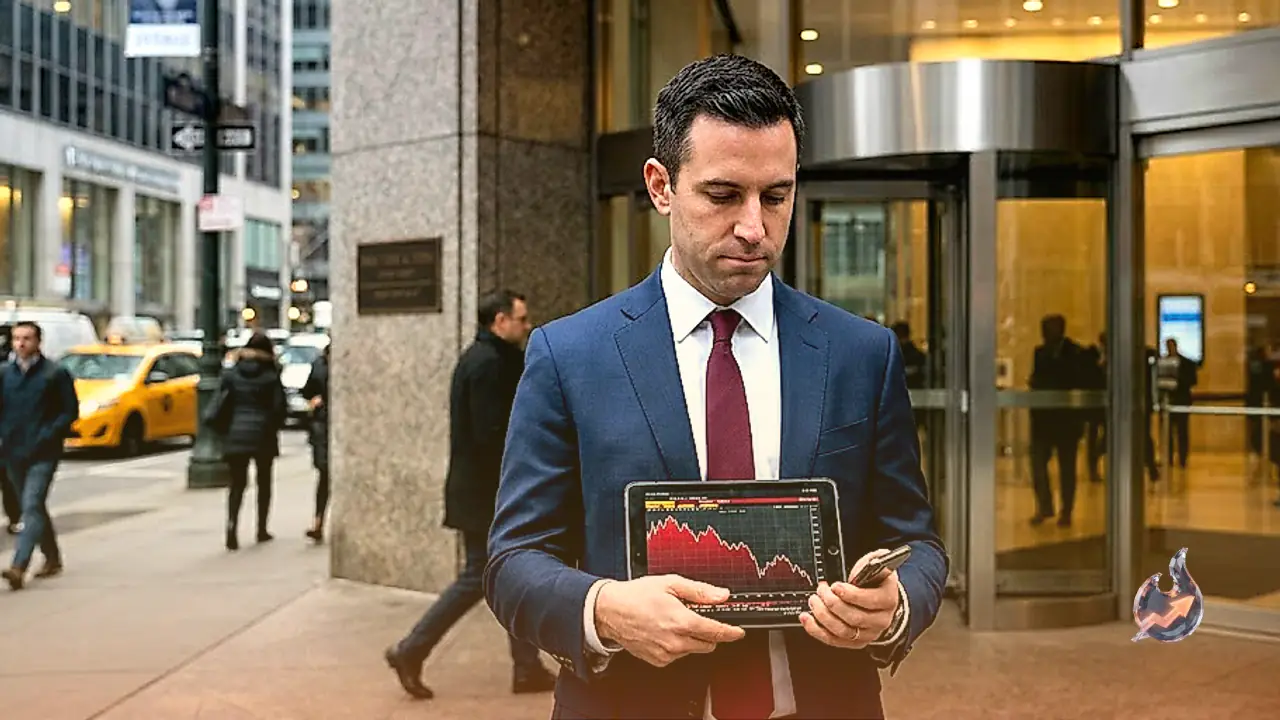

Circle's stock came under heavy selling pressure on Monday after Morgan Stanley took a decidedly cautious view on the company that issues the USDC stablecoin, cutting its price target all the way to $38 from $106 and lowering its rating to underweight. The sharp reversal piled onto an already difficult stretch for the shares, which have spent much of the year in the red.
Why the reserve model is the sticking point
At the heart of the downgrade is a question about how Circle actually makes its money. A large share of the company's revenue comes from the income it earns on the reserves that back USDC. Because every coin in circulation is supported by those reserves, the size of USDC's circulating supply is tied directly to how much the business can earn. When fewer coins are outstanding, the reserve pool is smaller and the interest it throws off shrinks with it.
That is exactly the pressure point analyst James Faucette highlighted. He noted that growth in USDC's circulating supply has been weaker than expected, and that softness could weigh on the reserve income the company depends on as a key source of revenue. The firm also questioned whether the stablecoin has found enough genuine demand to drive its next phase of growth. "Utility beyond remittances and stablecoin-linked card spending has yet to gain meaningful traction," the bank said, describing a business still anchored to a fairly narrow set of use cases.
The math behind the steep cut
Morgan Stanley did not simply shade its assumptions, it cut them hard. The bank reduced its forecast for USDC supply by 33% for 2027 and by 44% for 2028 against its earlier estimates. Those downward revisions flow straight into its profit outlook: the bank now expects Circle's GAAP earnings per share to come in roughly 3% below the Wall Street consensus for 2027 and a far steeper 20% below consensus for 2028.
Faucette laid out the logic in plain terms. "We downgrade Circle, as USDC contraction exposes reserve income sensitivity and points to a lower-margin shift toward transaction revenue," he wrote. The warning is that as the stablecoin's supply contracts, Circle may have to rely more on lower-margin transaction fees rather than the richer, interest-driven reserve income that has powered its earnings so far.
Competition is closing in
Beyond the growth math, the bank sees the competitive field tightening around USDC. Tokenized money market funds and tokenized bank deposits are steadily gaining ground as alternative ways for investors and institutions to hold digital versions of traditional financial assets, giving large pools of capital more choices than a stablecoin alone.
BlackRock's move to expand its blockchain-based money market products underscores how much capital is now competing inside the tokenized finance market. On top of that, newer stablecoin designs, including Open USD, could raise the cost of maintaining the distribution incentives that keep USDC widely used. The caution is not unique to one bank either: JPMorgan is among the firms that have already flagged the intensifying competition running through the stablecoin market.
Not everyone is bearish
The pessimism, however, is far from universal. On the very same Monday, TD Cowen began covering Circle with a buy rating and an $82 price target, more than double Morgan Stanley's new figure. Its thesis runs almost opposite to the bearish case. TD Cowen argued that the market may be placing too much weight on Circle's reserve income while overlooking the potential for growth in areas such as payments, treasury services, tokenized assets, and developer tools, businesses that do not depend on interest rates or coin supply in the same way.
Where the stock stands
For the day at least, investors leaned toward caution. Circle shares (CRCL) fell more than 3% after Morgan Stanley's downgrade, pushing the stock's decline for the year to 24%. The gulf between a $38 target and an $82 target captures the larger argument now hanging over the company: whether USDC's slowdown signals a genuine weakness at the center of Circle's business, or an overreaction that ignores the other lines the company is trying to build.