






















An expanding commercial market offering customized storybooks created through artificial intelligence is triggering a sharp division within families. While grandparents and extended relatives are increasingly buying into digital platforms that insert real children into personalized illustrated narratives, parents across the country report that young children find synthesized books tedious and uninspiring. Beyond narrative shortcomings, growing apprehensions surrounding photo privacy and child data retention are prompting parents to take a firm stance against automated children's literature.
The Surge of AI Personalization Platforms
Online services designed to manufacture custom children's literature have grown rapidly in recent months. Companies such as Imagitime, StoryWonderBook, and Childbook.ai actively target relatives with promotional campaigns promising bespoke books featuring a child's name, facial likeness, and personal experiences. For gift givers looking to present a meaningful token, the opportunity to make a young child the star of their own story appears ideal on the surface.
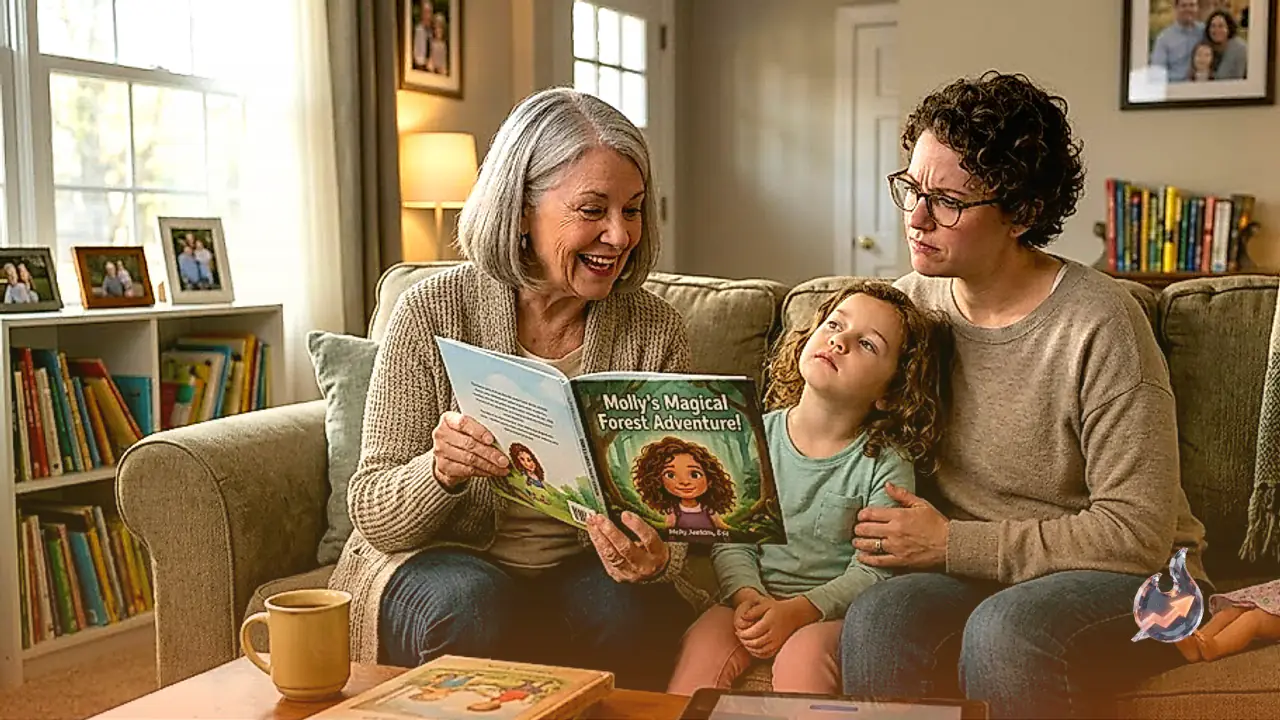
However, this trend has created friction among family members. On a prominent online forum dedicated to artificial intelligence discussions three months ago, a parent detailed an ongoing dispute with their mother. Despite explicit instructions not to upload family photographs or personal identifying details into automated tools, the grandmother persisted in generating customized storylines based on real childhood memories. The relative argued that incorporating first names and familiar settings would allow the granddaughter to see her family reflected on the page, highlighting how accessible creation tools encourage relatives to bypass parental boundaries.
Disappointed Young Readers and Family Friction
Real world feedback from households shows that personalizing a book with a child's identity does little to guarantee literary enjoyment. A 41-year-old father residing in the Midwest, who requested anonymity to preserve family relationships, shared that both of his children, aged 7 and 3, received personalized computer-generated books from family acquaintances. Despite theoretical excitement, the actual reading experience fell short.
"They are so long and wordy that, after one time through, each of my kids was like, 'Yeah, OK, let's read Little Blue Truck,'" the father observed, citing the popular children's book series written by author Alice Schertle. He noted that his children quickly grew bored with the customized output, preferring established published stories with engaging rhythm and structure.
A 40-year-old father in Los Angeles faced a similar situation after his mother-in-law gifted his 1-year-old and 3-year-old children a total of four artificial intelligence books. Among the presents were two Mother's Day themed stories that were entirely identical in narrative and structure, differing only by the child's name inserted into the text. Choosing to keep quiet to avoid domestic conflict because his wife preferred not to confront her mother, the father nonetheless regarded the practice of feeding children's photos into automated generation tools as ethically troubling.
In Chicago, artist and comedian Brandon Kirkman experienced a similar situation when his parents presented a custom synthetic book to his 4-year-old daughter. The storyline depicted activities the grandparents enjoyed sharing with her and her 2-year-old sister. Although he acknowledged the gift was well-meaning on their end, he noted that the story failed to hold the young girls' attention compared to traditional books in their home collection.
Academic Insights into Storytelling Flaws
Literary experts emphasize that artificial intelligence struggles to replicate the fundamental elements of compelling children's fiction. Daozhi Xu, a research fellow in the School of Humanities at Macquarie University who has published academic work analyzing the expansion of synthetic children's literature, notes that surface-level customization cannot compensate for weak narrative craftsmanship. According to her research, young readers form connections with books through imaginative worlds, vivid character development, and engaging plotlines rather than mere name placement.
"Compared with human-authored books, the AI-generated versions often lack humor, memorable characters, and dramatic tension," Xu explains. She highlights that common technical flaws, including spelling errors, disjointed narrative arcs, and glaring discrepancies between illustrations and accompanying text, severely hinder these books from offering educational value or genuine entertainment. Furthermore, relatives purchasing these items often overlook age-appropriate vocabulary and structural pacing, which are essential factors in supporting early childhood cognitive and emotional development.
The Broader Reading Crisis in Early Education
The influx of low-quality computer-generated books coincides with broader educational challenges regarding literacy rates. Data published in a January 2025 report from the National Assessment of Educational Progress indicates that approximately 40 percent of fourth-grade students in the United States perform below basic reading standards. Concurrently, home reading habits are undergoing a noticeable decline.
A joint study conducted last year by publisher HarperCollins and market research firm Nielsen revealed that the frequency of parents reading aloud to their children has dropped to an all-time low. Fewer than half of surveyed parents with children up to age 13 reported finding read-aloud sessions enjoyable, with Generation Z parents being particularly prone to viewing shared reading as an onerous obligation rather than a pleasurable bonding activity. In an environment where early literacy is already under stress, exposure to dry and incoherent synthetic texts can further diminish a child's enthusiasm for reading.
Privacy Concerns and Historical Comparisons
Beyond narrative quality, data security represents a major point of contention for parents. Xu points out that parents have valid reasons to feel uncomfortable when uploading their children's photographs to digital platforms without clear disclosure regarding data storage, third-party accessibility, or machine learning model training.
This uncertainty creates far greater hesitation than past forms of custom publishing. During the 1970s and 1980s, television commercials frequently advertised "Me Books," a popular personalized product line. However, those earlier books relied on a Mad Libs style framework, where publishers manually inserted personal details into pre-written, professionally authored stories without collecting digital images or building persistent user profiles.
When questioned about data protection practices, platforms have offered differing responses. Neither StoryWonderBook nor Childbook.ai provided comments regarding their privacy policies. In contrast, digital publisher Imagitime issued a formal statement explaining that it implements multiple security protocols to safeguard user data, asserting that customer information "is neither shared with unauthorized third parties" nor utilized for promotional campaigns or model training. Imagitime further maintained that its products are not strictly synthetic, claiming that a creative team of writers and illustrators participates in editing the content.
Marketplace Proliferation and Author Impact
The rapid expansion of artificial intelligence book generation also poses economic implications for the traditional publishing industry. Parents browsing retail platforms like Amazon have reported inadvertently purchasing synthetic books that lacked proper labeling, only to encounter activity pages and puzzles containing noticeable errors. The pervasive aesthetic of synthetic imagery across children's products has drawn widespread criticism from consumers.
From a cost standpoint, prices vary significantly across platforms. Imagitime sells hardcover personalized editions for $54.99 per book. Meanwhile, subscription models make mass generation accessible at lower price points. StoryWonderBook operates a monthly tier priced at $14.99 that permits users to generate up to 20 stories per month complete with audio narration and a digital library. Childbook.ai offers a $24 monthly premium plan allowing up to 50 story creations per month alongside one physical printed copy delivered to the subscriber's home.
These automated tools allow individuals to mass-produce children's stories on a virtual assembly line at a fraction of the time and expense required by human authors and illustrators. Social media influencers frequently market these tools as lucrative side hustles, encouraging users to generate books for quick financial return. This business model relies on the mistaken premise that young children cannot discern between thoughtful literature and generic synthetic text. However, initial consumer responses demonstrate that young readers easily recognize the difference, prompting parents to push back against low-quality synthetic gifts.