





















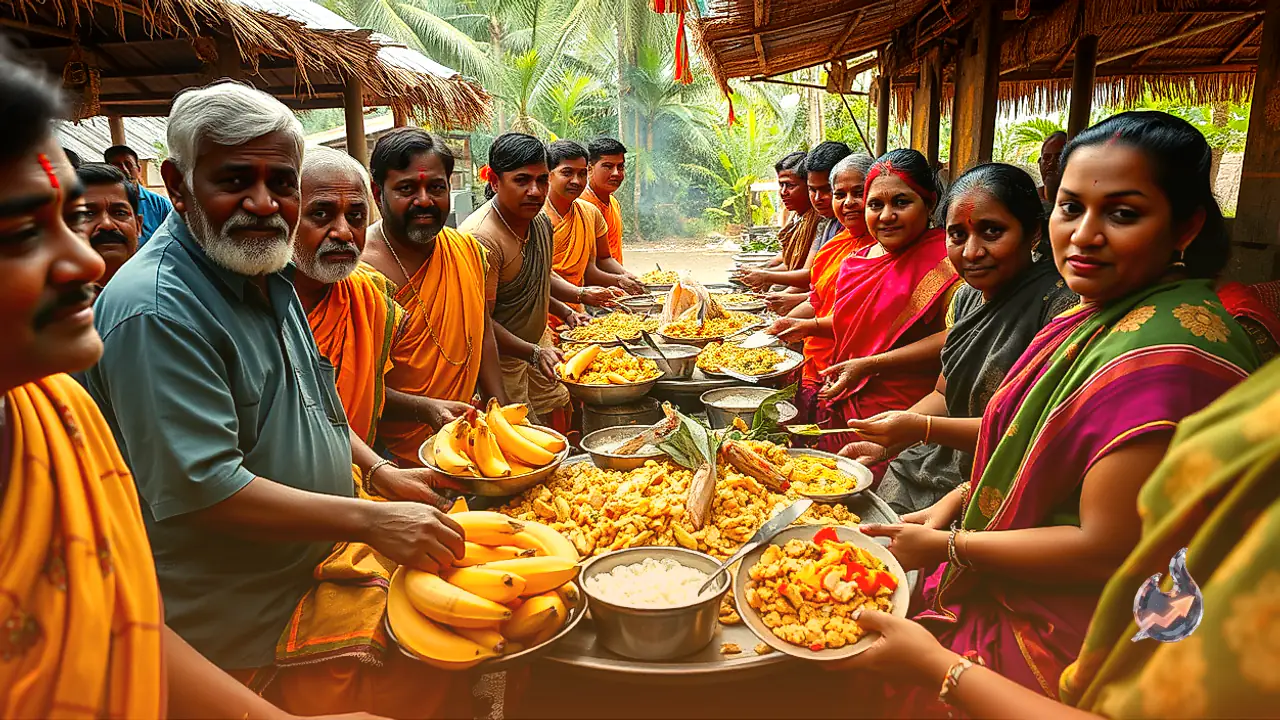

Every region across India nurtures its own distinct culinary heritage, with specific festive delicacies crafted to welcome guests and mark sacred occasions. Within this vibrant mosaic, Kerala's traditional grand banquet known as Onam Sadhya holds an exceptional place. Far beyond an elaborate assortment of dishes assembled on a platter, it stands as an enduring reflection of the state's living culture, deep-rooted heritage, and spirit of collective celebration. Prepared exclusively as a pure vegetarian feast during the festive period of Onam, this banquet is always served according to time-honored rituals on a fresh banana leaf.
The Legend of King Mahabali and Harvest Traditions
Onam Sadhya is traditionally cooked and enjoyed during Onam, which is the primary harvest festival of Kerala. In regional folklore, this celebratory occasion is intrinsically linked to the legendary King Mahabali and celebrations surrounding agricultural abundance and community prosperity. As the festival arrives, families, neighborhoods, and wider communities assemble together to rejoice and share this sacred meal. The word 'Sadhya' itself denotes a grand banquet or community feast. An extensive selection of recipes is presented together in a single dining sitting. At the same time, the precise count of dishes and their culinary preparations may vary based on family traditions, local districts, and the specific scale of the gathering.
The Practice and Practicality of Dining on Banana Leaves
The definitive signature of Onam Sadhya is the customary practice of presenting every item on an expansive banana leaf. Steamed rice forms the core serving, flanked by an array of seasonal vegetables, fragrant curries, tangy pickles, and assorted accompaniments positioned across specific sections of the leaf. Dining in this organic manner remains a foundational element of Kerala's gastronomic history. Beyond cultural symbolism, using fresh banana leaves serves a very practical domestic purpose by significantly cutting down the requirement for multiple individual serving utensils. However, the heart of Sadhya extends beyond the leaf itself; it lies in the elaborate custom of serving dozens of complementary preparations concurrently in a single sitting.
Signature Delicacies That Define the Vegetarian Spread
Within the culinary architecture of Onam Sadhya, rice typically serves as the primary staple anchoring the meal. Surrounding it are classic preparations such as sambar and parippu, which is a seasoned lentil dish. The leaf is further enriched with delicacies including avial, thoran, olan, koottu curry, and a selection of freshly prepared pickles. Among these distinct items, avial combines an assortment of native vegetables simmered with grated coconut. In contrast, thoran consists of finely chopped vegetables tossed lightly with fresh coconut shavings. Another gentle preparation is olan, which commonly blends white gourd or alternate seasonal vegetables gently simmered in creamy coconut milk. The grand meal reaches its ceremonial conclusion with payasam, the celebrated sweet dish. This traditional dessert can be prepared in multiple ways using staple regional ingredients such as rice, lentils, milk, or jaggery.
A Unifying Symbol of Communal Harmony and Regional Flavor
The true essence of Onam Sadhya rests in the balanced convergence of authentic indigenous ingredients, distinct local cooking styles, and centuries of preserved heritage. This banquet offers a rare opportunity for relatives and community members to sit side by side on equal footing to share food. Consequently, viewing Sadhya solely as an everyday culinary tradition does not capture its broader meaning. It remains the beating heart of Kerala's foremost harvest festivities and a powerful reflection of unity, generous hospitality, and shared cultural pride.