






















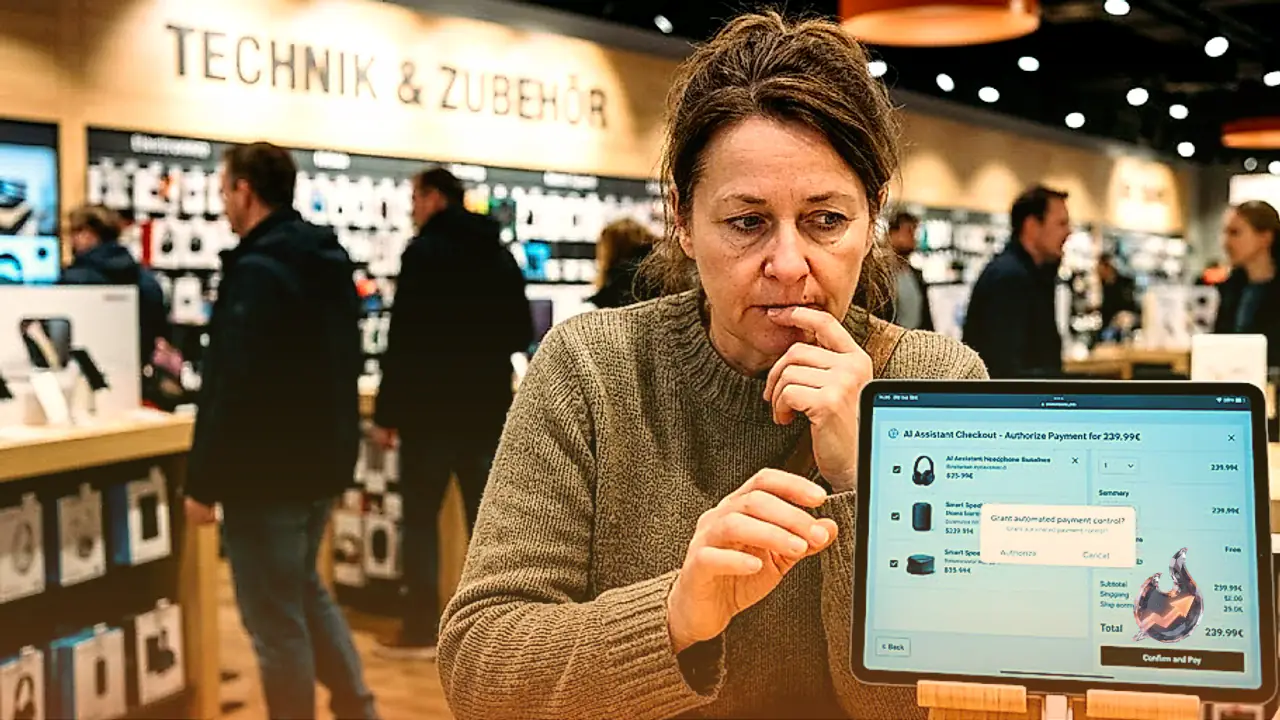

The integration of artificial intelligence into e-commerce has rapidly advanced beyond routine customer support chatbots and conversational queries. Today, personal AI assistants are being built to oversee the entire retail journey, taking charge of product research, price comparisons across competing platforms, and executing the final financial checkout. Offerings such as Meta's Muse highlight this emerging capacity for autonomous purchasing on behalf of users. However, despite rapid technological strides, consumers remain distinctly cautious about delegating total buying power to algorithmic tools.
Survey Data Highlights Consumer Reluctance
To measure public appetite for autonomous retail, YouGov conducted a study on behalf of ACI Worldwide, gathering feedback from over 3,000 adults in the United States and the United Kingdom regarding fashion and sportswear purchases. The findings revealed strong skepticism, with 53 percent of respondents explicitly stating they would under no circumstances permit an AI assistant to make purchases on their behalf. In stark contrast, only 7 percent expressed willingness to allow an agent to execute transactions without requiring prior authorization.
A broader investigation conducted by Accenture across more than 25,000 consumers painted a similarly nuanced picture. Roughly 74 percent of participants acknowledged that they could trust a personal AI agent more than their closest friend to select the correct item for their needs. Nevertheless, enthusiasm evaporated when it came to entirely autonomous purchasing devoid of human confirmation, with merely 9 percent prepared to embrace such automation. Approximately one-third of the participants favored a middle path, preferring that AI recommend and decide what to buy while reserving checkout and payment strictly for themselves.
Assistance in Discovery, Caution at Checkout
The numbers demonstrate that consumers appreciate software efficiency when narrowing down choices and analyzing market options, but draw a firm line at handing over the wallet. Dan Coates of ACI Worldwide pointed out that the current hurdle centers on trust, noting that while people are comfortable leaning on AI for product discovery and decision-making, they ultimately want to pull the trigger themselves.
Industry analysts describe the current landscape of agent-led commercial buying as resembling an unregulated digital wild west. To establish structured boundaries, payment networks are developing specialized frameworks, including Agent Pay by Mastercard and Intelligent Commerce by Visa. These emerging guidelines are intended to set clear rules governing how autonomous agents, shoppers, online merchants, and financial institutions interact, thereby introducing critical layers of transparency and institutional safeguards.
Privacy Missteps and the Timeline for Adoption
Consumer confidence will require steady reinforcement, particularly in light of early procedural flaws. In one publicized instance, a YouTuber revealed that Muse exposed their home address on Facebook Marketplace and scheduled a physical pickup without their explicit awareness.
Addressing such concerns, Meta maintains that Muse is designed to always request authorization before committing to actions. Phil Bruno of ACI noted that an isolated negative occurrence can swiftly undermine public confidence, whereas genuine consumer trust is built slowly over time. He observed that adoption will likely follow a familiar pattern, beginning with early technology adopters before expanding to the general public, primarily across platforms where users are already accustomed to seamless one-click ordering mechanisms, such as Amazon.
Bruno emphasized that the fundamental dilemma is not simply whether automated agents are technically functional, but rather how much better they are, questioning whether their utility is compelling enough to make shoppers genuinely desire automated purchasing. Until industry standards adequately resolve concerns surrounding data safety, financial transparency, and final human control, shoppers are set to keep the final payment decision firmly in their own hands.