


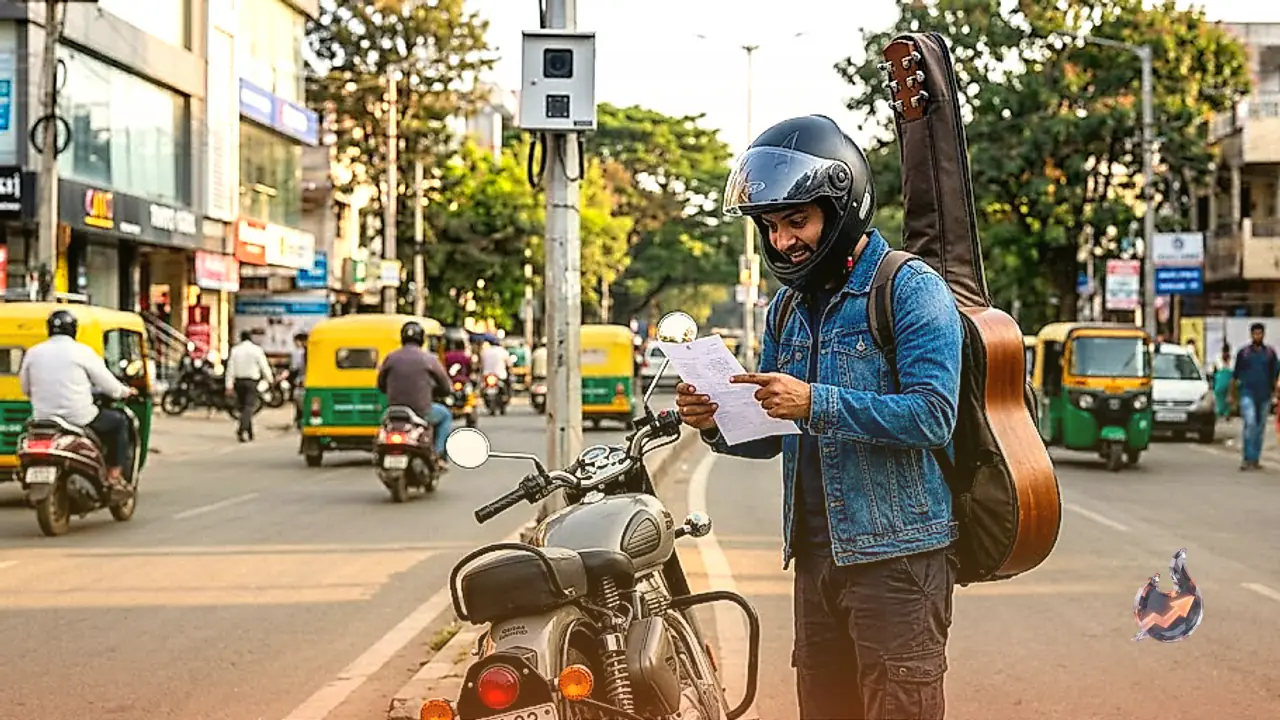




















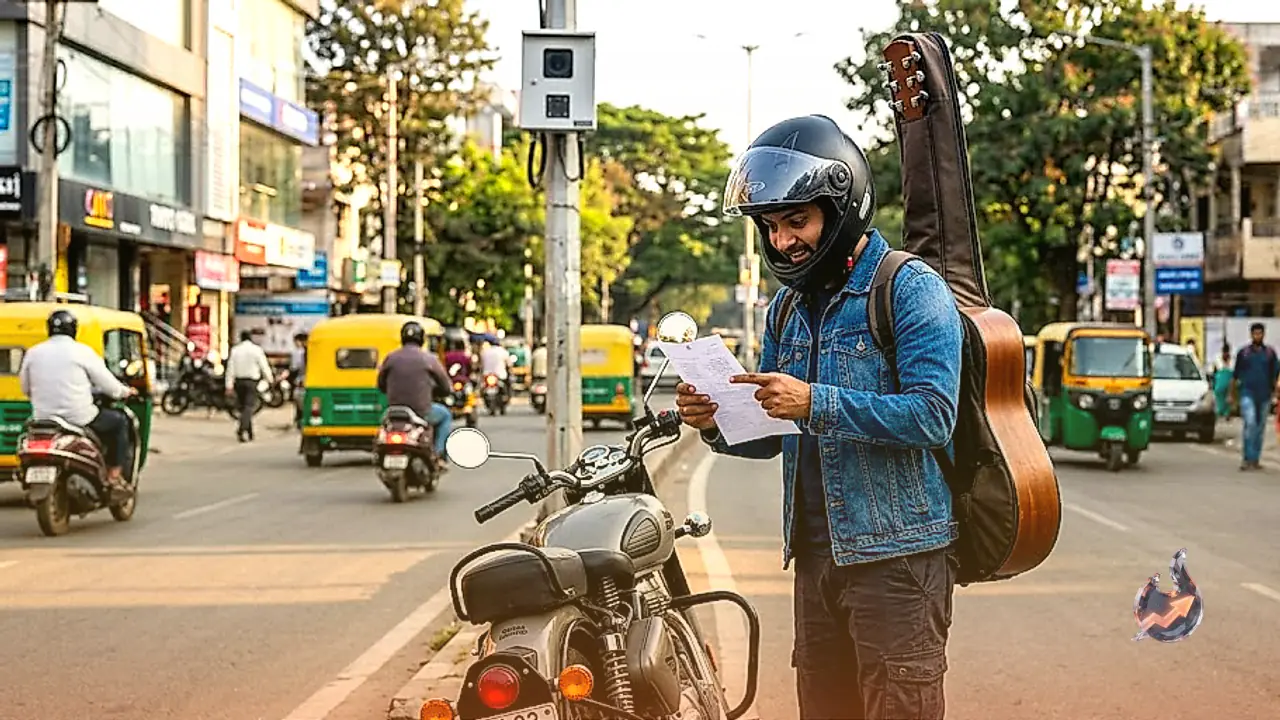

Modern traffic surveillance powered by artificial intelligence is designed to enforce road discipline with precision, but when automated systems operate entirely without human intuition, bizarre errors can occur. In a peculiar incident in Bengaluru, an AI-powered traffic camera mistook a guitar strapped to a commuter's back for a helmetless pillion passenger, resulting in a fine of five hundred rupees. This technical glitch highlights the ongoing challenges faced by automated surveillance networks operating on city thoroughfares, turning a routine safety check into a widely discussed talking point across digital platforms.
How the Strange Traffic Mistake Occurred
Souvik Datta was riding as a pillion passenger on a scooter driven by his wife while carrying a guitar strapped securely to his back. As they traveled along the Outer Ring Road, the automated surveillance camera misinterpreted the musical instrument as a human passenger traveling without proper headgear. By the very next day, a formal challan along with an automated photographic snapshot demanding five hundred rupees arrived at his doorstep. When Datta published details of the bizarre occurrence on social media, the city's automated monitoring infrastructure became the subject of widespread ridicule. As the matter drew public attention, Joint Commissioner of Police (Passenger) Karthik Reddy assured that authorities would examine the error and cancel the erroneous penalty. Bengaluru police originally deployed AI-powered cameras in December 2022, and although officials implemented manual verification processes following earlier complaints about misread number plates and system flaws, such errors continue to surface.
Global Precedents of Automated Monitoring Errors
This isolated incident is not unique, as similar technological missteps have frequently emerged as a persistent nuisance for drivers across various regions. In Athani within Karnataka's Belagavi district, an automated surveillance camera penalized a car owner five hundred rupees for failing to wear a helmet while driving a four-wheeler. In response to the absurd notice, the motorist recorded a video of himself driving the automobile while wearing a motorcycle helmet to highlight the system's flaw. Similarly, another motorist was previously penalized for driving without a seatbelt despite wearing one, because the monitoring equipment failed to distinguish between the color of the driver's shirt and the safety strap. International jurisdictions face comparable challenges, as demonstrated in Australia during May, where sixty percent of appeals against similar automated traffic penalties proved successful, underlining the universal limitations of current automated enforcement technology.