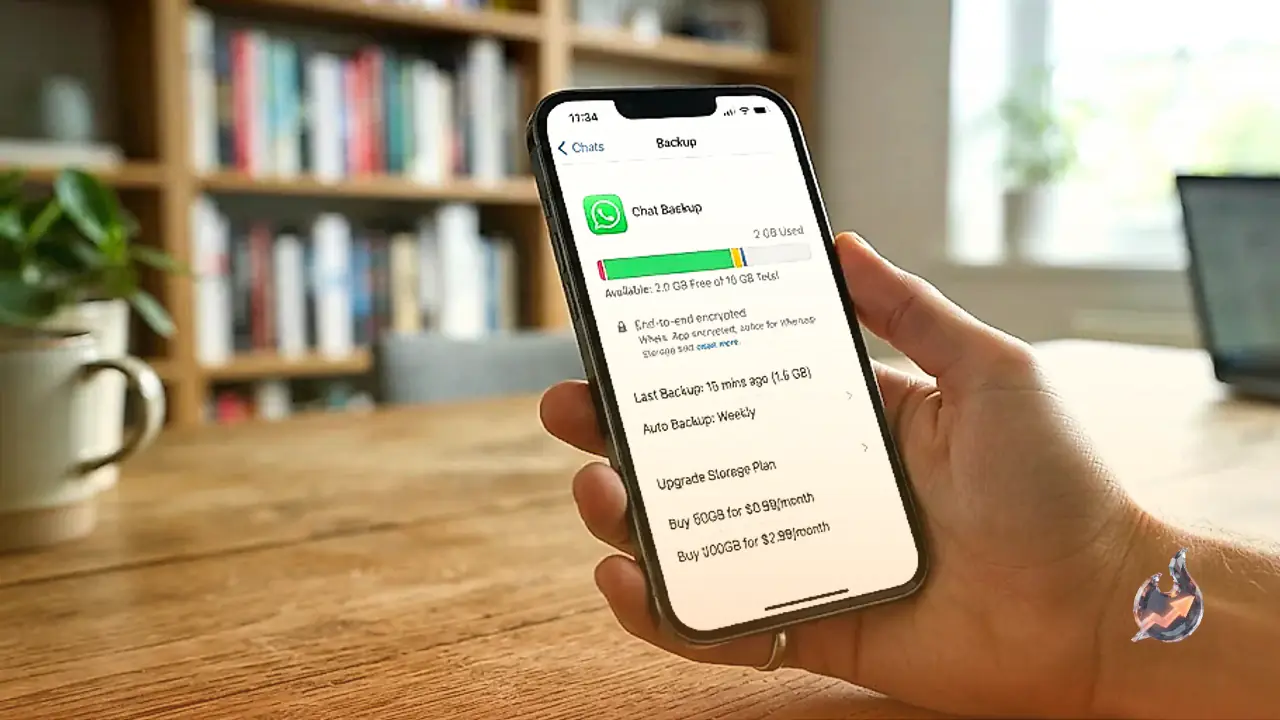

Meta-owned messaging platform WhatsApp is preparing to introduce an in-app cloud storage option, giving users an alternative to Google Drive for backing up their chats. A key aspect of this upcoming feature is that all data saved within this internal cloud will remain end-to-end encrypted by default, ensuring that user conversations stay secure without relying entirely on external services.
The platform is currently testing this capability among select Android beta testers. Once rolled out widely, users will have the flexibility to choose whether they want to store their WhatsApp chat backups on the platform's native cloud storage or continue using Google Drive based on their personal storage requirements.
WhatsApp may offer 2GB free cloud storage
According to reports tracking beta developments, this feature has been spotted in the Android beta version 2.26.46.4 of the application. The company is reportedly planning to provide users with up to 2GB of complimentary cloud storage space. For individuals whose backup needs exceed this initial limit, various paid subscription tiers will be made available to purchase.
In India, the pricing for the WhatsApp Plus subscription has been noted at 79 rupees per month, which expands the storage limit up to 100GB. For users requiring significantly more capacity, higher-tier options like the Meta One subscription are designed to step in. The Meta One Core plan is priced at 549 rupees per month and delivers up to 4TB of storage space.
However, maintaining access to this storage facility requires an active subscription status. Reports indicate that if a user fails to renew their plan, WhatsApp will preserve the final backup on its servers for a period of up to four months. Failing to renew the subscription within this grace window could result in the permanent deletion of the stored backup data.
Enhanced security with custom passwords and passkeys
Security remains a cornerstone of this new cloud infrastructure. Data saved to this storage tier will be protected via end-to-end encryption by default, and users will not be given an option to disable this security layer. Anyone preferring an unencrypted backup routine will need to rely on alternative platforms such as Google Drive or iCloud.
Furthermore, users will have access to advanced security mechanisms to lock down their backups, including custom passwords, modern passkeys, or a 64-digit encryption key for maximum protection against unauthorized access.
At present, this functionality is restricted to a small circle of Android beta testers. Industry observers anticipate that WhatsApp will soon extend beta testing to iOS users as well. However, an official launch timeline for the general public has not yet been announced by the company.