




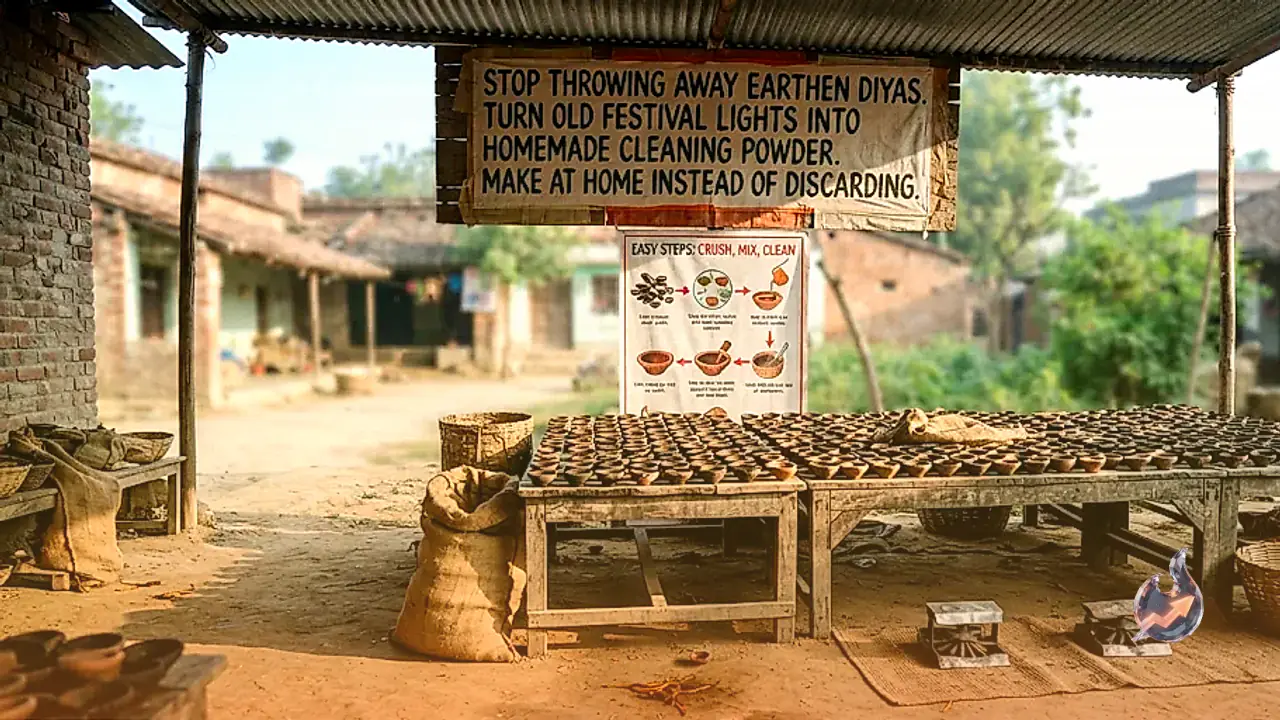

















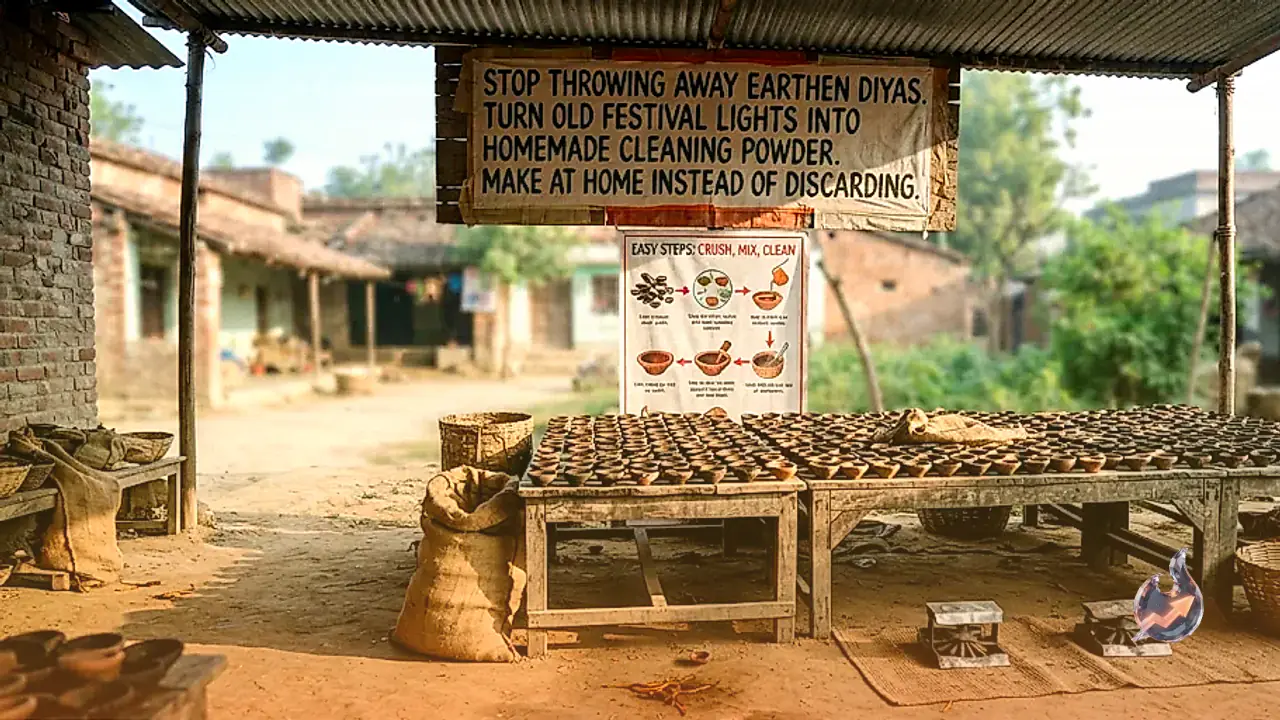

Most people consider old earthen diyas completely useless once festivals are over and throw them away in the trash. However, these humble items can be repurposed for everything from home decoration to making your kitchen utensils shine like new. You do not need to spend money on expensive commercial cleaning products from the market when you can easily prepare a Pitambari-style cleaning powder right at home. This homemade powder can be created using common items already present in your house, and the procedure to make it is remarkably straightforward.
Cleaning and Preparing the Diyas
The process begins by collecting all the old earthen diyas lying around the house. You must ensure that they are free from leftover oil, soot, or any other stubborn dirt before proceeding. Wash the diyas thoroughly and let them dry out completely under the sun or in a well-ventilated space until no moisture remains.
Crushing the Diyas Into a Powder
Once the earthen diyas are completely dry, carefully crush them into a fine powder. During this step, make sure that the small pieces of clay do not fly around haphazardly and enter your eyes or respiratory tract through inhalation, as safety should always come first while processing dry clay.
Sieving the Ground Powder
Next, pass the crushed clay powder through a standard sieve or strainer. This crucial step separates any large or coarse chunks of clay from the mixture, leaving you with an ultra-fine, uniform powder that is ideal for rubbing against stubborn stains without being excessively abrasive.
Adding Salt and Detergent
Now, take the fine clay powder and mix half a teaspoon of common salt along with half a teaspoon of regular detergent powder into it. Blend both ingredients thoroughly with the clay powder. This simple combination completes your homemade cleaning powder, which performs just like commercial metal cleaning pastes.
Important Precautions During Use
Since fine clay particles can potentially scratch certain delicate metallic surfaces, you should never scrub utensils too harshly with this mixture. Avoid using this powder on expensive, designer, or tin-plated utensils altogether. Always test the mixture first on a small, hidden area of an old or rarely used utensil before applying it broadly. After cleaning, rinse the utensil thoroughly with clean water and wipe it dry with a clean cloth. Always take care to protect your hands and eyes while preparing and using this cleaning compound.