






















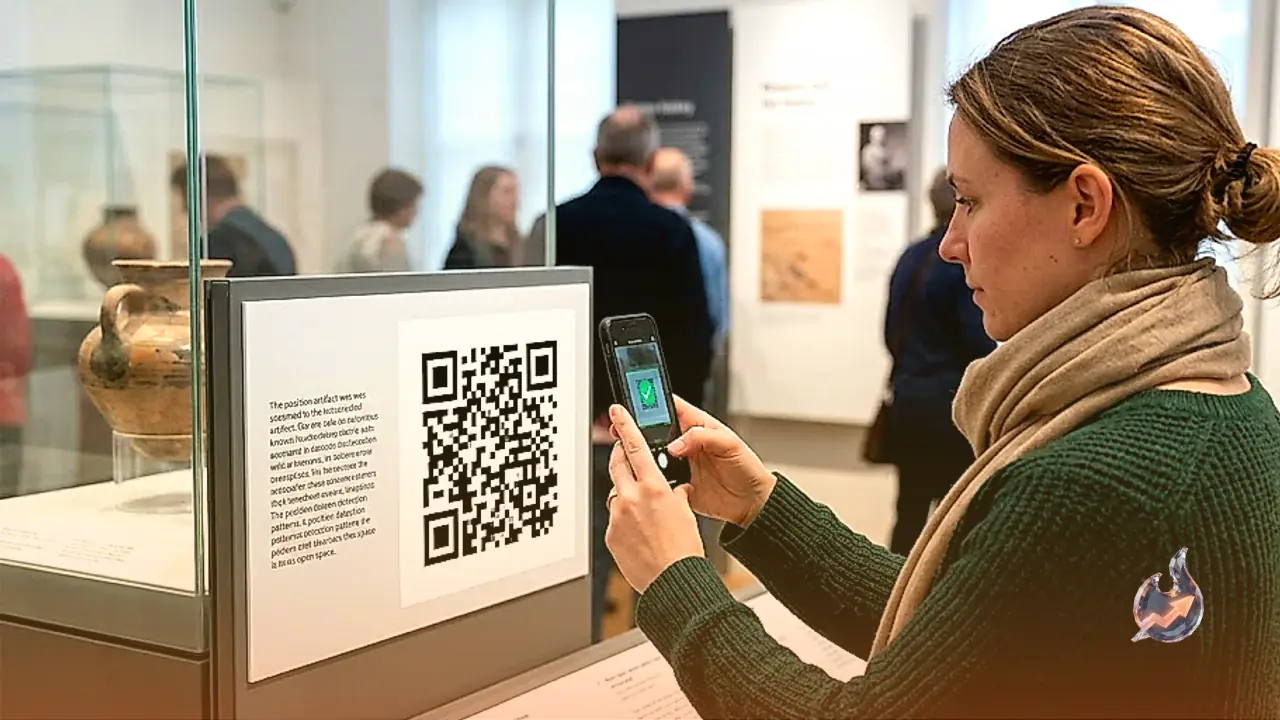

In today's digital era, QR codes have become an inseparable part of our daily routines. Whether you are paying for tea at a local shop, booking transit tickets, or opening a website menu, these pixelated squares are everywhere. Although we use this technology constantly, very few people pay attention to its intricate design details. If you observe closely, almost every code features square boxes on three of its corners, whereas the fourth corner remains completely blank. Many people assume this is merely an aesthetic design, but a remarkably smart engineering concept operates behind it to complete scans in a flash.
Understanding Finder Patterns
In technical terminology, these three prominent squares are referred to as finder patterns or position detection patterns. You can think of them as the eyes of the QR code. When you point your mobile camera at a code, these three boxes are the very first elements that signal the software about the presence of a scannable grid. This allows the camera to bypass the surrounding background and immediately focus on the encoded data.
Scanning from Any Angle
When you scan a code, your phone does not need to be held in a perfectly upright position. You can tilt it, hold it upside down, or view it from virtually any angle. These three markers help the scanner understand the precise orientation of the code. Upon detecting these shapes, the scanner internally adjusts the image instantly, which is why the entire recognition process takes merely 0.1 seconds.
The Purpose of the Empty Fourth Corner
If large square boxes were placed on all four corners, a phone would struggle to determine which side is up and which side is down. From a geometric standpoint, precisely three reference points are sufficient to establish the orientation of any rectangular object. The absence of a box at the fourth corner acts as a directional indicator, allowing the scanner to recognize whether the code is right side up.
Origins and Evolution in Japan
The QR code was invented back in 1994 by a Japanese company named Denso Wave. Initially, its primary application was tracking automobile parts and managing inventory during manufacturing. Over the decades, it evolved far beyond industrial use to become a cornerstone of modern digital life across the globe.