






















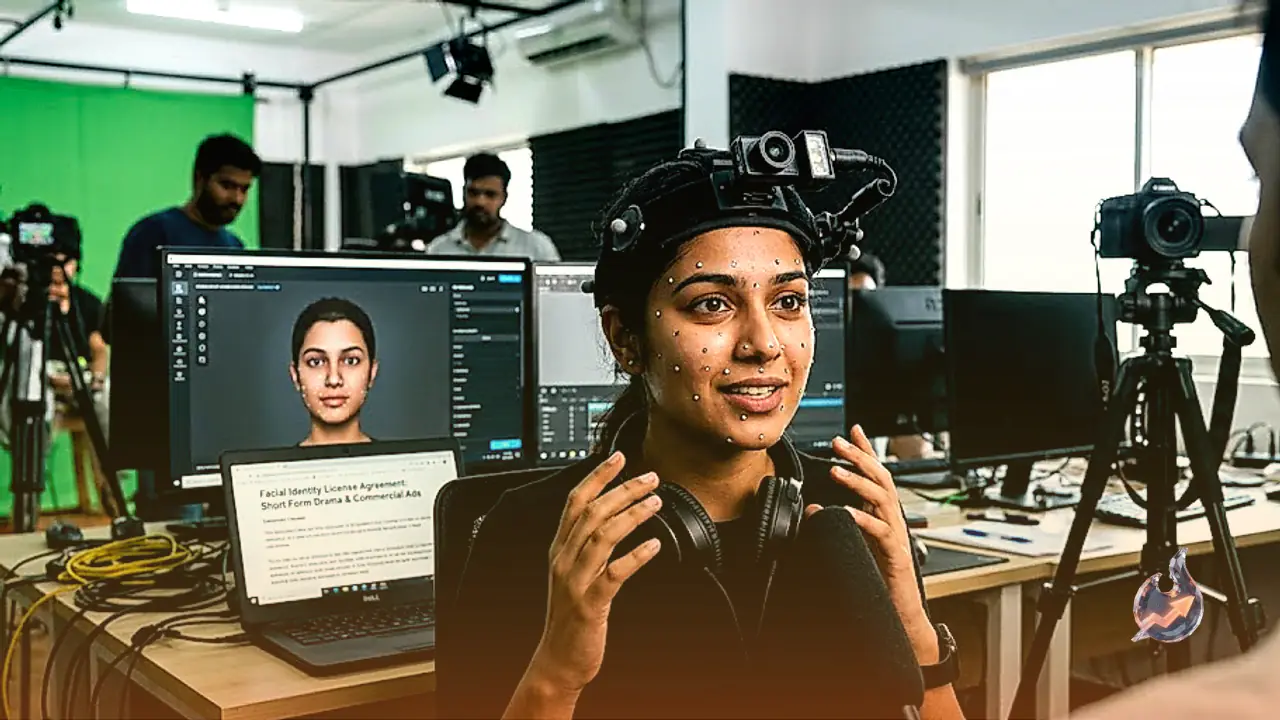

Rapid strides in artificial intelligence are reshaping how people generate income online, creating novel revenue opportunities that previously seemed unimaginable. For decades, lucrative licensing deals for personal appearances were reserved exclusively for film stars, athletes, and prominent celebrities. Today, automated generation tools have democratized this landscape, enabling ordinary individuals to monetize their physical appearance without ever stepping onto a film set. By licensing their facial likeness as digital assets, young people are turning personal identity into a flexible and profitable revenue stream.
Human Likeness as Digital Property
In China, an expanding network of specialized online platforms is transforming everyday faces into tradable digital property. These services connect registered individuals directly with synthetic media creators, video producers, and commercial developers. Instead of hiring traditional actors or models, creative teams purchase licenses to incorporate realistic human features into short web dramas, digital advertisements, video games, and streaming clips. This setup allows production companies to dramatically slash production costs and shooting schedules, while regular participants earn money simply by granting access to their digital portrait.
Lucrative Deals Reaching 14 Lakh Rupees
The financial rewards in this emerging market vary widely based on usage rights and scale. Base entry fees can start as low as 50 yuan, approximately 700 rupees, but comprehensive or exclusive deals can climb as high as 99,999 yuan, which is around 14 lakh rupees. For instance, a 34-year-old individual secured 99 yuan, about 1,400 rupees, for permitting a single-use appearance of his likeness in digital media. Because the entire pipeline relies on computer-generated imagery, participants are spared the physical demands of standard acting, earning fees purely for the rights to their visual data.
Granular Rights and Licensing Conditions
A key selling point promoted by these marketplaces is the degree of editorial control retained by users over their biometric data. When creating an account, individuals can customize their profile terms, specifying acceptable content genres and setting firm boundaries regarding the contexts in which their likeness may appear. Users explicitly establish how long a developer can use their likeness, the types of commercial or entertainment productions permitted, and the duration of distribution rights. These stipulations allow everyday contributors to restrict access and retain final authority over their personal digital image.
Bank Worker Earns 35 Thousand in Three Days
The real-world earnings potential is evident in the case of a Chinese bank employee who licensed his facial data for a brief three-day window. Over that short interval, the platform deployed his portrait across 7 separate instances, generating a payout of 2,500 yuan, roughly 35,000 rupees. In the city of Shenzhen, an enterprise named Yuanxiang Xinsheng operates an active marketplace that enables young residents to register as virtual performers. Through this framework, ordinary workers establish supplementary income streams from home without participating directly in video creation.
Escalating Privacy Concerns and Risks
Despite the attractive economic returns, the rapid growth of digital face rentals has sparked urgent discussions around data security and privacy. The primary risk centers on personal agency and the long-term control of sensitive biometric profiles once shared with third-party software engines. Even with contractual caps and strict usage parameters, the threat of unauthorized deepfake generation, identity replication, and unintended content associations remains significant. As more people treat their facial identity as a rentable commodity, balancing lucrative commercial benefits against permanent privacy exposure presents an unresolved dilemma.