






















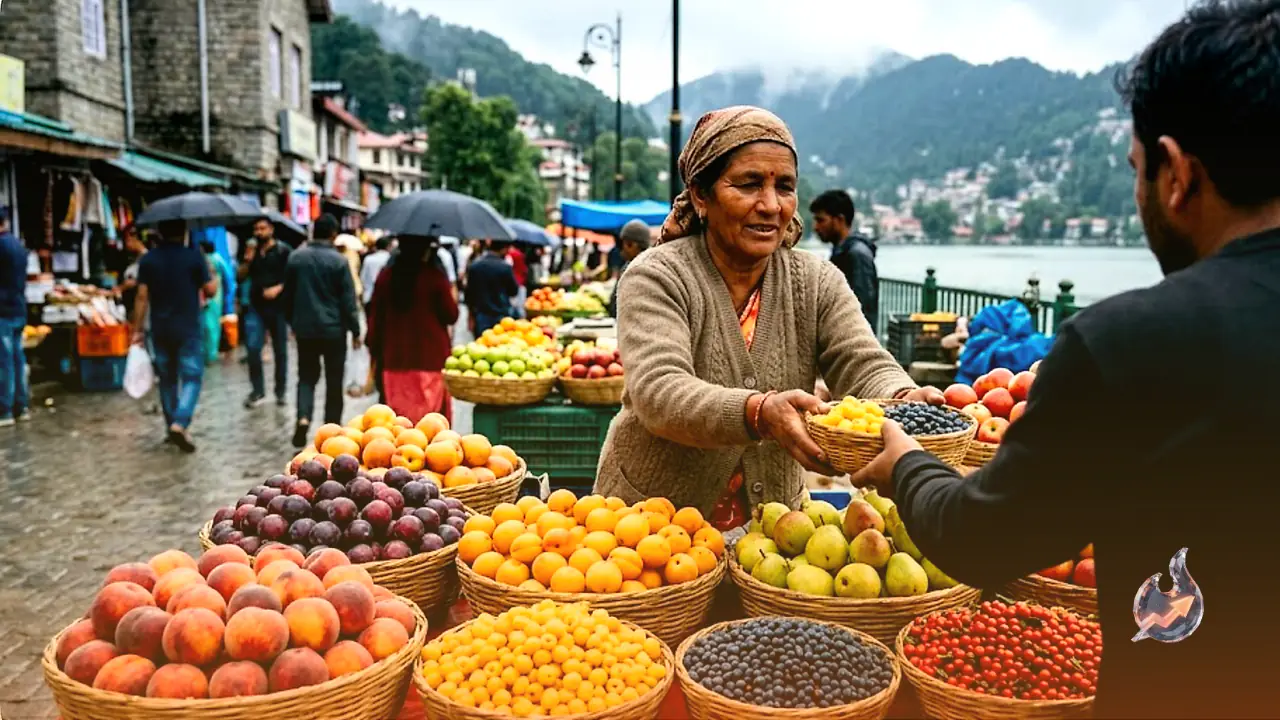

Wrapped in clouds, washed-green hillsides and cool monsoon air give Nainital a completely different charm during the rainy season, and this year is no exception. Markets in Mallital, Tallital and the surrounding areas are packed with colourful hill fruits, which is exactly why visitors coming here aren't just chasing lake views and mountain scenery. Many end up getting a real feel for hill life simply by tasting what's sold at the local stalls. Along with orchard fruits like peaches, plums, apricots, pears and apples, wild fruits such as hisalu, kilmoda and ghingaru also show up in the markets during these weeks.
The sweetness and aroma of peaches
Peaches grow in abundance across Nainital and the surrounding hill villages during the monsoon. Light red and yellow in colour, the fruit is known for its strong aroma and juicy flavour. Fresh peaches arriving straight from local orchards immediately catch tourists' attention at the markets. Grown in the cool climate of the hills, this peach carries a distinct sweetness that sets it apart from fruit grown in the plains. Beyond eating it raw, people also use it to make juice, jam and various sweets. Anyone visiting Nainital during the monsoon should make it a point to try this hill peach.
The tangy-sweet identity of plums
Plums, known locally as aloobukhara, are also sold widely in Nainital's markets during the rainy season. Its sweet-and-sour taste appeals to everyone, from children to elders. The fruit comes in deep red, purple and yellow shades, and is as visually striking as it is distinctive in taste. The freshness and juiciness of hill plums set it apart from ordinary fruit found elsewhere. In the Nainital region, this fruit is grown the most in the Ramgarh-Mukteshwar area, and locals also enjoy eating it with salt and chilli. Tasting plums during a Nainital trip can make the visit even more memorable.
The juicy flavour of apricots
Apricots, or khumani, are an extremely popular seasonal fruit in the hill regions. Around the monsoon, the trees are dotted with small yellow and orange fruits that carry a mildly sweet, juicy taste. Apricots are easily available in the villages around Nainital and in local markets. Many families also dry them so the flavour can be enjoyed long after the season passes. Apricots are also used to make jam, chutney and assorted sweets. Visitors to Nainital should not leave without tasting apricots.
The distinct fragrance of hill pears
Hill pears also show up prominently in the markets during the monsoon. Though small in size, they are exceptionally sweet and juicy, making them a favourite among locals and tourists alike. Grown in the soil and climate of the hills, the pear carries a fragrance quite unlike its plains-grown counterpart. Pear cultivation is prominent in Nainital's Mukteshwar and Ramgarh areas, and eating it with pahari noon, a local salt preparation, doubles the enjoyment. Anyone travelling to Nainital should make sure to try this hill fruit.
The crisp sweetness of apples
The word apple instantly conjures images of the mountains. Nainital and the wider Kumaon region grow several varieties of apples across different seasons. The local apples available in the markets during the monsoon may be smaller in size, but their taste is exceptional. Their sweetness and crunch are widely loved, and since these apples come straight from hillside orchards, they stay fresh and fragrant. A trip to Nainital is incomplete without tasting these hill apples.
Wild fruits like hisalu, kilmoda and ghingaru
Hisalu is a wild fruit found in the mountains that appears especially during the monsoon. This small yellow and orange fruit has a mildly sour-sweet taste. Neeraj, a resident of Mukteshwar, said that hisalu, which grows on hill slopes and around forests, is tied to the childhood memories of local residents. There is a special joy in eating it freshly plucked, and in several places, locals also sell it in the markets. Anyone who comes across hisalu while exploring around Nainital should try it. Kilmoda is another wild fruit of the hills with a taste and identity of its own. Deep purple in colour, it appears in hill forests and on slopes during the monsoon. Neeraj said locals prefer eating it with salt or spices. Kilmoda has a mildly sour and astringent flavour that sets it apart from other fruits, and it is seen as a symbol of the taste tied to hill life and nature. Ghingaru, meanwhile, is a small but special wild fruit found in hill regions, red or dark red in colour, with a mildly sour-sweet taste. Ghingaru trees appear around villages and forests in the hills during the monsoon, and locals have been eating it since childhood, treating it as a native gift of the mountains. Its fragrance and flavour carry the distinct identity of hill soil. Tasting wild fruits like ghingaru during a Nainital trip offers a chance to get closer to hill culture.