


















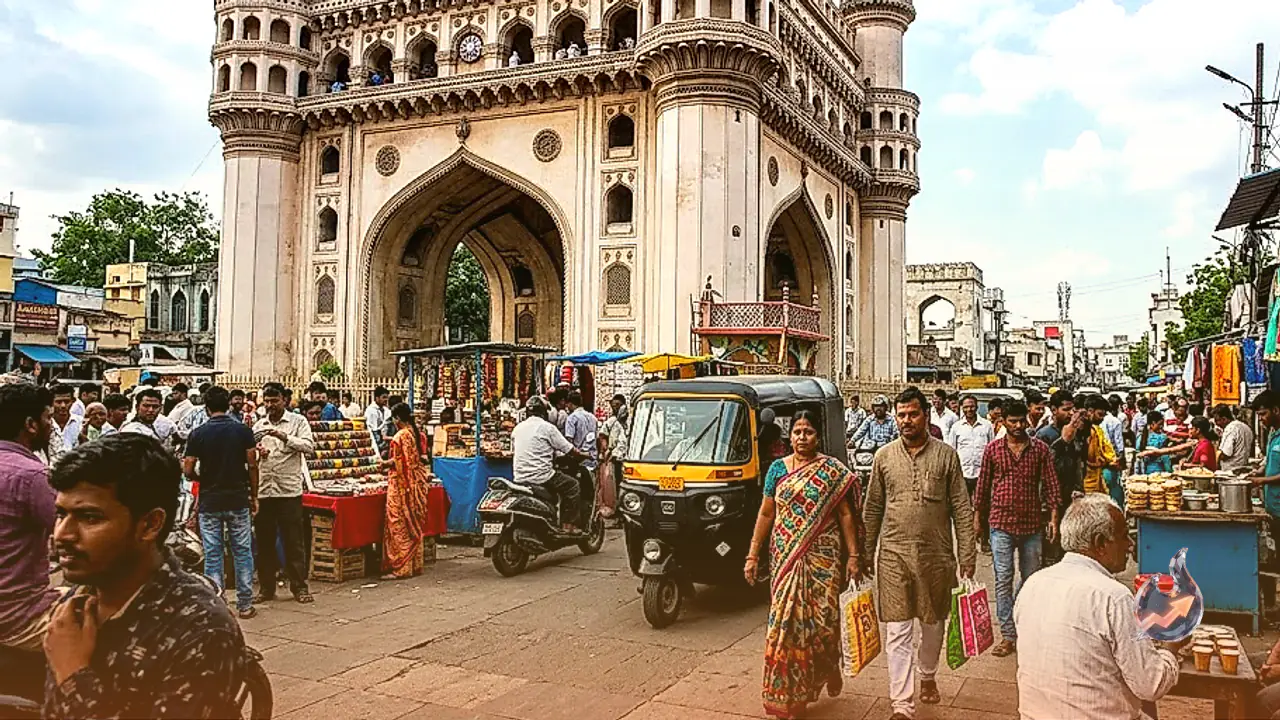

In Hyderabad, a visit to Charminar does not always end at its upper level. Many residents treat the 430-plus-year-old landmark as a familiar part of their shopping routes, tea stops and daily movement around the Old City. They may circle it repeatedly, yet keep putting off the climb for years.
Charminar, the historic building linked to Quli Qutb Shah, is one of the images most closely associated with Hyderabad, along with the city's flavorful biryani. Hundreds of thousands of tourists from India and overseas join long ticket queues, climb the winding stairs and look out over the Old City from above. By contrast, when local Hyderabadis are asked about their last visit to the top, most remember a school trip from childhood or an outing made when relatives arrived from out of town.
A daily backdrop, not a distant attraction
This casual approach does not mean locals disregard the monument. It reflects a Hyderabadi culture and temperament in which Charminar is part of everyday life. Residents of the Old City work, shop and move through its surroundings so routinely that going upstairs does not feel like an urgent, separate excursion.
The daily attractions around it explain that pattern. A visitor may go to Lad Bazaar for lac bangles and studded jewellery, to Medina Chowk for ittar and clothes, or to watch the activity around Gulzar Hauz on Ramadan nights. Movement around Charminar continues through the day and late into the night, giving residents many reasons to be nearby without necessarily entering the upper level.
Across from the monument stands the historic Nimra Cafe. People can spend hours there over Iranian tea and Osmania biscuits, watching Charminar from their seats. Even after such a long visit, the idea of buying a ticket for the climb often does not arise.
The reassurance of going another day
Majid Anna traces this behaviour to an easygoing Hyderabadi habit of leaving the trip for another day. Locals know that the impressive monument is in their own city and treat its availability almost like having a courtyard at home. That reassurance allows days and months to pass, and sometimes generations can pass before the visit happens.
For many residents, the first floor becomes part of the plan only when they must show the site to a friend or relative visiting from another city. In that role, the local host effectively becomes a tourist guide and finally steps onto a level they had previously kept postponing.
Familiarity makes the climb optional
Visitors from across the world remain eager to photograph the building and even touch its minarets. For Hyderabadis, however, Charminar is not a distant marvel reserved for a special outing. It is embedded in the rhythm of their lives and regular journeys, so familiarity makes the climb feel optional rather than essential.
The local joke captures the contrast neatly: a true Hyderabadi may complete 100 circuits of Charminar but still feel no urgency to go upstairs. The remark contrasts residents' everyday relationship with the monument against the way visitors from elsewhere approach it.