





















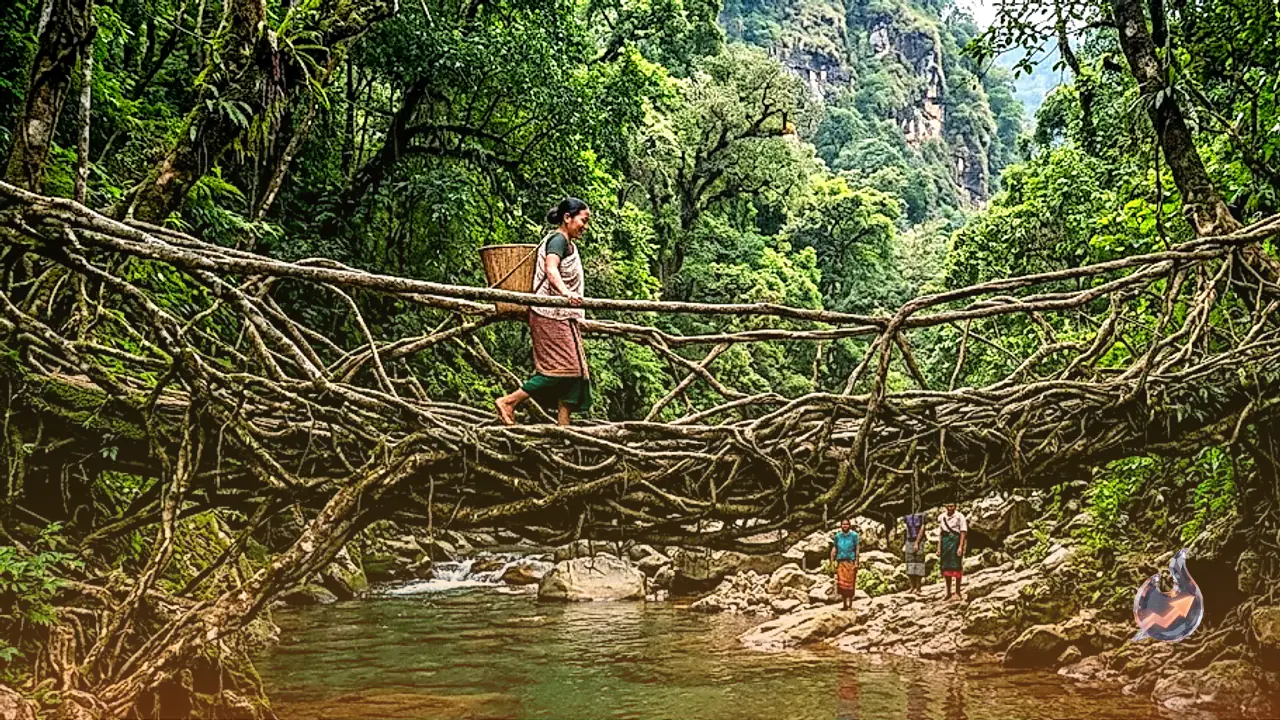

Tucked away in the hills of Meghalaya is a bridge that was never built with bricks, cement or a single rod of iron. The structure at Dawki was instead grown, formed by steering the living roots of trees along a fixed path for years on end, and that unusual origin is exactly why travellers keep making the trip to see it.
Set against green hills and thick forest, the bridge is as striking to look at as its slow, patient formation is fascinating.
How roots turn into a bridge
Locals choose rubber fig trees, known by the botanical name Ficus elastica, because their roots are unusually strong and pliable. In the early stages, bamboo or wooden scaffolding is used to carry the roots from one bank of a river or stream to the other, giving them a path to follow as they grow.
Over time, the roots thicken and intertwine, gradually forming a solid structure sturdy enough for people to walk across. The entire process can stretch across several decades, which is why these are described as living bridges rather than ordinary engineered ones. Local communities keep tending to them so the roots keep growing in the right direction, and as the roots mature further, the bridge only gets stronger.
A tradition kept by the Khasi and Jaintia communities
What makes this technique remarkable is that it works with nature rather than against it. Crossing rivers and streams in Meghalaya's difficult hilly terrain has long been a challenge, and that very need led the Khasi and Jaintia communities to develop this traditional method. The knowledge has been passed down through generations and is still practised with the same care today.
Several older living root bridges remain in active use even now. Some are said to be more than 100 years old, though the age and strength of any given bridge depends on its location, the surrounding climate and how well it has been maintained, so no two bridges have quite the same story.
The Umngot river and Dawki's setting
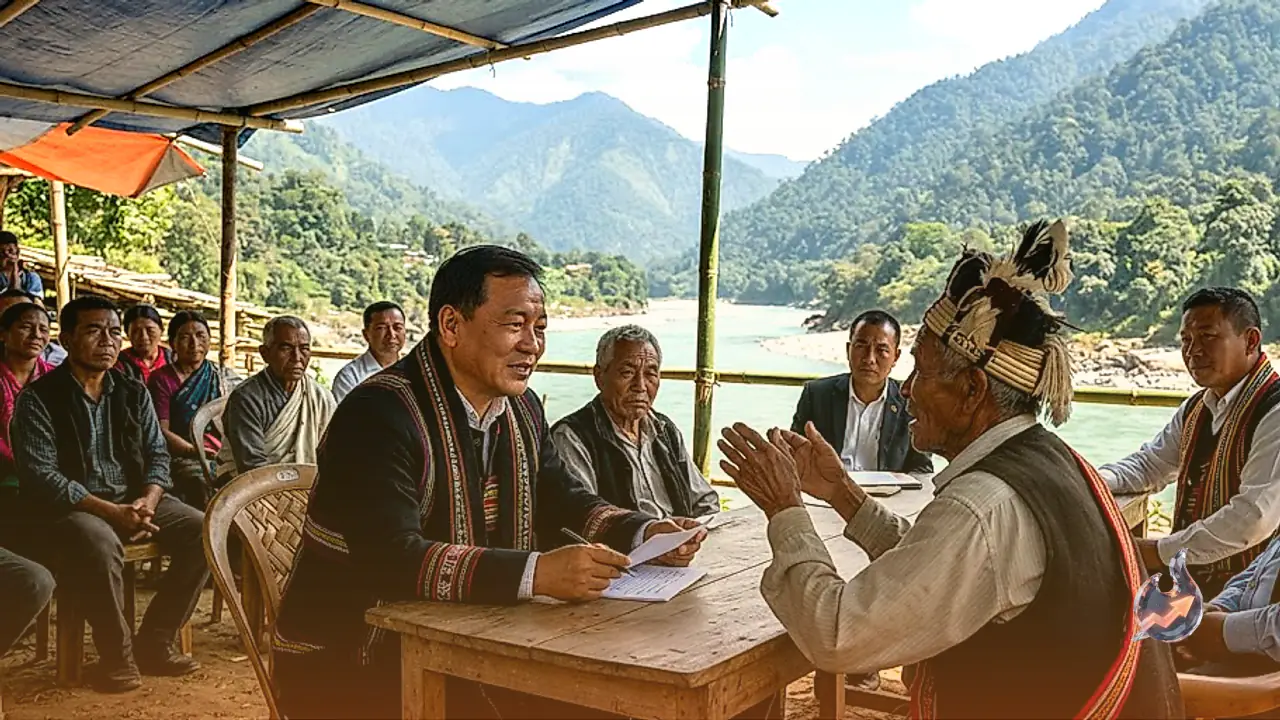
Dawki isn't known only for its living root bridge, it is also famous for the clear waters of the Umngot river. Green hills, dense forest and transparent river water all combine to make the spot especially attractive. Visitors who come here get to experience not just Meghalaya's natural beauty but also the local traditions and generations-old knowledge behind the bridge itself.
Places like Shnongpdeng and Mawlynnong lie close to Dawki and are known for their own charm. Travellers heading to Dawki often add these spots to the same trip.
Planning the trip
Meghalaya sees heavy rainfall, so keeping the weather in mind while picking travel dates matters a lot. The period between October and March is generally considered the most convenient window to visit this region. Dawki can be reached by road from Shillong. Before setting out, it's worth checking the latest updates from the local tourism department and current weather conditions to avoid running into trouble along the way.