






















Traversing the subcontinent from the snowbound alpine terrain of Himachal Pradesh to the sweeping arid expanse of Rajasthan presents one of the most geographically diverse road journeys in the country. Undertaken in an auto rickshaw by tourists from England, this distinctive cross-country expedition connects ancient Buddhist heritage sites perched on cold cliffs with the sunlit sandstone architecture of the Thar desert. The route bridges two starkly contrasting topographies, blending mountain wilderness with desert folklore into a singular travel experience.
Kaza: The Central Hub of Spiti Valley
Serving as the central operational base for exploring the rugged cold desert, Kaza is the most prominent town in Spiti Valley. Situated at an elevation of roughly 3,650 metres above sea level, the settlement provides essential lodging and transit connectivity for voyagers. From this high-altitude hub, travellers routinely branch out to visit nearby remote hamlets, isolated clifftop monasteries, and sweeping vistas framed by barren mountain ranges.
Tabo Monastery: The Ajanta of the Himalayas
Located further along the valley floor, Tabo Monastery stands as a pivotal centre of art, antiquity, and Buddhist tradition, widely referred to as the Ajanta of the Himalayas. Established in 996 AD, the mud-brick complex houses numerous sacred shrines, stupas, and meditative chambers that have survived centuries intact. Its deeply peaceful environment and historical frescoes make it an essential sanctuary for visitors intrigued by trans-Himalayan spiritual heritage.
Manali and Surrounding Adventure Corridors
Descending from the harsh isolation of Spiti brings travellers into Manali, one of northern India's premier tourist destinations. Flanked by lush alpine slopes and the roaring Beas River, the town is a hotspot for active outdoor pursuits including paragliding, white-water rafting, mountain trekking, and wilderness camping. Manali also serves as the principal gateway to cultural landmarks such as the Hidimba Devi Temple, alongside high-altitude vantage points like Solang Valley, Rohtang Pass, and the engineering corridor of the Atal Tunnel.
The Atal Tunnel and Lahaul Access
Ranked among Himachal Pradesh's most celebrated modern infrastructure feats, the Atal Tunnel cuts beneath high mountain barriers to radically ease vehicular access into the Lahaul Valley. In addition to transforming regional connectivity, the passage reveals dramatic mountain perspectives on either side, framing towering peaks immediately upon exit.
Chandigarh: The Planned Plains Stopover
As the journey transitions away from rugged mountain terrain toward the flat northern plains, Chandigarh functions as a convenient intermediate waypoint. Known for its structured grid architecture, the city offers peaceful respites along the banks of Sukhna Lake and amidst the sculpted mosaic grounds of the renowned Rock Garden.
Bikaner: Desert Heritage and Regal Architecture
Entering Rajasthan marks a profound shift in landscape and cultural textures, with Bikaner standing as the initial major desert gateway. Renowned for the imposing battlements of Junagarh Fort, expansive courtyards of heritage havelis, and signature culinary traditions, the city immerses overland travellers in the authentic rhythm of desert life.
Jaisalmer: The Grand Golden Finale
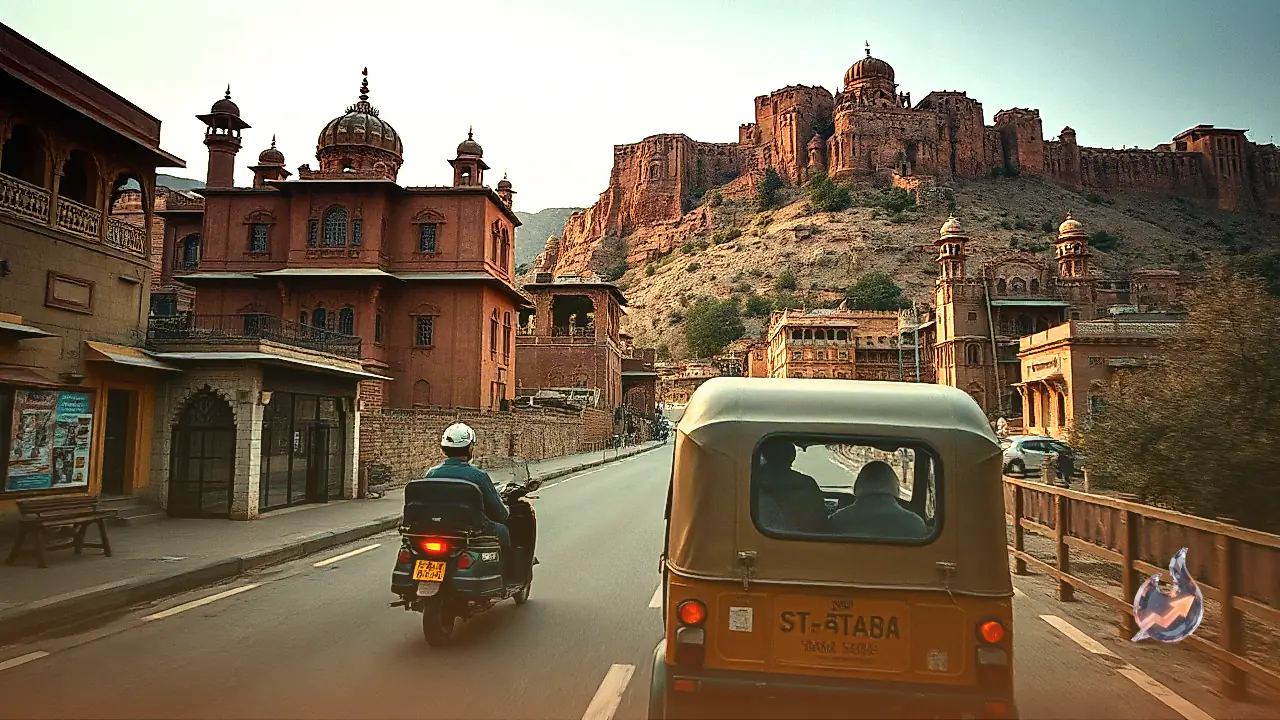
The ultimate and most striking culmination of the expedition lies in Jaisalmer, situated deep in the Thar Desert. Here, the living ramparts of the Jaisalmer Fort, the intricate stone facades of Patwon Ki Haveli, the serene waters of Gadisar Lake, and the undulating ripples of Sam Sand Dunes draw visitors from around the world. Watching the sun dip below the desert horizon at Sam provides a definitive conclusion to a journey that unites the towering crags of the Himalayas with the endless sands of western India.