

















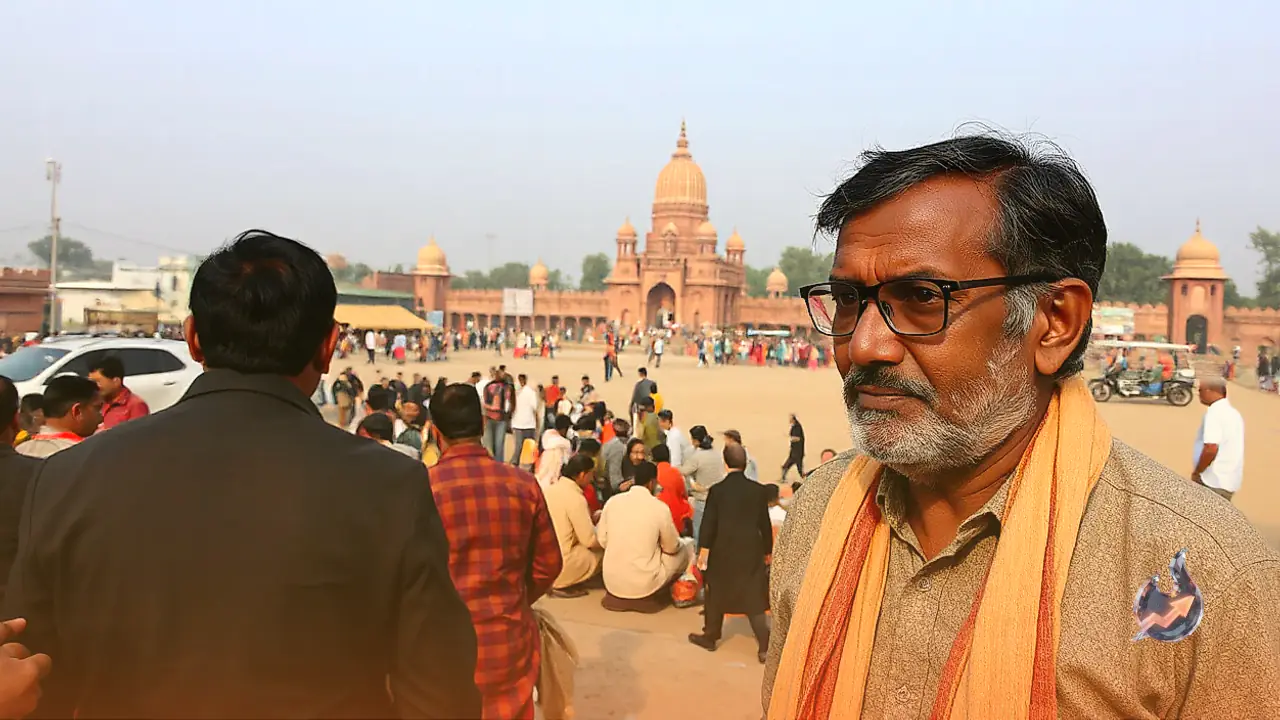

A short video excerpt from a religious discourse in the Karera area of Madhya Pradesh's Shivpuri district has ignited an intense online debate concerning the choice of expressions used on spiritual platforms. Pandit Dhirendra Krishna Shastri, head of the Bageshwar Dham pilgrimage site, finds himself at the center of attention following remarks in which he drew direct comparisons between the manifestations, physical postures, and symbolic instruments of Lord Ram and Lord Krishna. While several observers have taken strong exception to the framing and phrasing of his remarks, a substantial section of listeners views the incident merely as customary stage wit aimed at outlining theological differences between the two divine incarnations.
The Discourse and the Controversial Remarks
During a recital of the Ram Katha in Karera, Dhirendra Shastri turned his attention to comparing the appearances and iconic depictions of the two revered deities. In the circulating footage, he observes that Lord Ram stands upright and straight, whereas Lord Krishna is traditionally represented in a posture curved at three points. Broadening the contrast, he brought together the distinct sacred landscapes of Ayodhya and Vrindavan while juxtaposing Lord Ram's mighty bow against Lord Krishna's melodic flute.
The specific portion of his talk that drew the sharpest reactions asserted that holding and playing a flute is an accessible endeavor, whereas handling and firing a battle bow requires an entirely different caliber of effort beyond ordinary reach. Adding theatrical flavor to his words, he gestured toward an instrumentalist playing the flute on stage, eliciting laughter from the gathering. Following the growing pushback regarding his tone, Dhirendra Shastri later clarified that the observation was shared entirely in jest during the course of the narration and lacked any offensive intent.
Theological Distinctions Between Maryada and Leela
When evaluated within the framework of traditional scriptural philosophy, Lord Ram and Lord Krishna embody complementary dimensions of the divine, each celebrated through distinct spiritual sentiments. Lord Ram is worshipped as Maryada Purushottam, the embodiment of rectitude, duty, ethical conduct, and unbending adherence to social and filial codes. Lord Krishna, on the other hand, is venerated as Leela Purushottam, signifying boundless divine play, universal love, tactical ingenuity, philosophy, and accessible human interactions.
The three-bend stance referenced in the discourse is celebrated throughout classical iconography as the Tribhanga posture. Rather than indicating an imperfection, this posture is widely recognized in traditional Indian art and devotional lore as the epitome of grace, aesthetic balance, and divine charm. The fundamental grievance among critics is therefore not the historical mention of the posture itself, but rather the casual vocabulary and dismissive tone employed while contrasting divine implements before a massive gathering. While Dhirendra Shastri appeared to be attempting an informal explanation of the stylistic differences between the two deities, the comparative language chosen regarding the flute and bow triggered discomfort among devotees.
Internet Polarization and the Debate on Public Expression
The circulation of the speech has split digital audiences into sharply defined viewpoints. One group maintains that both Lord Ram and Lord Krishna command equal, profound devotion from millions of worshippers. Consequently, anyone addressing the public from a prominent spiritual pulpit should maintain strict linguistic decorum, avoiding any phrasing that could even inadvertently portray one divine incarnation as superior or inferior to another. This viewpoint stresses that religious leaders bear a responsibility to use words that uplift rather than divide.
Conversely, defenders maintain that the controversy is an overreaction driven by out-of-context viewing. They point out that light-hearted banter, practical jokes with accompanying musicians, and colloquial illustrations have always been organic elements of traditional Indian storytelling. Supporters emphasize that isolating a brief snippet from an extensive sermon fails to capture the true context, tone, and goodwill of the speaker.
The episode highlights the delicate balance between oral sermon traditions and modern digital scrutiny. Offering constructive criticism regarding a public personality's diction and pointing out perceived lapses in reverence remains legitimate civic dialogue. However, resorting to personal abuse, hostile trolling, and reflexive calls for ostracization without assessing the speaker's overarching intent detracts from thoughtful cultural discussion.