


















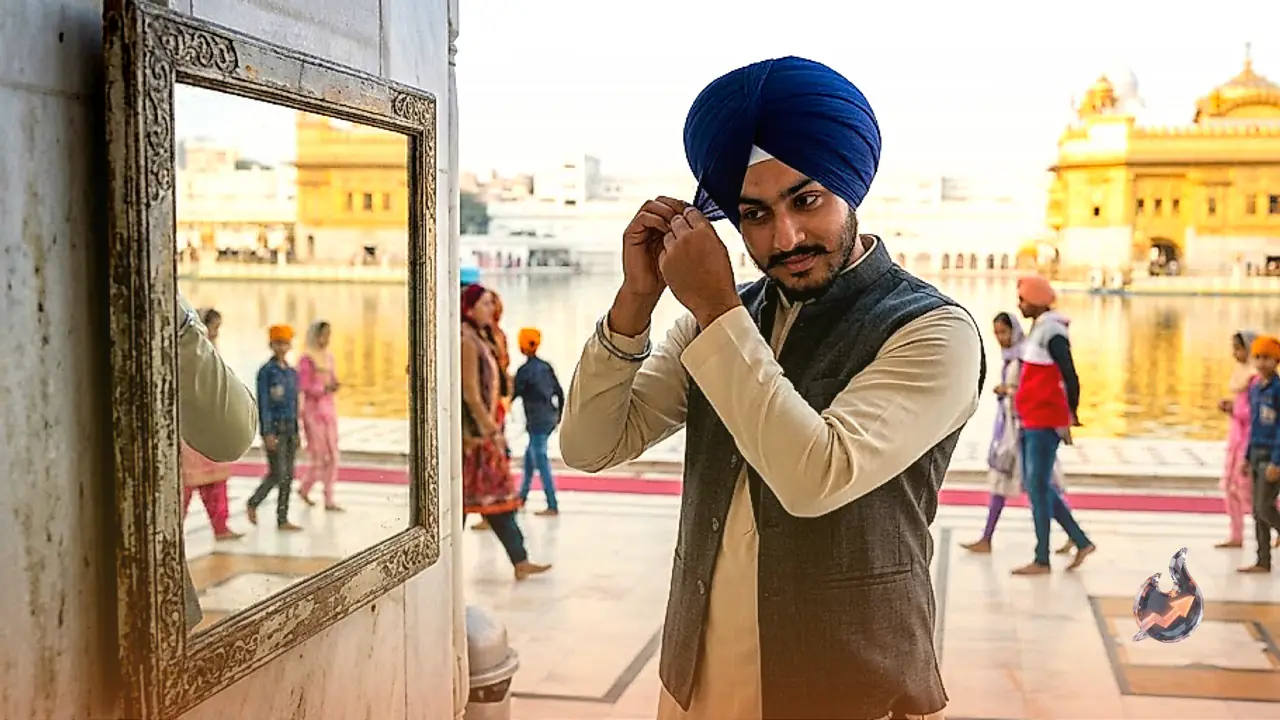

Recent verbal sparring between regional political figures has brought the sacred headgear of the Sikhs back into national headlines, refocusing public attention on its spiritual roots and profound heritage. Within the Sikh faith, the turban is never merely an item of clothing or a stylistic choice; it represents an inviolable seal of devotion, dignity, and spiritual discipline. It is equally important to distinguish regional heritage from religious commitment. While individuals residing in Punjab and speaking Punjabi share a proud cultural geography, the turban specifically distinguishes those who observe the Sikh faith. For devout followers, any disrespect directed toward this crown of faith is viewed as an unacceptable insult, defending which has historically inspired the supreme sacrifice of life itself.
A War of Words Over Headgear
The latest public conversation flared up after Punjab Chief Minister Bhagwant Singh took a sharp jab at his counterpart in Haryana. Bhagwant Singh asserted that Haryana Chief Minister Nayab Singh Saini keeps a turban stored in his official vehicle simply to wear whenever he travels across the Punjab border. According to the Punjab leader, putting on what he labeled a fake turban cannot win over the genuine trust and hearts of the people of Punjab.
Nayab Singh Saini was quick to counter the criticism while speaking to reporters. Defending his conviction, Saini stated that Mann Sahib, for us, the turban is respect for the Gurus. He further explained that wearing the headgear is rooted in reverence, spiritual faith, and living out the sacred traditions handed down through the centuries by the venerated Sikh Gurus rather than chasing political point scoring.
The Khalsa Heritage and Divine Command
Commonly referred to as the dastar or dumalla, the turban carries a legacy that is intimately intertwined with community history and profound ethical values. In ancient India, elaborate turbans were historically reserved for royalty, ruling monarchs, and elite warriors as a mark of power and distinction. Guru Gobind Singh Ji, the tenth Guru of the Sikhs, revolutionized this social paradigm following the creation of the Khalsa Panth by instructing every follower to crown themselves with a turban. This historic decree erased entrenched social hierarchies, conferring sovereign dignity and spiritual equality upon every common adherent.
Central to Sikh religious tenets is the vow to keep kesh, meaning bodily hair is never cut or trimmed. A carefully wrapped dastar provides essential protection, cleanliness, and security for sacred hair. Far beyond practical protection, tying the turban serves as a regular reminder of moral duty, courage, humility, and steadfast adherence to the timeless teachings of the Gurus.
Distinct Styles and Structural Dimensions
Over generations, the art of tying the turban has evolved into distinct traditional styles, each reflecting unique aesthetic traditions and lengths of cloth.
- Double Patti Nok: This represents the most widespread everyday design, carefully styled from an unstitched length of cloth measuring approximately 6 meters.
- Chand Tora Dumalla: A revered warrior style worn predominantly by Nihang Sikhs, carrying historical martial emblems and defensive spirit.
- Amritsar Dumalla: A classic blue colored turban crafted from approximately 5 meters of cloth, widely recognized across holy cities.
- Basic Dumalla: A functional and snug wrap favored especially by youngsters and members affiliated with the Akhand Kirtani Jatha.
- General Sikh Turban: An elaborate formal headwrap measuring nearly 7 meters in total length, arranged neatly across seven layered wraps.
Social Rites and Generational Succession
The influence of the dastar extends deeply into the social customs and transitional phases of family life. As a young boy transitions from childhood into his adolescent years, the extended community gathers for a formal turban tying ceremony known as Dastar Bandi. From this initiation onward, the youth is expected to wear the dastar in everyday civic life, stepping forward into public accountability and communal pride.
The fabric also plays an indispensable role during times of familial grief. Following the passing of the patriarch or head of a household, a solemn ceremony sees the elders tie a turban onto the head of the eldest son. This poignant tradition formalizes the transfer of leadership, signifying that the moral mantle and family duties now rest securely upon the successor.