




















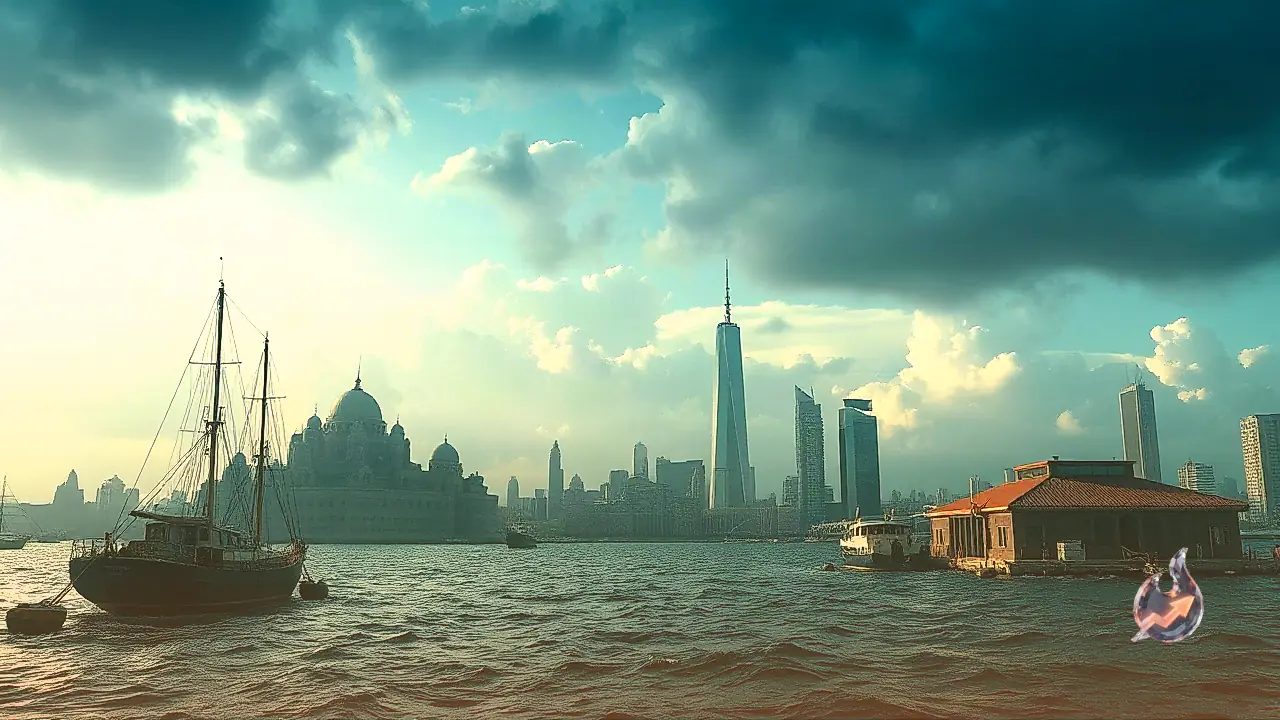

When discussing the vast expanses of water covering our planet, people routinely treat the terms sea and ocean as exact synonyms. Both represent vast, interconnected reservoirs of saltwater, which easily explains the everyday confusion. However, from a rigorous geographic perspective, seas and oceans are distinct aquatic environments. They differ noticeably across several core parameters, including overall surface dimensions, structural depth, geographic placement, and their physical relationship to dry land.
Understanding Oceans and Their Planetary Scale
Oceans constitute Earth's largest, deepest, and most comprehensive reservoirs of saline water. Geographically, they represent colossal marine basins that stretch across immense distances between distinct continental landmasses. Globally, geographers recognize five primary oceans: the Pacific Ocean, the Atlantic Ocean, the Indian Ocean, the Southern Ocean, and the Arctic Ocean.
Among these planetary bodies of water, the Pacific Ocean stands as the largest by surface area. Oceans envelope a dominant portion of the planet's total surface. Because of their staggering scale, they serve as the ultimate drivers of global oceanic currents, directly steer weather systems, influence precipitation, and play an indispensable role in moderating global climate stability.
The Nature of Seas and Their Continental Connections
A sea is typically categorized as a smaller division or subsidiary sector of a broader ocean. Unlike open ocean expanses, seas are generally partially enclosed or demarcated by continental landmasses or island chains. Most recognized seas maintain direct marine links with the open ocean while occupying a substantially smaller geographic footprint.
For instance, the Arabian Sea, bordering western India, forms a direct regional segment of the larger Indian Ocean. In similar fashion, the Mediterranean Sea maintains an interconnected relationship with the Atlantic Ocean. Nevertheless, geographic terminology around seas is not strictly uniform worldwide. Several bodies of water carry the formal word sea in their recognized names yet exhibit varying localized geographic settings and physical traits.
Comparing Scale, Position and Water Chemistry
The decisive distinctions between oceans and seas come down to surface area, depth, and land positioning. Oceans represent massive, deep water bodies spanning continents, while seas are smaller, typically shallower, and situated much closer to continental shorelines with partial terrestrial borders.
Regarding the composition of the water itself, there is no fundamental difference between the two environments. Both seas and oceans consist of saltwater. Because numerous seas connect directly and seamlessly to adjacent oceans, no rigid physical boundary or visible aquatic partition exists to demarcate where a sea terminates and an ocean officially begins. Their waters circulate continuously together as part of the same global marine system.