























As monsoon rain fills up low-lying stretches of land and floods burrows, snakes across many regions start moving out in search of dry ground and food, and they end up being spotted more often in fields, bushes, near homes and even on roads. Seeing a snake naturally makes most people nervous, but not every snake that turns up during the rains is dangerous. A good number of the species found across India carry no venom and are not usually considered life-threatening to humans. Even so, trying to identify a snake just by looking at it from a distance is risky, so caution matters far more than confidence when one turns up nearby.
Common Wolf Snake
The Common Wolf Snake is a small to medium-sized snake with white or light-coloured bands running across its body. Its appearance can resemble a krait to some extent, which is exactly why people often mistake one for the other. It is considered non-venomous and stays active mostly at night.
Indian Rat Snake, or Dhaman
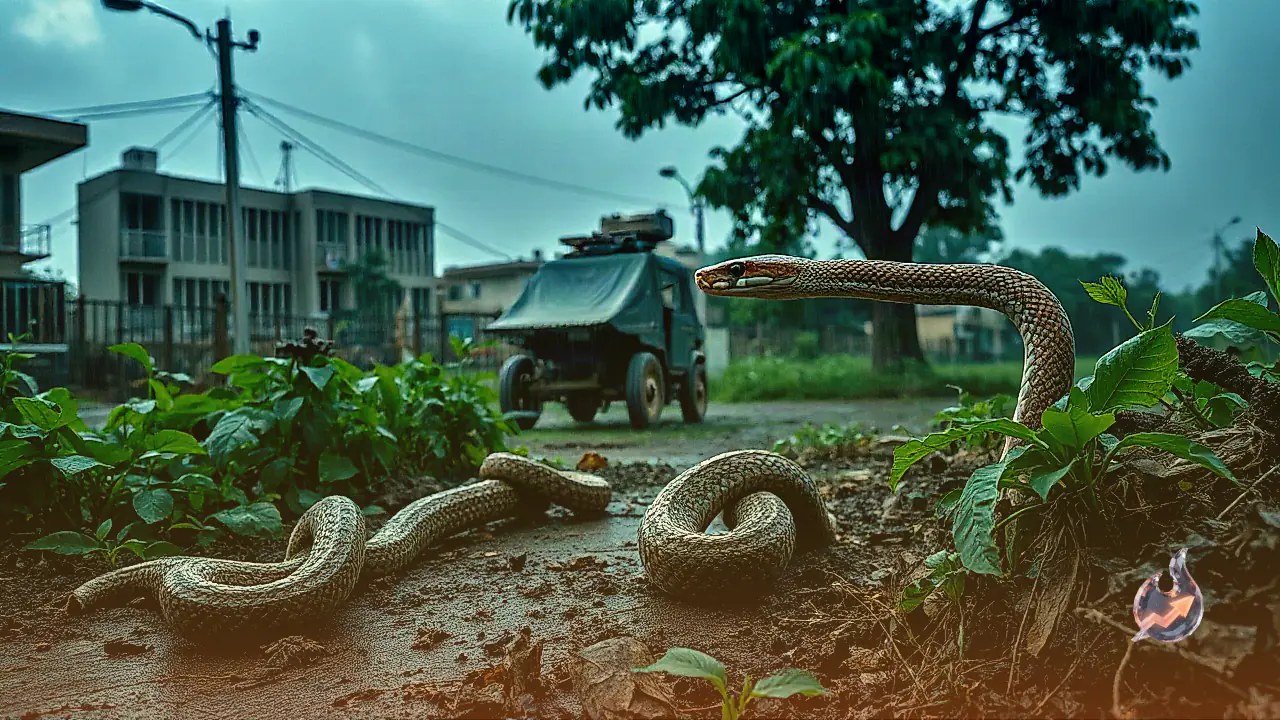
Widely known as Dhaman, the Indian Rat Snake is counted among the most commonly found non-venomous snakes in India. It has a long, slender body, and its colour tends to vary depending on the region it is found in. Because it preys on rats and other small creatures, it is frequently seen in farmland and rural areas. Even though it carries no venom, it can still bite when it senses danger, so keeping a safe distance from it is still advisable.
Common Sand Boa
The Common Sand Boa has a thick, sturdy body and is usually found in areas with loose soil or sand. It is a non-venomous species that survives mainly by preying on small creatures. Relying only on its colour to identify it is not a dependable method.
Checkered Keelback
The Checkered Keelback is commonly found near water bodies, ponds and fields. The square, checkered pattern on its body makes it fairly easy to recognise. It is a non-venomous snake that mostly survives on small prey such as fish and frogs.
Indian Rock Python
The Indian Rock Python also falls in the non-venomous category. It kills its prey by constricting it. Its body is extremely large and long, marked with brown and black patches. During the monsoon, it may move out of its usual habitat in search of water or food.
Why identifying a snake by sight alone is risky
Even a non-venomous snake like the Common Wolf Snake can look similar to a venomous one like the krait, so assuming a snake is harmless just by glancing at its colour or stripes can turn out to be a serious mistake. Patterns, colours and body shapes of venomous and non-venomous snakes often overlap enough that telling them apart from a distance becomes difficult, which is why getting close to or trying to touch any snake should always be avoided.