























Daily cooking exposes kitchen towels to continuous splashes of cooking oil, ground spices, and food residues. Because they are handled multiple times throughout the day to wipe surfaces, hold hot pots, and dry wet hands, these cloths quickly develop an unpleasant greasy coating and a stubborn sour smell. Standard wash cycles with regular laundry soap often fail to penetrate deep into the fibers where oils solidify. Continuing to handle food preparation with such soiled linens risks transferring bacteria and residue across countertops, making deep hygiene an absolute necessity in every home kitchen.
Restoring these heavily used cloths does not require investing in aggressive commercial detergents or expensive cleaning sprays. Common kitchen staples including baking soda, hot water, liquid dish soap, and plain white vinegar provide a highly effective cleaning system when applied properly and with basic precautions.
Loosening Baked-in Grease with Hot Water and Baking Soda
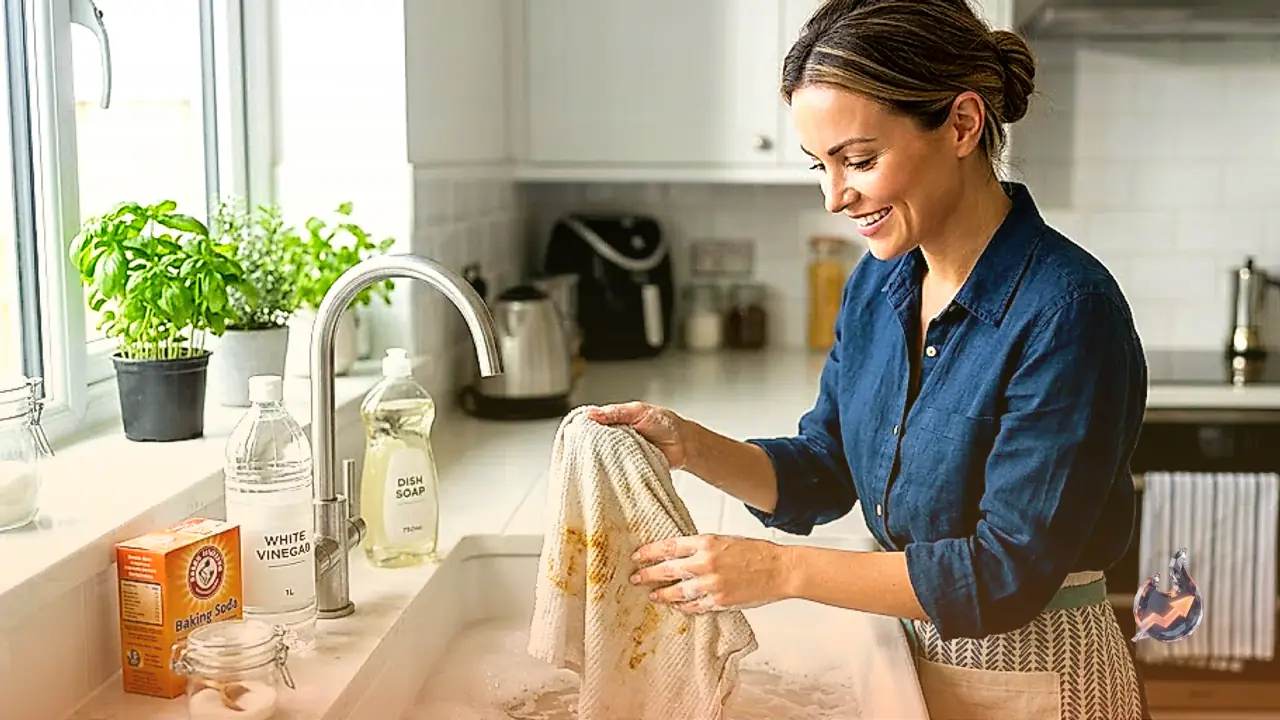
When cooking oils form a dense film across the fabric, cold or lukewarm water remains largely ineffective at breaking down the fatty binders. The most dependable first step is soaking the fabric in an enriched hot water bath. Heat a generous volume of water in a large pot or tub, then stir in a measured portion of baking soda alongside one tablespoon of liquid dishwashing soap until fully dissolved. Submerge the soiled kitchen towels completely into this mixture, allowing them to rest undisturbed for approximately 15 to 20 minutes.
The elevated temperature softens the hardened fats while the degreasing agents in the dish soap loosen the grip of the oil molecules on the individual fibers. Once the soak concludes, transfer the towels to a regular detergent wash. Gentle manual scrubbing on particularly dense patches will easily lift away residual discolorations and oil traces. Always review the fabric care tag before soaking, ensuring delicate materials are never subjected to excessively high temperatures that could compromise their structure.
Eliminating Lingering Odours with White Vinegar
While many households routinely add commercial fabric softeners to laundry loads, these products are often counterproductive for kitchen textiles because they coat fibers and severely diminish absorbency. A superior alternative for refreshing kitchen cloths is standard distilled white vinegar.
Adding a modest quantity of white vinegar during the final rinse cycle in a washing machine neutralizes persistent kitchen aromas and stale moisture odors. However, a critical safety protocol must always be respected: never combine white vinegar with chlorine bleach. Mixing vinegar and bleach triggers an immediate chemical reaction that releases hazardous, toxic gases. Keeping each cleaning agent isolated to its own separate washing routine prevents any health hazards while delivering maximum freshness.
Targeting Concentrated Oil Spots Directly
Occasionally, droplets of dense frying oil or turmeric-rich curries settle deep into specific sections of the cloth, resisting broad machine washing. In these situations, pre-treating the localized stain produces the best outcome. Before placing the item into the main wash, pour a few drops of concentrated liquid dishwashing detergent directly over the greasy mark.
Allow the soap to sit on the fabric for 20 to 30 minutes so its grease-cutting agents can break apart the oil foundation. Lightly rub the affected area between your fingers before proceeding with standard washing. For older, stubborn spots that have set over weeks, prepare a thick paste by mixing baking soda with a splash of water, coat the stain thoroughly, let it sit for a short duration, and then rinse it clean.
Proper Drying in Sunlight Prevents Moisture Buildup
Completing a deep wash cycle represents only half the cleaning routine; thorough drying is equally vital for maintaining kitchen cloth cleanliness. Folding damp cloths or leaving them bunched up inside a humid kitchen encourages mildew formation and causes foul smells to return within hours.
After laundering, hang kitchen towels outside in open air and direct sunlight until completely dry. Sunlight provides a natural sanitizing effect, eliminating microscopic spores while ensuring no residual dampness remains locked inside the weave. Adopting these methodical cleaning habits keeps daily kitchen essentials clean, fresh, and hygienic over extended periods.