




















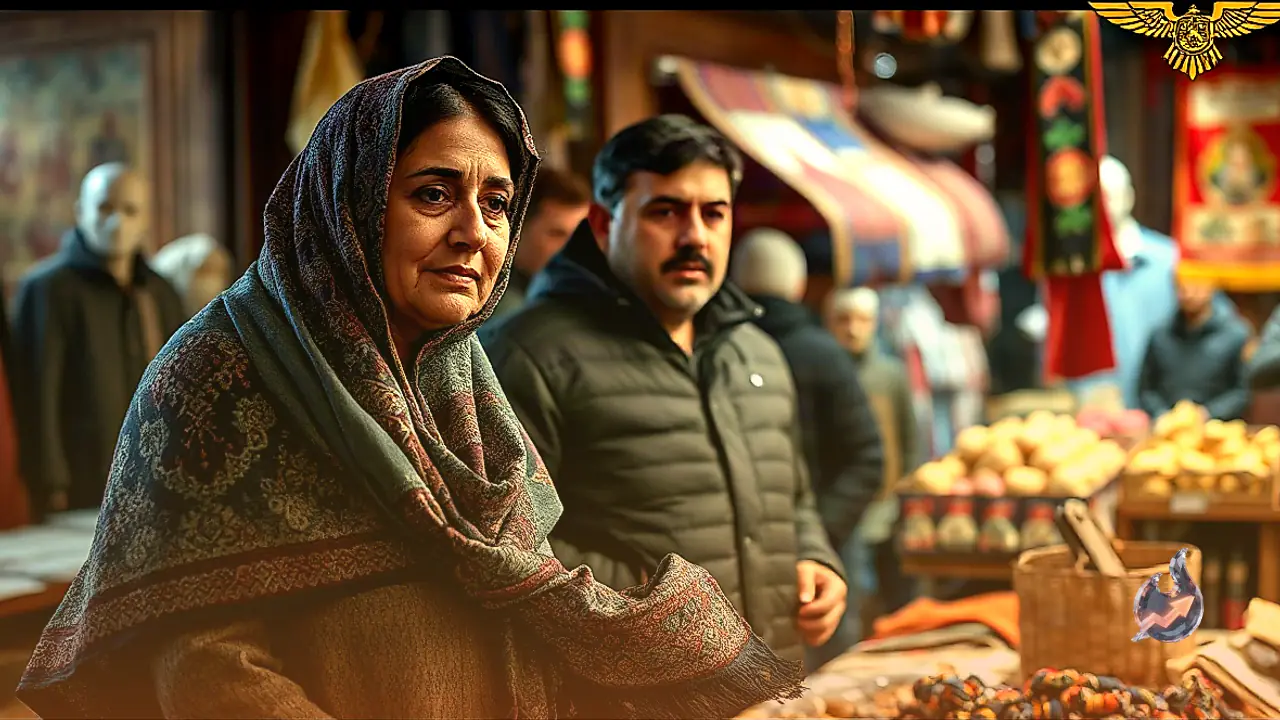

Zahra Pezeshkian, the daughter of Iranian President Masoud Pezeshkian, drew attention during her recent visit to the BRICS Market alongside her husband Hassan Majidi. While exploring the international artisan displays, a handcrafted shawl exhibited at the Iranian pavilion captivated her, leading her to purchase the piece. While appearing to be a stylish garment at first glance, a detailed examination of its weave and intricate patterns reveals a rich reflection of Iran's centuries-old textile heritage and craftsmanship traditions.
The Heritage of Rashti-Duzi Embroidery
The defining feature of the shawl lies in its intricate embroidery technique, known as Rashti-Duzi. This artistic needlework originates from the northern province of Gilan in Iran, particularly centered around the historic city of Rasht. Rashti-Duzi is widely recognized as one of the most exquisite and painstaking traditional textile arts in Persian culture. Artisans specializing in this craft utilize detailed chain stitching to depict natural elements, floral motifs, birds, and complex geometric structures onto fabric, passing down these specialized skills through generations.
Materials and Craftsmanship Techniques
Creating a Rashti-Duzi garment requires extraordinary patience and technical precision. The foundational material used for this shawl is a heavy woolen fabric known as Mahoot. Artisans work upon this thick base using vibrant silk threads. Rather than standard sewing needles, craftsmen utilize a specialized metallic hook tool that penetrates the fabric to form tiny, consecutive loops of thread, yielding a continuous chain stitch. The process begins by transferring the intricate artwork onto the Mahoot cloth, after which the needlework commences. The purchased shawl features a prominent central medallion pattern framed by meticulously embroidered borders and elaborate corner accents.
Persian Carpet Aesthetics and Global Legacy
The visual composition of the shawl features a refined color palette dominated by deep red, black, and cream tones. The fine floral patterns and winding vine motifs are signature elements of traditional Persian visual arts, often symbolizing nature, lush gardens, and classical aesthetics. Visually, the arrangement mirrors the detailed symmetry found in world-renowned handmade Persian rugs. Iran has historically held an esteemed global reputation for its carpets, embroidered textiles, and artisan clothing. This particular purchase highlights how traditional Persian craftsmanship continues to preserve its timeless artistic value on international platforms.


