






















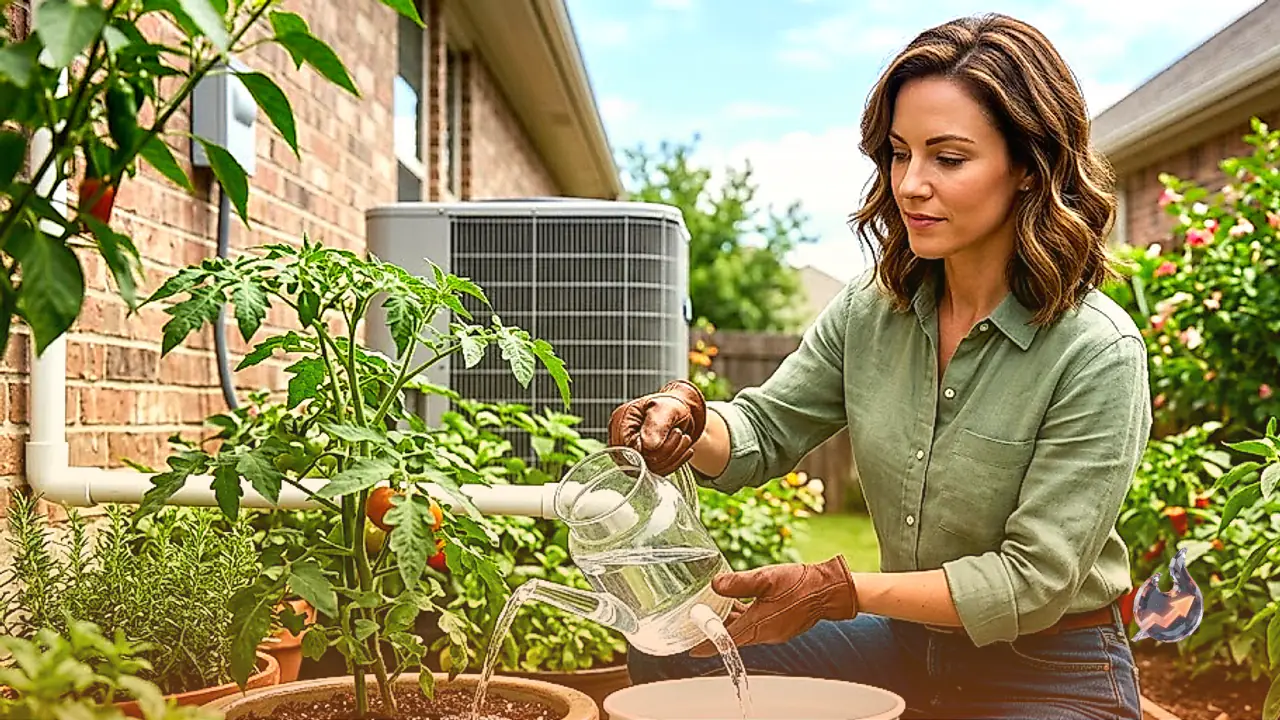

As summer temperatures rise, air conditioners run for long hours, constantly dripping water from their drainage pipes. Most households simply let this water flow down the drain, but it can actually be repurposed for gardening needs. The water generated by an air conditioner is a condensate formed from the humidity present in the air, which means it generally contains fewer dissolved minerals compared to standard tap water.
However, this does not mean you should dump this water onto every plant blindly. The cleanliness of your air conditioning unit, the method used to collect the water, and the specific type of plant matter significantly. Extra caution is particularly necessary when dealing with edible crops, vegetables, and kitchen herbs.
When an AC cools the warm and humid air inside a room, the moisture in the air turns into water droplets that flow out through the drain pipe. This is known as AC condensate water. Since this water does not come directly from municipal pipelines or groundwater pumps, it lacks the calcium and other harsh dissolved minerals found in tap water. Consequently, it can benefit certain plants that are sensitive to hard water.
At the same time, AC water should never be considered completely pure or drinkable. Dust, dirt, and microorganisms can accumulate inside the cooling coils, drain tray, or piping of the unit. If the water emits an odor, shows discoloration, or if the AC has not been serviced for a long time, it is best to avoid using it on your plants entirely.
Which Plants Benefit From AC Water?
Cleanly collected AC water can safely be used for roses, marigolds, money plants, snake plants, and various ornamental varieties. It is especially useful for indoor plants that develop white mineral crusts on their leaves due to hard water. However, water alone cannot sustain plant growth; essential nutrients like nitrogen, phosphorus, potassium, and organic matter must come from the soil and fertilizers. Therefore, do not ignore the nutritional requirements of your garden soil while utilizing AC runoff.
Precautions for Edible Crops and Herbs
Greater caution is required when watering edible plants such as tomatoes, chilies, coriander, tulsi, or other kitchen herbs. If the drainage line or storage container is unclean, unwanted dirt and pathogens can easily reach the plants. Using clean and reliable water remains the safest choice for anything you plan to consume. If you must use AC water for edible gardens, verifying the absolute cleanliness of the source is critical.
Guidelines for Reusing AC Runoff
Always collect the runoff in a clean container and wash that vessel regularly. Avoid leaving the water stagnant in open containers for multiple days. When watering ornamental plants, pour the liquid directly near the soil roots and prevent splashes from hitting the edible parts of food crops. While other household greywater sources like showers or washing machines can sometimes be repurposed, they often contain soaps and detergents, making them far riskier than AC water and demanding much stricter precautions.