



















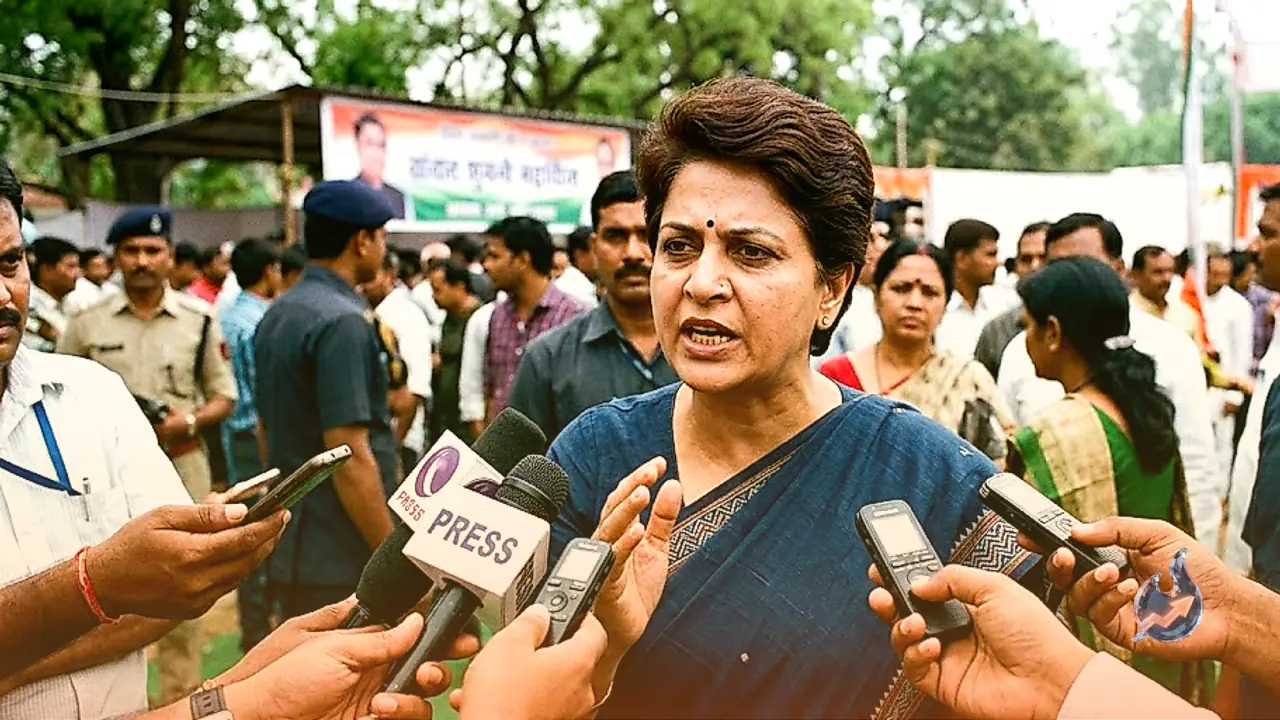

A fresh political controversy has emerged in Madhya Pradesh surrounding entry regulations at festive Garba dance venues during Navratri. Bharatiya Janata Party legislator Usha Thakur has strongly argued in favour of barring individuals who do not practice idol worship from stepping inside Garba enclosures. Advocating for strict boundaries, she asserted that an estimated 4.5 lakh Hindu young women used to elope with individuals of other faiths annually, subsequently giving birth to approximately 9 lakh children. Thakur contended that this recurring development posed a painful challenge that directly shifted regional demographics, though she did not present any official government figures or verified statistical documentation to corroborate the numbers cited.
Pledge to Restrict Entry for Non-Idol Worshippers
Highlighting the perceived impact on population metrics, Usha Thakur stated that multiple affiliated organizations have resolved to impose a strict prohibition on anyone who rejects idol worship from entering Garba celebrations. She highlighted concerns regarding individuals who supposedly disguise their identity by wearing sacred threads on their wrists or applying vermilion tilak on their foreheads to gain access under false pretenses. According to her, organizational workers have pledged to curb such coordinated entry attempts so that individuals who do not revere the underlying tradition are firmly kept outside the venue perimeters.
Religious Dedication Versus Modern Commercialisation
Addressing the social atmosphere around these events, Usha Thakur stated that certain elements enter the festival grounds specifically to mislead Hindu women and girls, which she argued eventually plunges their personal lives into distress. She noted that responsible citizens must actively prevent such efforts from taking root. Beyond the entry controversy, the legislator reflected upon the shifting cultural character of the festival itself. She underscored that Garba is fundamentally a sacred dance dedicated to spiritual power and divine worship. While traditional celebrations prioritized piety, austerity, and community prayer, she lamented that contemporary festivities are frequently reduced to public displays of expensive designer attire, lavish jewellery, and body tattoos. She urged organizers to restore and protect the foundational religious sanctity of the tradition.
Rameshwar Sharma Sparks Debate on Festival Attendance
The controversy around Navratri festivities in the state was further fueled by separate remarks from fellow BJP legislator Rameshwar Sharma. Representing the Huzur constituency in Bhopal, Sharma raised questions regarding the attendance of Muslim youth at dance venues. He asked why young Muslim men often visit Garba gatherings alone instead of bringing their sisters and daughters along with them. His pointed comments drew immediate and sharp criticism from opposition leaders, who strongly condemned the rhetoric as divisive and damaging to public harmony.