























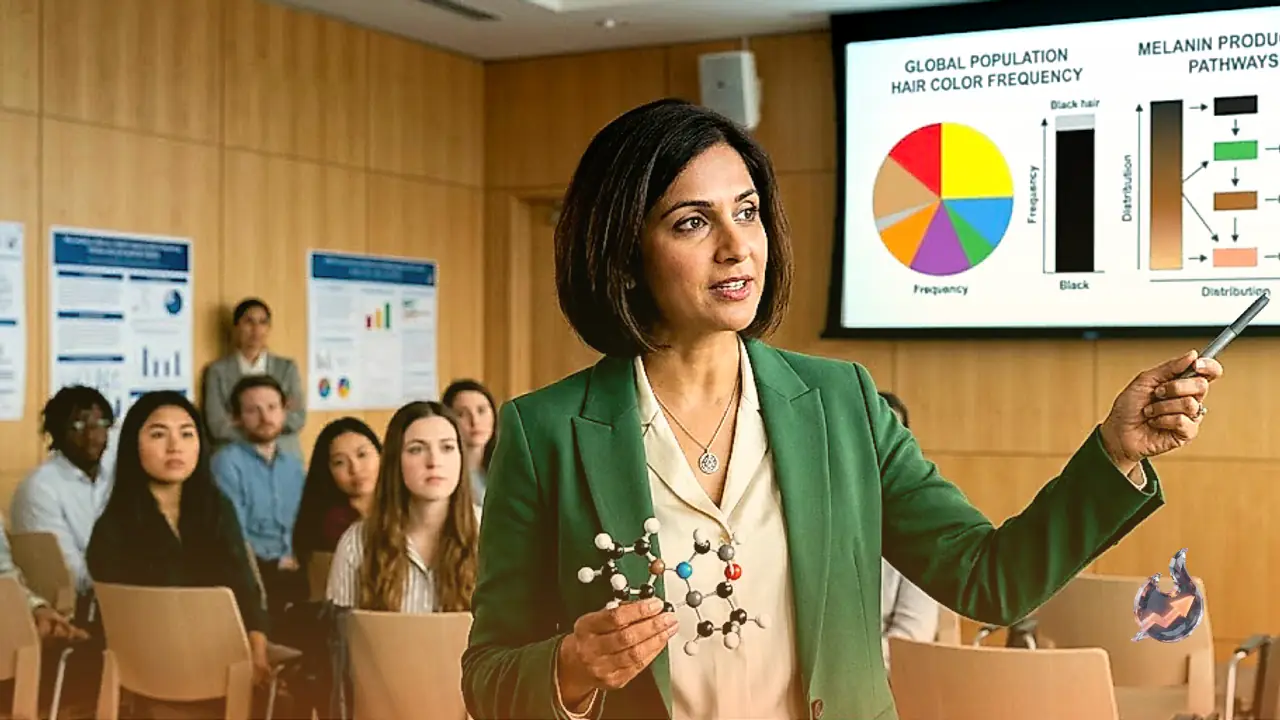

Human physical traits display remarkable diversity, and hair color is one of the most prominent examples. Across populations, the vast majority of people possess black hair. Is this prevalence merely a coincidence, or is there a concrete biological science driving it? The coloration of hair, eyes, skin, and lips depends heavily on specific biological pigments. Inside the human body, various cells function much like miniature manufacturing units. Producing melanin pigment is one of their primary responsibilities, and this specific pigment dictates coloration. When a particular type of melanin known as eumelanin is present in high concentrations, the resulting hair color appears black.
The Role of Melanin and Genetics
Statistical estimates indicate that roughly 70 to 85 percent of the global population has black hair. However, assuming that every individual possesses uniformly black hair would be inaccurate. Significant color variation exists across different populations and geographic regions. While some individuals sport jet black hair, others have dark brown or light brown shades. At the heart of this variation lie genetic factors. Multiple genes influence hair color, with the MC1R gene playing a particularly vital role. This specific gene helps determine which type of melanin the pigment-producing cells will manufacture in greater quantities.
Eumelanin Versus Pheomelanin
Two primary types of melanin dictate overall hair pigmentation, namely eumelanin and pheomelanin. High levels of eumelanin result in black or very dark brown hair, whereas an abundance of pheomelanin leads to red or golden blonde shades. This underlying chemical balance explains why hair characteristics vary drastically around the planet. Genetics dictate the exact balance of these pigments within the body. For instance, dark or black hair remains common across numerous communities and nations worldwide, whereas lighter shades such as brown and blonde appear more frequently among populations native to Europe. Over long periods, genetic adaptations and evolutionary shifts have preserved this diverse spectrum of human appearance.
Does Hair Color Indicate Better Health?
A common question that arises is whether having black hair serves as an indicator of superior health or strength. Scientifically speaking, it does not. Whether hair is black, brown, or any other natural shade is fundamentally tied to pigmentation and genetics rather than overall physical robustness. Natural hair color cannot be directly correlated with an individual's health status or the intrinsic strength of the strands.