

















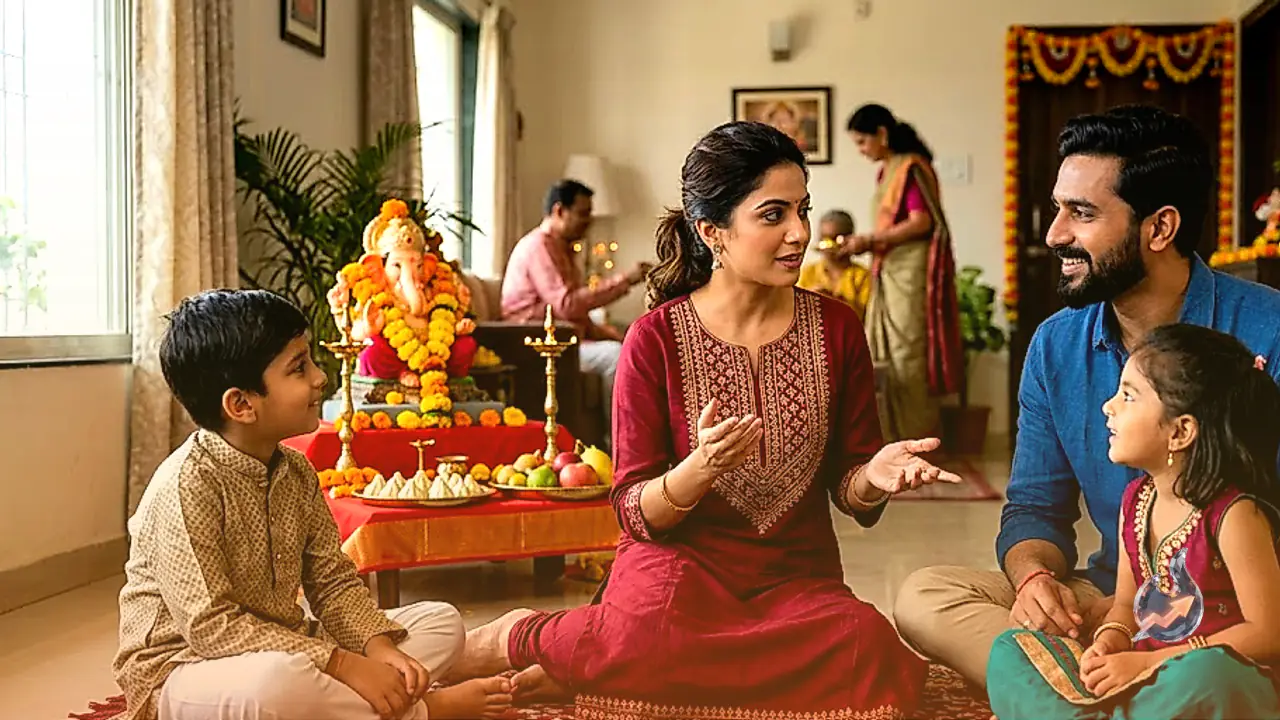

As Ganesh Chaturthi approaches, homes across the country begin preparing for the arrival of Lord Ganesha. But few pause to ask why, before any wedding, ritual or new venture, it is Ganesha who is invoked first, or how he came to be known as the remover of obstacles, "Vighnaharta." The answer lies in a well loved mythological tale that has shaped this tradition for generations.
What Does "Vighnaharta" Actually Mean
The word "vighna" means an obstacle or hurdle, while "harta" means one who removes it. Put together, "Vighnaharta" translates to the remover of obstacles. Ganesha is regarded as the god of wisdom, knowledge and auspiciousness, and it is believed that worshipping him gives devotees both the courage to overcome hurdles in their path and the clarity to make the right decisions.
The Famous Race Against Kartikeya
According to the Puranas, Lord Shiva and Goddess Parvati's two sons, Ganesha and Kartikeya, once got into a dispute over who was the superior of the two. To settle the matter, a condition was placed before them: whoever completed a full circuit of the entire world first would be declared the winner. Kartikeya wasted no time, mounting his vehicle, the peacock, and setting off to circle the earth.
How Circling His Parents Won Him The Title
Ganesha, on the other hand, took a different approach. Instead of travelling the world, he simply circled his parents, Shiva and Parvati, three times. When asked why, he explained that since the entire world exists at his parents' feet, there was no need to travel the earth separately. Impressed by this reasoning, Ganesha was declared the winner. It is this very episode that established the tradition of invoking Ganesha first at the start of every auspicious occasion.
Why Ganesha Is Invited First, From Weddings To New Businesses
Religious belief holds that Ganesha grants wisdom and the ability to think clearly, and that sound judgement is essential at the start of any new undertaking. That is why he is invoked first at weddings, house warmings, religious rituals, the launch of a business or any other auspicious occasion. Devotees believe that worshipping him clears obstacles from their path and smooths the road to success. This is also why he is affectionately called "Vighnaharta," the remover of obstacles, and "Mangalmurti," the embodiment of auspiciousness.
The Symbolism Hidden In Ganesha's Form
Every feature of Ganesha's form is said to carry a lesson. His large head represents broad thinking and deep wisdom, his big ears signal the importance of listening, and his small eyes stand for focus and depth of attention. Worshipping Ganesha, in this sense, teaches devotees not just faith but also patience, wisdom and the value of clear thinking.