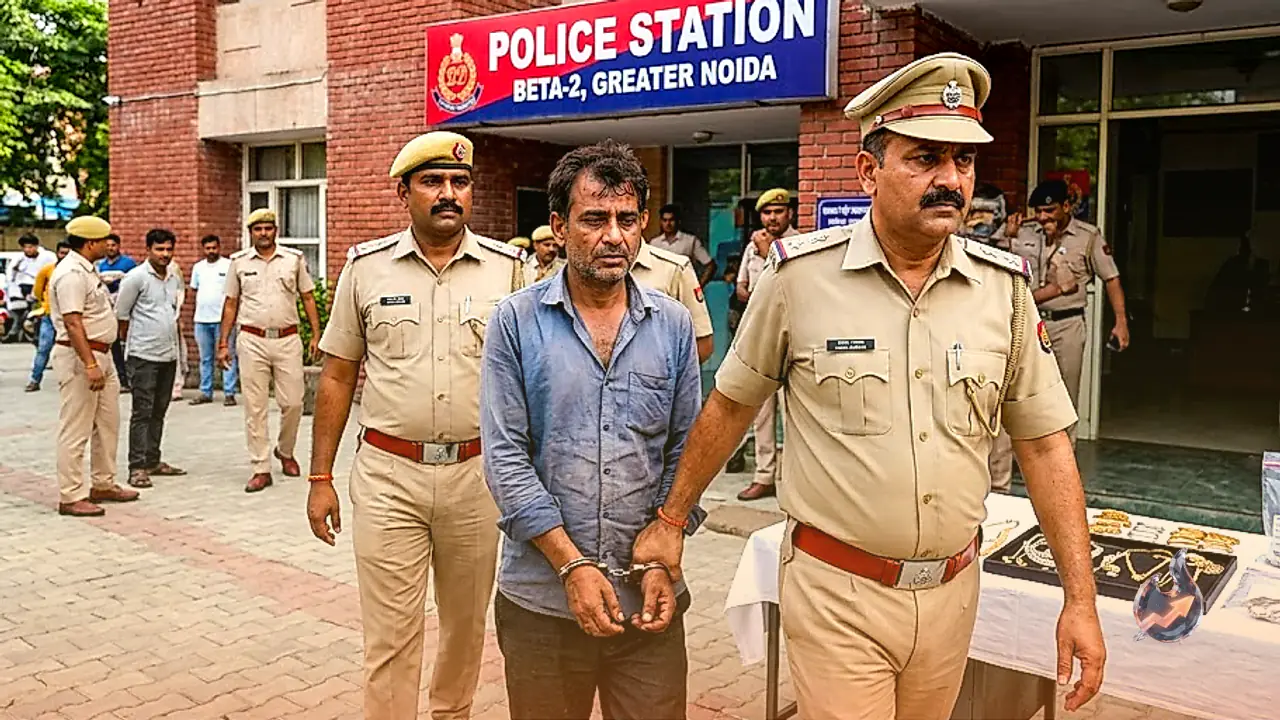







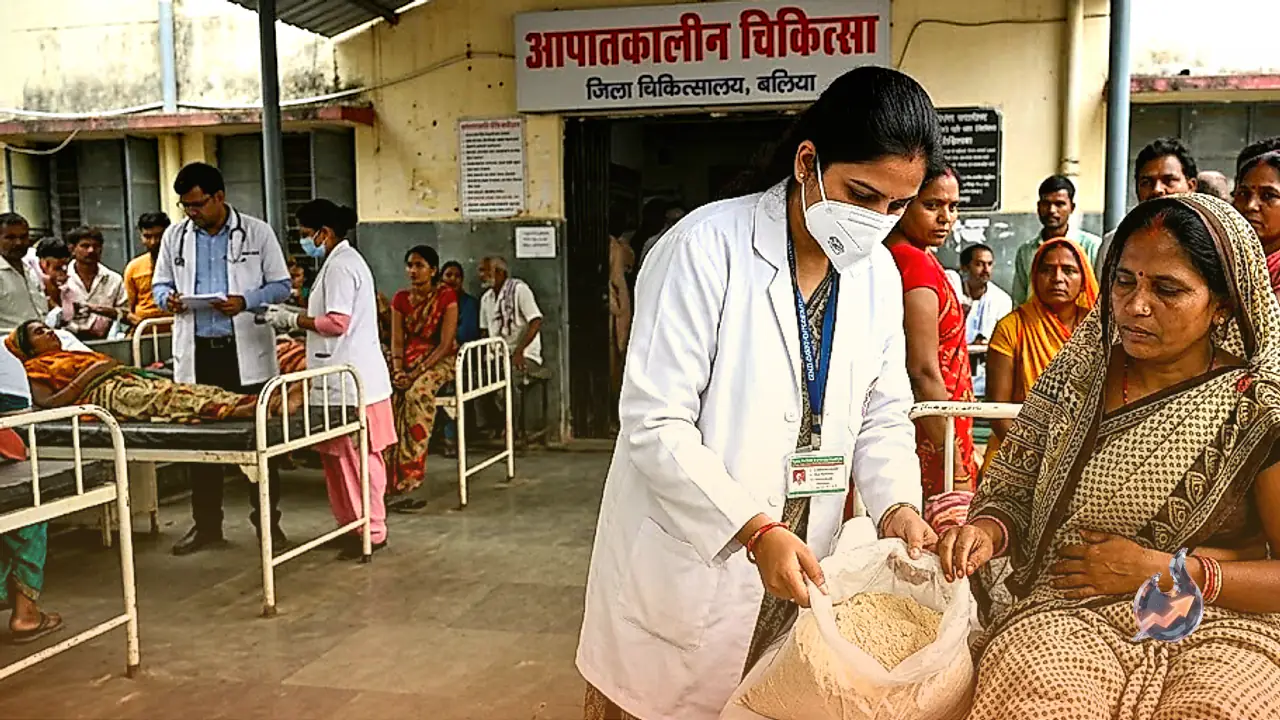
















A severe food poisoning outbreak struck several villages in the Ballia district of Uttar Pradesh following the consumption of traditional meals prepared with finger millet flour, commonly known as madua or ragi. The incident unfolded just ahead of the auspicious Jitiya fast, leaving at least 49 people, including women, men, and children, in need of immediate hospital care. Administrative records confirm that three women remain in critical condition under specialized medical observation. Following the sudden surge in hospitalizations, senior district administration and police officials visited healthcare facilities and affected residential localities to monitor relief efforts and oversee investigations.
Hospitalization Details and Medical Emergency Response
District administrative officials rushed to assess healthcare arrangements and review the medical interventions being provided to the victims. Out of the 49 individuals officially reported ill, 43 patients were admitted to the district hospital. An additional three patients received treatment at the Bansdih Community Health Centre, while three other individuals were shifted to a private medical facility located in the district headquarters. According to details released by the information department, dedicated teams of medical specialists have been assigned to continuously monitor the three women who are currently in critical condition.
Earlier, Chief Medical Superintendent Dr. S. K. Yadav confirmed the admission of the sick individuals, stating that around 20 women were initially being treated in the wards. He emphasized that the medical staff remained fully alert and proactive, assuring the public that necessary clinical measures were underway to stabilize all patients.
Ritual Feasting, Distribution of Prasad, and Rapid Onset of Symptoms
The poisoning cases emerged predominantly from Chhata village under the Bansdih Road police station jurisdiction, along with the nearby villages of Chokan and Aaschaura located in the Bansdih tehsil area. Jitiya, also celebrated as Jivitputrika, is a significant Hindu religious observance wherein mothers observe an austere waterless fast to pray for the longevity, prosperity, and sound health of their children. Customarily, before beginning the fast, devotees prepare and consume flatbreads made from ragi flour accompanied by a preparation of satputiya vegetables. Adhering to this long-standing ritual, several households in the area prepared dishes using the millet flour and distributed them as sacred offerings to friends and relatives.
Family members explained that the flour had been purchased from a local grocery store run by a shopkeeper named Sonu Verma. Shortly after eating the food, people began experiencing distressing physiological symptoms. Pankaj Kumar, a local resident of Chhata village, recounted that between 30 to 35 women alongside five children had consumed the ragi preparations. Within a short span of time, individuals developed severe bodily tremors and uncontrolled shivering, which eventually caused several women to lose consciousness. Madhuri, one of the female patients undergoing treatment at the hospital, similarly recounted that her health deteriorated rapidly right after consuming the ragi flour items.
Administrative and Police Inspection of Affected Areas
Promptly after learning of the crisis, District Magistrate Gyanendra Singh arrived at the district hospital to review patient care directly. The district magistrate issued stern instructions to the medical fraternity, directing them to provide the best possible medical care without any negligence. In response to the severity of the illness among vulnerable patients, special medical units were formed. Subsequently, District Magistrate Gyanendra Singh alongside Superintendent of Police Omveer Singh traveled to the affected villages. The administrative heads interacted with relatives of the sick villagers to reconstruct the timeline from the purchase of the ingredients to the emergence of sickness.
Food Safety Investigations and Sample Collection
To determine the exact contaminant that led to this widespread poisoning, the district administration dispatched food safety officers and allied inspection teams to the ground. The inspection team scrutinized the sites, collecting samples of the suspect madua flour along with other food materials from the retailer and household kitchens for laboratory testing. District Magistrate Gyanendra Singh affirmed that this is an unambiguous case of contaminated foodgrain consumption, asserting that stringent legal action will be pursued against anyone found responsible under established regulations. Administrative vigilance remains active across the region while prioritizing medical care for the afflicted.
Variance in Reported Victim Counts
BJP MLA Ketki Singh, who represents the Bansdih constituency, also visited the district hospital to console the victims and assess their condition. Following her interaction with the patients and hospital staff, the legislator claimed that the number of people taken ill due to the toxic flour could be as high as 70. However, the district administration has formally verified and confirmed only 49 hospital admissions, leading to a noticeable difference between the official figures and the representative's estimate. Officials noted that health personnel are actively monitoring anyone with milder complaints, while the outcome of chemical and biological tests on the flour samples is awaited to pinpoint the underlying toxin.